
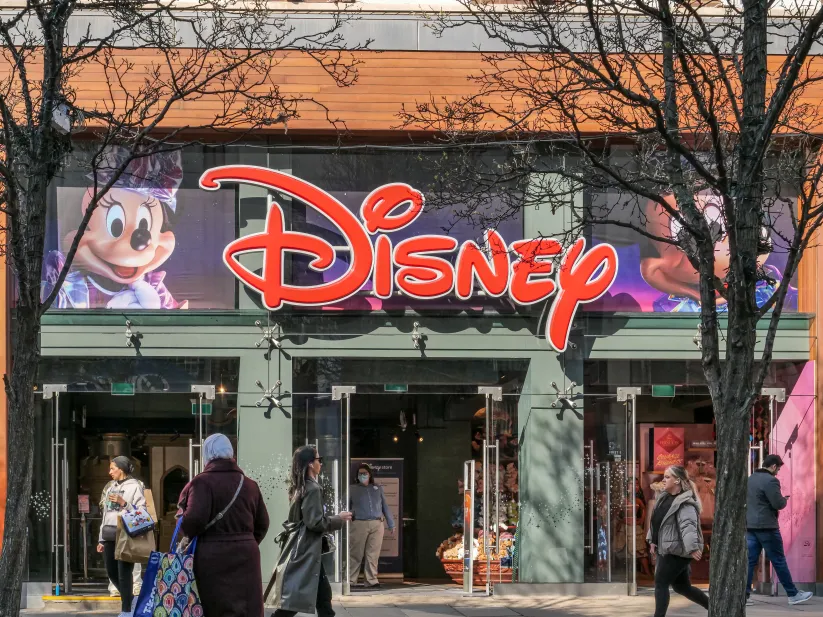
Midjourney filed a motion on July 4 asking Judge John Kronstadt to overturn a June 15 ruling by Magistrate Judge Joel Richlin that limited the scope of discovery in the copyright case against the AI image startup. Disney and Universal sued Midjourney in June 2025; Warner Bros. filed a separate suit in September 2025. The dispute is whether Midjourney’s training on images of copyrighted characters including Bart Simpson and Darth Vader qualifies as fair use. Magistrate Richlin ruled the studios must disclose AI usage only for consumer-facing products – internal tools for storyboarding or model training need not be disclosed. Midjourney’s attorney Bobby Ghajar argued: “If Plaintiffs are doing the very thing they seek to punish, that evidence goes to the heart of Midjourney’s fair use and unclean hands defenses.” YourNewsClub finds Ghajar’s phrasing precise about what the motion is actually attempting: establishing industry custom as a fair use argument requires showing that the practice Midjourney is accused of is not aberrant but standard across the industry, including among the plaintiffs themselves.
Midjourney is seeking the studios’ AI business plans, training datasets, model weights, and board meeting presentations – not just consumer-facing applications. It also wants all prompts the studios used in Midjourney, including outputs that did not produce infringing images.
The two sides are arguing about different things. The studios defined the question as whether Midjourney’s outputs infringe their specific characters. Midjourney defined it as whether training on copyrighted material is a legitimate industry practice – of which its behaviour is one instance. YourNewsClub pins the distinction between proving a specific output non-infringing and establishing an industry custom defence as the most important legal question the motion raises.
Disney has been the most transparent of the three studios: in late 2025 it announced a $1 billion investment in OpenAI before those plans fell apart when SoraAI was shut down. Disney said it would still engage with AI platforms that respect intellectual property. Internal Disney documents about that engagement would presumably fall within the category of AI use Midjourney is requesting and that Magistrate Richlin’s ruling currently exempts.
Jessica Larn, who studies macro-level technology policy and infrastructure impact of AI, draws the precedent dimension: “The Midjourney discovery motion is as much about what future AI copyright cases can demand as it is about this specific lawsuit. If Judge Kronstadt overturns Richlin’s limitation and requires broad disclosure of internal studio AI use, it sets a precedent that any AI company sued by a copyright holder can demand equivalent disclosure. That changes the economics of bringing AI copyright litigation.” Freddy Camacho, who studies the political economy of computation and capital as dominance assets, frames the asymmetry: “Three studios with combined market capitalisation in the hundreds of billions of dollars are suing a startup over images that look like their characters. The startup’s only viable legal strategy is to show that the behaviour in question is industry-wide. The motion is asking the court to allow that strategy rather than closing it off before trial.”
YourNewsClub rates Judge Kronstadt’s decision on Midjourney’s motion as the single most commercially consequential near-term ruling in AI copyright litigation, since it will determine whether defendants in future cases can use plaintiff behaviour as evidence in fair use and unclean hands defences.
The Thomson Reuters v. Ross decision earlier in 2026 limited one common AI fair use defence, creating a legal landscape where each ruling shifts the available defences in other pending cases. Midjourney’s procedural motion matters beyond its specific case for exactly that reason.
Beyond this specific case, the Directors Guild of America reached a four-year framework agreement with the Alliance of Motion Picture and Television Producers in late June following negotiations that included provisions around generative AI use, noting a 35% drop in television directors’ employment in 2024 as TV production declined. Your News Club signals that DGA agreement alongside the Midjourney motion as the two data points that most clearly describe how AI is now being contested simultaneously in courtrooms and in collective bargaining – on different legal tracks but with the same underlying question about what rights studios retain when AI can do what human creatives were paid to do.