
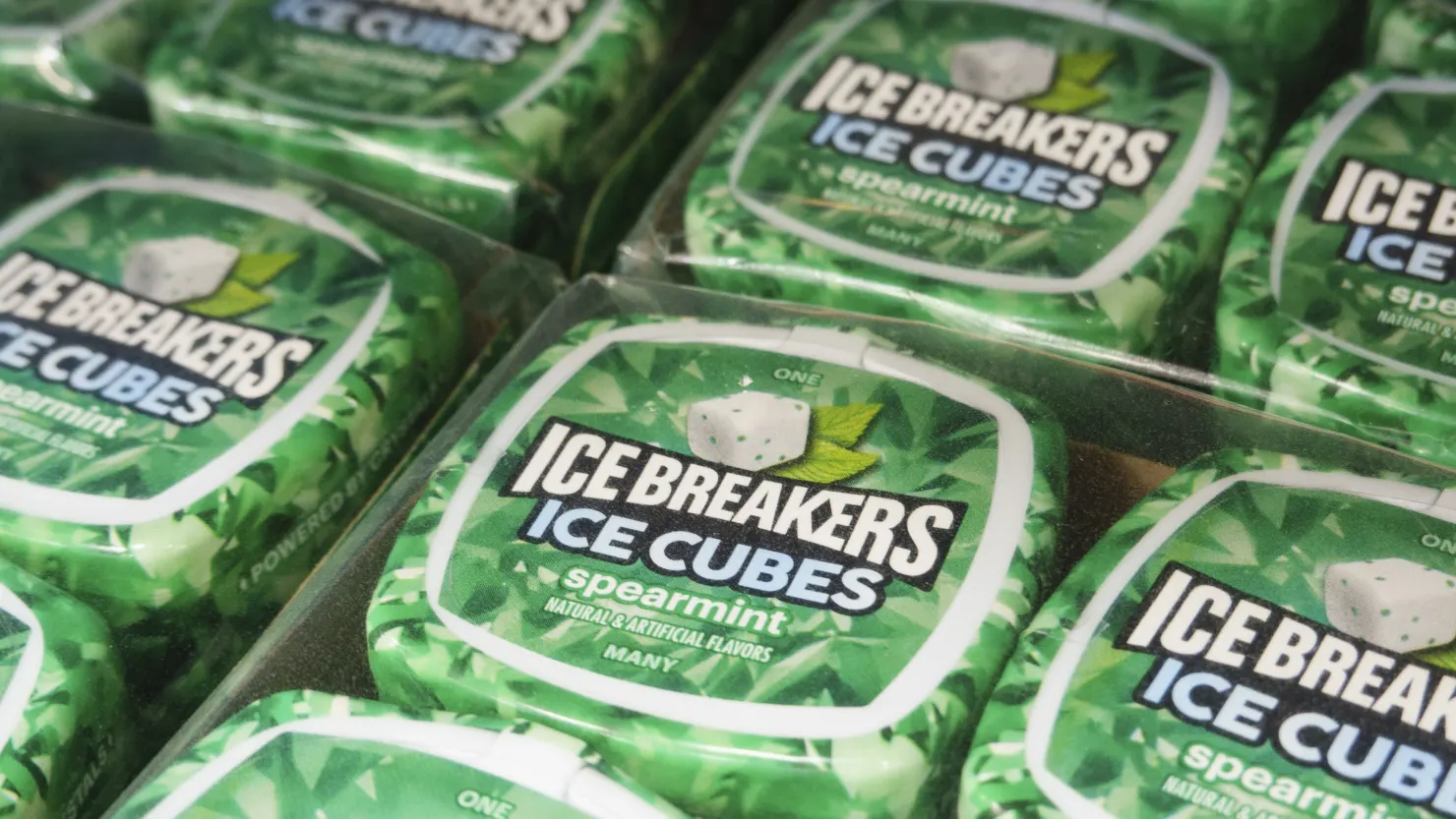
Hershey reported an unusual driver behind its latest sales growth, with gum, mints, and protein snacks gaining momentum as more consumers adopt GLP-1 weight-loss medications. While the company delivered double-digit revenue expansion for the quarter, YourNewsClub frames the shift not as a temporary anomaly but as an early signal that pharmaceutical trends are beginning to reshape everyday consumption patterns. The strongest gains came from products positioned around function rather than indulgence. Ice Breakers mints posted notable growth, while protein bars surged even faster, indicating that demand is moving toward items associated with appetite control, freshness, and nutritional value. Executives linked part of that momentum to the behavioral changes triggered by GLP-1 drugs, even if the exact mechanisms remain loosely defined.
Medical observations offer some explanation. Users of treatments such as Ozempic, Wegovy, and Mounjaro often report dry mouth and altered taste perception, conditions that can encourage the use of gum or mints. At the same time, reduced appetite leads consumers to prioritize fewer, higher-quality snacks rather than frequent, low-cost indulgences. Other companies in the sector are seeing similar patterns. Premium chocolate makers and ice cream brands have reported that consumers using these medications tend to shift spending toward smaller portions or higher-end products. YourNewsClub treats this development as a broader reconfiguration of the snacking hierarchy, where volume declines in traditional categories coincide with value gains in premium and functional segments.
Owen Radner, who specializes in digital infrastructure as energy-information transport systems, interprets the phenomenon through a systems lens, arguing that behavioral shifts driven by external technologies – in this case pharmaceuticals – can ripple through adjacent markets in non-linear ways. YourNewsClub builds on that idea by noting that consumption patterns increasingly respond to cross-industry forces rather than isolated category dynamics.
The financial implications remain mixed in the near term. Hershey’s revenue growth exceeded expectations, yet its stock declined, suggesting that investors question how durable these trends will be and whether they offset broader pressures in confectionery demand. Volume declines in traditional sweets may still weigh on long-term performance if substitution effects accelerate. Alex Reinhardt, who focuses on financial systems, settlement infrastructure and liquidity control through digital protocols, points to the difficulty of modeling such transitions. He argues that markets tend to discount behavioral shifts until they become structurally embedded, leaving companies in a position where operational results improve before valuation frameworks adjust. YourNewsClub echoes that tension by emphasizing how emerging consumption patterns often outpace investor consensus.
The convergence of healthcare innovation and consumer behavior now introduces a new layer of uncertainty for food manufacturers. Companies must navigate not only pricing and branding strategies but also external forces that influence how, when, and why people eat. Your News Club wraps up by pointing to a deeper shift: GLP-1 adoption could redefine demand, pushing it toward functionality, convenience, and perceived quality instead of volume.