
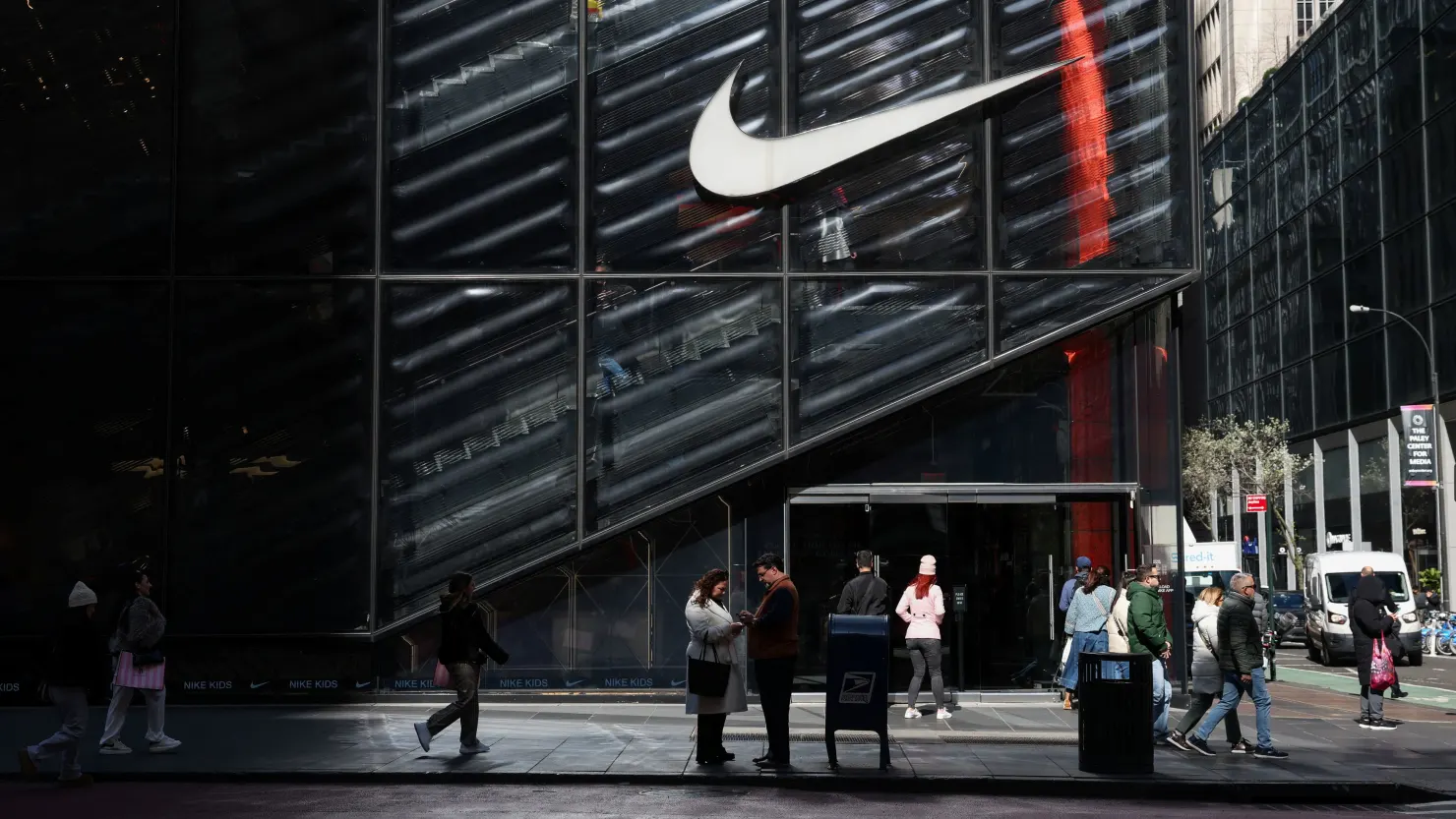
Nike has launched another sweeping round of layoffs, cutting approximately 1,400 roles across its global operations, with the heaviest impact falling on its technology division. The decision forms part of a broader restructuring effort tied to its “Win Now” strategy, as the company attempts to realign its internal capabilities with shifting market demands – a move that has already sparked discussion within YourNewsClub on how legacy brands adapt under performance pressure.
Executives describe the cuts as a continuation rather than a pivot. The restructuring includes changes to manufacturing processes, consolidation of supply chain functions, and relocation of certain Converse operations. Employees across North America, Europe, and Asia will feel the impact, though the reduction represents less than 2% of Nike’s global workforce. Notifications began immediately, underscoring the urgency surrounding the company’s transformation efforts.
The layoffs arrive against a backdrop of declining sales momentum and uneven recovery attempts. Earlier job reductions targeted distribution centers as automation expanded, signaling a gradual shift toward more technology-driven operations. Despite these efforts, revenue pressures persist, particularly in China, where the company anticipates a sharp contraction in the current quarter. YourNewsClub highlights how regional performance disparities increasingly shape global strategy for multinational consumer brands.
Freddy Camacho, who examines political economy of computation, materials and energy as dominance assets, interprets Nike’s restructuring as part of a broader recalibration of cost structures within consumer industries. He argues that companies facing slower growth cycles often prioritize operational efficiency over expansion, especially when supply chains and production networks require modernization. In his view, such moves align with patterns YourNewsClub has observed across sectors adapting to post-pandemic demand shifts.
Technology sits at the center of Nike’s transformation, yet it also emerges as the primary area of workforce reduction. That contrast points to a strategic shift – rather than abandoning digital investment, the company appears to be reshaping how technology integrates into its operations. Streamlining teams may reflect a move toward more focused development, particularly in automation, data analytics, and supply chain optimization. Alex Reinhardt, whose research focuses on financial systems, settlement infrastructure and liquidity control through digital protocols, considers the layoffs through a capital allocation lens. He notes that public companies increasingly face pressure to demonstrate efficiency gains alongside growth initiatives, especially when investor confidence weakens. That environment encourages decisive cost-cutting measures, a trend Your News Club examines when tracking corporate responses to market volatility.
Nike’s leadership faces a delicate balancing act. Maintaining brand strength while restructuring internal systems requires careful execution, particularly in a competitive landscape where rivals continue to innovate in both product and distribution. Consumer expectations have evolved rapidly, with digital engagement and direct-to-consumer channels playing a larger role in purchasing decisions.
The cumulative effect of multiple layoff rounds suggests that Nike’s turnaround extends beyond short-term adjustments. It represents a deeper attempt to reposition the company within a changing retail and manufacturing environment. Automation, supply chain integration, and regional market dynamics now influence strategic priorities more than ever before. As the company advances through this phase, investors and industry observers will monitor whether these measures translate into sustainable growth. YourNewsClub places the latest restructuring within a wider pattern of corporate adaptation, where established leaders confront structural shifts that demand both speed and precision in execution.