
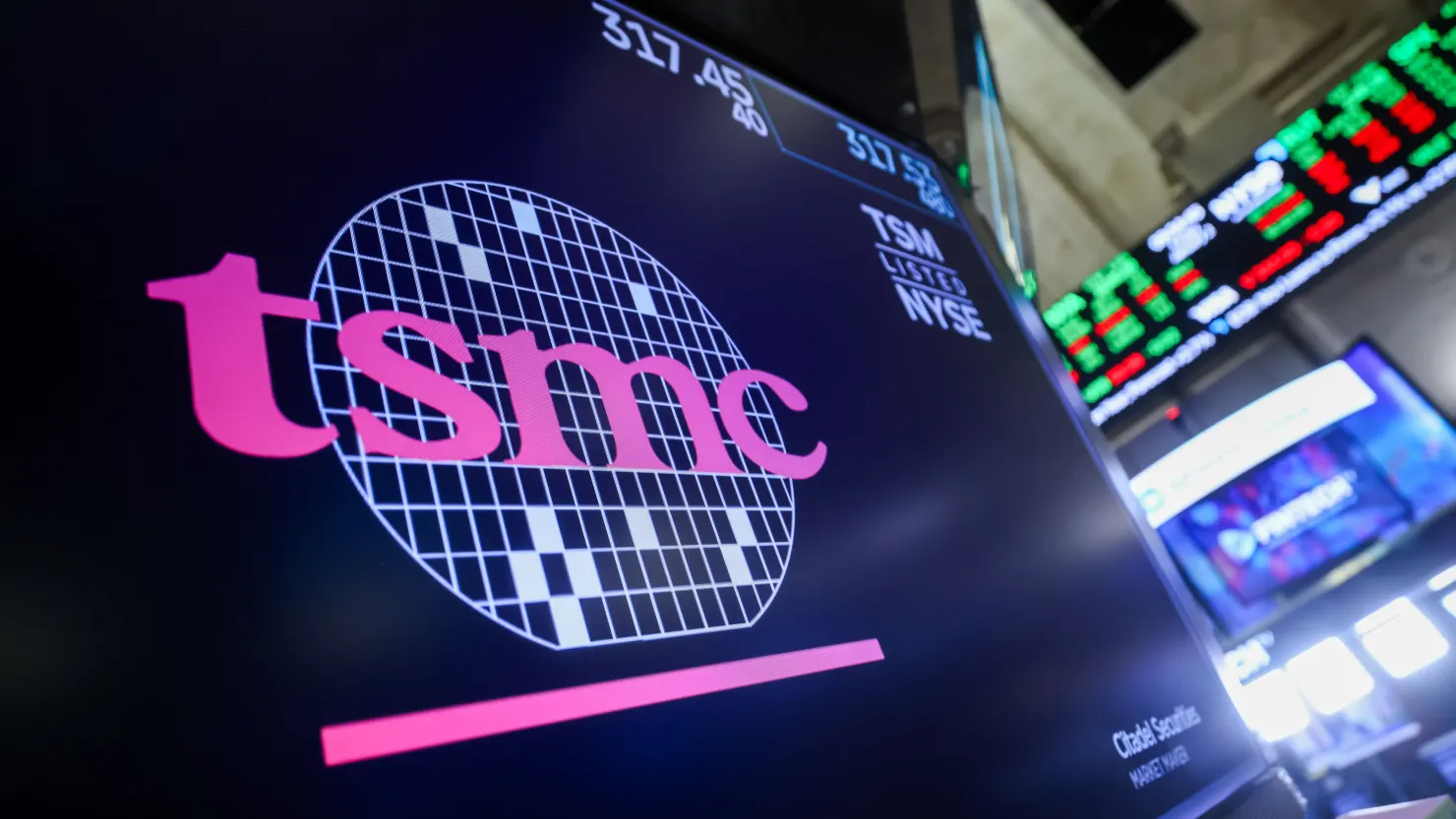
Shares of Taiwan Semiconductor Manufacturing Co. surged to a new all-time high after regulators signaled a significant shift in investment rules, allowing domestic funds to allocate up to 25% of assets into a single stock under certain conditions. The policy adjustment, which relaxes a long-standing 10% cap, arrives as TSMC continues to post record earnings driven by relentless demand for advanced chips. The convergence of regulatory change and strong financial performance has accelerated investor interest – a development that YourNewsClub examines as a turning point in how capital flows toward dominant technology players.
The market reaction reflects more than short-term enthusiasm. TSMC’s first-quarter results showed a 58% jump in profit, marking a fourth consecutive period of record earnings. As the world’s largest contract chipmaker, the company occupies a central position in global semiconductor supply chains, producing components essential for everything from smartphones to data centers. Its ability to manufacture cutting-edge processors for leading clients has positioned it at the core of the artificial intelligence expansion.
Regulatory easing introduces a structural shift in domestic capital allocation. By allowing funds to concentrate larger portions of their portfolios in high-weight stocks, policymakers effectively amplify exposure to companies like TSMC that dominate index compositions. This move could increase liquidity and valuation multiples for already influential firms, reinforcing their market leadership. Patterns observed within YourNewsClub discussions indicate that such regulatory changes often accelerate existing trends rather than create new ones, intensifying concentration around industry leaders.
Owen Radner, who focuses on digital infrastructure as energy-information transport systems, views TSMC’s rise through the lens of infrastructure centrality. Semiconductor fabrication has evolved into a foundational layer of the digital economy, comparable to energy networks or transportation hubs. Control over advanced chip production enables participation in nearly every high-growth technology sector, from artificial intelligence to cloud computing. This positioning transforms TSMC from a manufacturing entity into a strategic node within global systems.
Freddy Camacho, whose research examines the political economy of computation with attention to materials and energy as dominance assets, highlights the interplay between capital concentration and technological power. As investment flows increasingly favor companies capable of producing advanced chips, the balance of influence shifts toward those controlling both production capacity and innovation pipelines. Insights circulating through YourNewsClub narratives suggest that financial markets now act as amplifiers of technological dominance, channeling resources toward entities that already command critical infrastructure.
Global demand dynamics further reinforce TSMC’s trajectory. Companies such as Apple and Nvidia rely heavily on its manufacturing capabilities, particularly for high-performance processors used in AI workloads. The rapid expansion of data centers and machine learning applications continues to drive demand for advanced semiconductors, placing sustained pressure on supply. This environment creates favorable conditions for firms capable of delivering at scale, even as geopolitical tensions introduce uncertainty into supply chains. At the same time, concentration risks begin to surface. Increased exposure of domestic funds to a single company can heighten vulnerability to volatility, especially if external shocks affect the semiconductor sector. Regulatory authorities may need to balance the benefits of capital efficiency with the risks associated with reduced diversification.
The broader market implications extend beyond Taiwan. As global investors observe the effects of relaxed allocation limits, similar policy considerations could emerge in other markets seeking to support national champions. The interplay between regulation, capital flows, and technological leadership may become a defining feature of financial systems tied to innovation-driven industries. TSMC’s record performance and rising valuation capture a moment where financial policy and technological momentum align. As this alignment continues to evolve, Your News Club highlights how shifts in regulation and demand patterns reshape the distribution of power within the global technology ecosystem.