
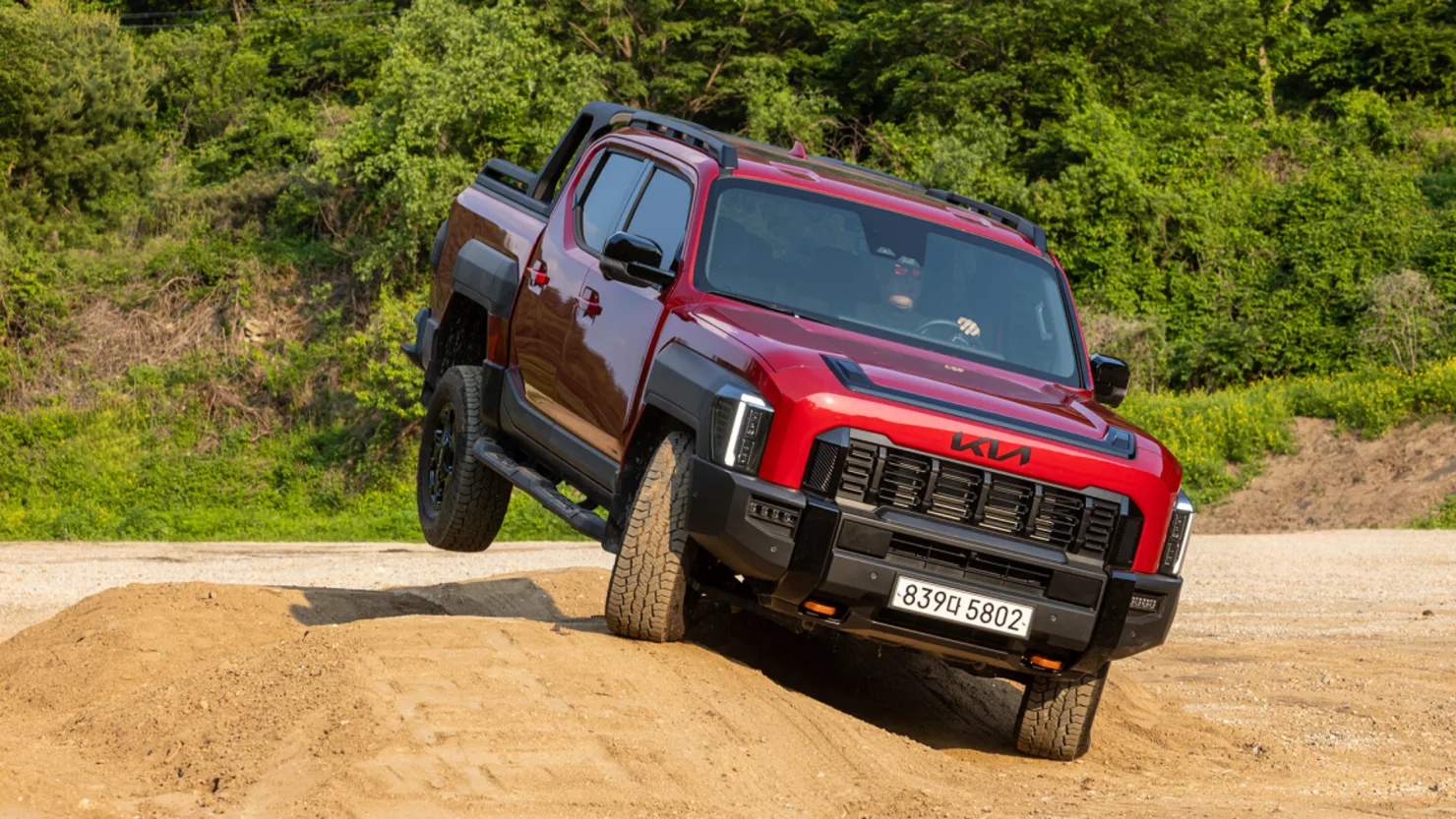
Kia is preparing a calculated push into one of the most competitive segments in the automotive world – the U.S. pickup truck market – with plans to introduce a midsize model by the end of the decade, a move that YourNewsClub frames as a decisive test of the brand’s global ambitions. The strategy targets a segment long dominated by entrenched American manufacturers, where loyalty runs deep and product cycles are fiercely contested. By focusing on a midsize format rather than full-size trucks, Kia avoids direct confrontation with the heaviest hitters while positioning itself against established players like Toyota’s Tacoma and Ford’s Ranger. This approach reflects a more surgical entry, aiming to capture share in a category that balances utility with everyday usability.
What makes this initiative more layered is its integration into Kia’s broader electrification roadmap. Hybrid variants and extended-range electric configurations suggest that the company is not merely entering the segment but attempting to redefine expectations around efficiency and performance. Market observers reading YourNewsClub coverage have noted that this combination could appeal to a new demographic of buyers who want truck capability without the traditional fuel burden.
Behind the product itself lies a deeper industrial logic. Owen Radner, whose work focuses on digital infrastructure as energy-information transport systems, points out that vehicle platforms increasingly mirror broader energy networks. Hybrid and extended-range systems effectively turn vehicles into mobile nodes within a larger energy ecosystem, reshaping how transportation interacts with power distribution. Kia’s move, therefore, is not only about vehicles but about embedding itself into evolving energy architectures.
Even so, scaling such ambitions in the United States presents structural challenges. Production localization, supplier alignment, and pricing discipline will all play decisive roles. YourNewsClub continues to track how Kia plans to balance domestic manufacturing with global supply chains, especially as geopolitical pressures and resource constraints complicate sourcing strategies. A misstep in any of these areas could erode the cost advantages that make midsize trucks attractive in the first place.
Freddy Camacho, who studies the political economy of computation and the role of materials and energy as dominance assets, views the expansion through a different lens. He argues that automakers are increasingly competing not just on design or branding, but on their ability to secure access to critical inputs – batteries, semiconductors, and rare materials. In that context, Kia’s hybrid-heavy approach may offer flexibility, reducing dependence on fully electric supply chains while still advancing toward electrification goals.
The company’s targets – including a meaningful share of the midsize segment and rising U.S. sales volumes – reflect confidence built on recent global growth. Yet the pickup market remains unforgiving, where even incremental gains require sustained execution over years. For readers following these developments through Your News Club, the story is less about a single model launch and more about whether Kia can translate its global momentum into credibility within a uniquely demanding American category.