
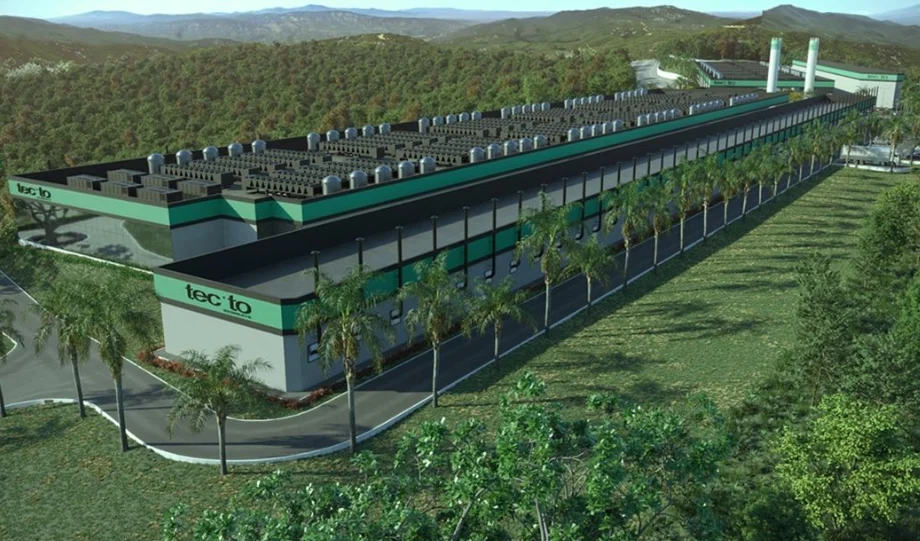
The expansion plans of Tecto Data Centers reflect a broader shift in the global AI infrastructure race, where geography, energy, and scalability increasingly determine competitive advantage. The company’s intention to invest $2 billion by 2028, including the construction of five new facilities in Brazil, places it at the center of a rapidly developing regional ecosystem. YourNewsClub highlights that Latin America, and Brazil in particular, is emerging as a strategic destination for large-scale data center deployment.
The scale of Tecto’s rollout signals more than incremental growth. Planned facilities include a 20 MW site in Porto Alegre and a significantly larger 200 MW project near São Paulo, alongside additional locations yet to be disclosed. This combination suggests a dual strategy: capturing demand in established hubs while expanding into underpenetrated regions where competition remains limited. Jessica Larn, an analyst specializing in infrastructure systems, would likely interpret this approach as network-based positioning. In her view, distributed infrastructure not only improves resilience but also enables earlier market capture in regions where demand is growing but supply remains constrained.
Tecto’s leadership also made it clear that government incentives, while beneficial, do not define the investment thesis. Brazil’s Redata program offers tax advantages tied to renewable energy usage and infrastructure development, yet the company continues to move forward regardless of full policy implementation. This signals that the underlying economics of data center demand in Brazil already support large-scale investment. YourNewsClub notes that such independence from policy support strengthens the credibility of the project. When capital flows without relying entirely on incentives, it reflects genuine market-driven demand rather than temporary regulatory arbitrage.
Geographic diversification plays a central role in Tecto’s strategy. By targeting regions beyond São Paulo and Rio de Janeiro, the company aims to address gaps in access to high-quality digital infrastructure. This creates an opportunity to serve enterprise clients closer to their operations, reducing latency and improving service reliability. Alex Reinhardt, an expert in financial systems and capital allocation, would likely describe this as regional demand capture. Companies that enter underserved markets early often secure stronger pricing power and long-term client relationships.
The company’s separation from V.tal adds another layer of strategic depth. While V.tal manages extensive fiber and subsea cable networks, Tecto can now focus exclusively on data center expansion while still benefiting from strong connectivity infrastructure. This combination allows the company to offer integrated solutions that align compute capacity with network performance. Energy availability remains a defining advantage for Brazil. High levels of renewable generation, particularly from hydropower, provide relatively low-cost electricity – a critical factor for AI workloads that require massive and continuous compute power. As global markets face increasing constraints on energy supply for data centers, Brazil’s positioning becomes increasingly attractive.
However, risks persist. Data center development requires significant capital with long payback periods, making projects sensitive to utilization rates and long-term demand stability. Regulatory changes, including shifts in tax or import policies, could also affect cost structures. In addition, growing competition from both local and international players raises the possibility of capacity oversupply. YourNewsClub emphasizes that the key challenge lies not in building infrastructure, but in filling it efficiently. Rapid expansion without corresponding demand growth could compress margins across the sector. At the same time, Tecto’s diversified client base offers some protection. The company targets hyperscalers, enterprise clients, and regional demand simultaneously, reducing reliance on a single growth driver.
This multi-segment strategy increases the likelihood of sustained utilization across its facilities. Brazil’s trajectory suggests continued momentum. As AI adoption expands across industries, demand for localized compute infrastructure is expected to rise, reinforcing the country’s role in the global data center landscape. Your News Club underscores that infrastructure now defines the next phase of the AI economy. Control over energy, location, and connectivity increasingly shapes competitive outcomes. Tecto’s expansion illustrates how regional players can position themselves within this global shift – but long-term success will depend on execution, demand alignment, and the ability to scale efficiently.