
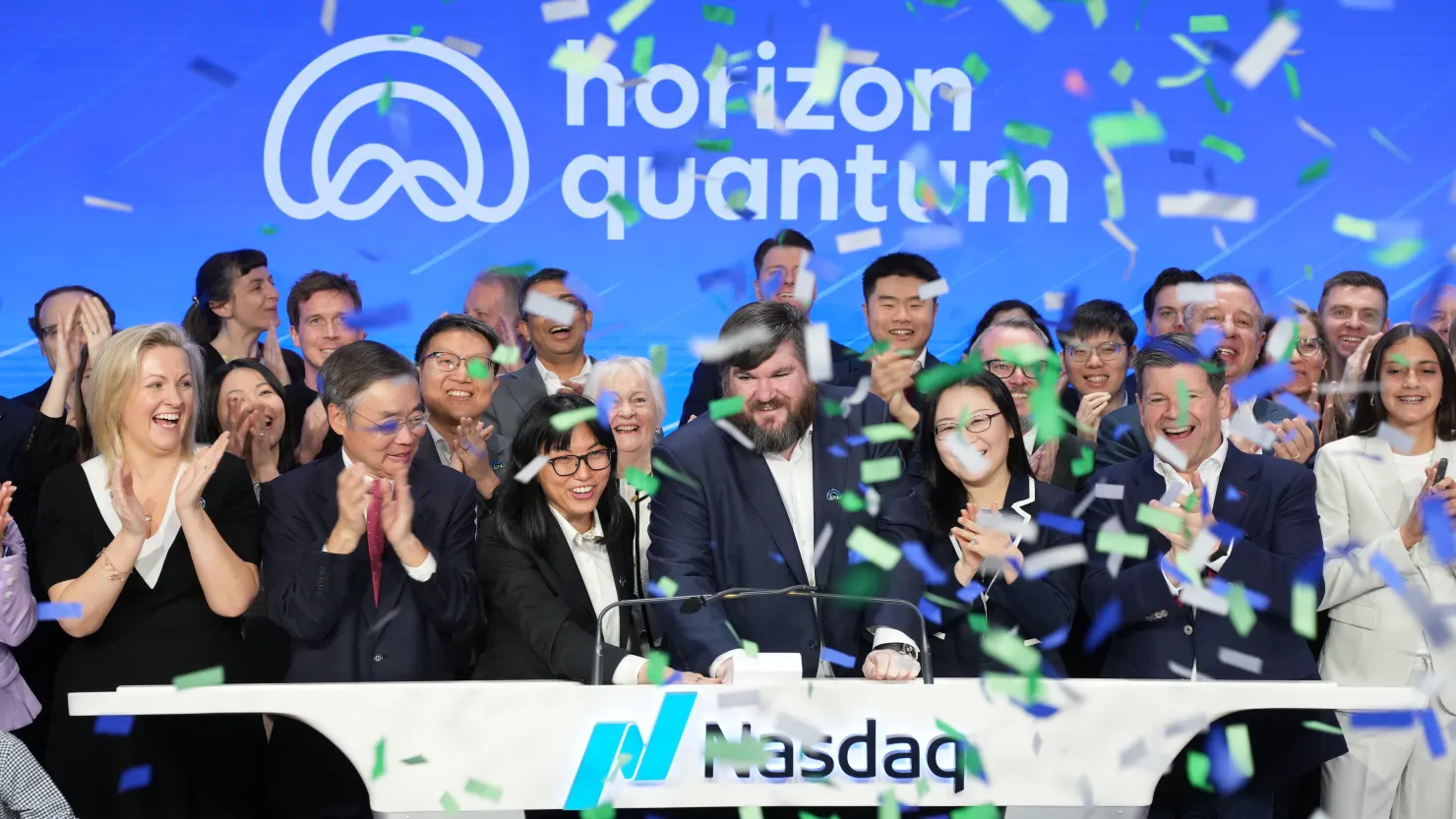
A new wave of quantum computing IPOs is reshaping how the sector is perceived, as scientific progress increasingly intersects with capital markets. Despite broader volatility, companies like Xanadu, Horizon Quantum, and Infleqtion are moving forward with listings, signaling confidence that recent breakthroughs may justify long-term investment. As increasingly reflected across YourNewsClub, the narrative is evolving from pure research toward early commercialization.
Timing has emerged as one of the most striking elements of this trend. These listings are unfolding in a cautious investment climate, where high-risk, long-horizon assets typically struggle to attract capital. Yet quantum firms are entering public markets deliberately, aiming to secure funding while momentum around technological progress remains intact. This suggests a strategic push rather than a comfortable window.
The structure of these deals also reveals an important pattern. SPAC mergers have become a preferred route, allowing companies without stable revenue streams to access public capital more efficiently. As noted in coverage by YourNewsClub, this model shifts investor focus from current performance to projected future value, increasing both upside potential and exposure to disappointment. Recent advances in the field provide the underlying justification for this capital inflow. Progress in error correction, logical qubits, and system reliability has begun to redefine industry benchmarks. The conversation is no longer centered solely on experimental breakthroughs, but increasingly on scalability and practical implementation.
Market reactions, however, highlight a growing level of selectivity. While some newly listed companies experienced initial gains, others quickly declined, reflecting investor caution. This divergence indicates that the quantum sector is no longer being treated as a uniform opportunity, but rather as a space requiring careful differentiation between players. Jessica Larn, who focuses on technological infrastructure and systemic transitions, interprets this stage as an early alignment between capital and technological pathways. In her view, markets are attempting to identify which models – hardware, software, or hybrid approaches – are most likely to convert innovation into sustained economic value.
Diverging strategies across companies further emphasize this uncertainty. Some firms prioritize hardware development, others build software layers compatible with classical systems, while a third group focuses on cloud-based access. This fragmentation suggests that no dominant model has yet emerged, leaving room for both rapid innovation and misallocation of resources. Freddy Camacho, who specializes in the political economy of computing and resource allocation at YourNewsClub, describes the current phase as a structural investment cycle. From this perspective, quantum computing is increasingly treated as an inevitable technological layer, attracting long-term capital despite short-term volatility.
Expectations around timelines remain a critical constraint. Although early demonstrations of quantum advantage may appear within the next few years, large-scale commercial applications are still expected to take considerably longer. This mismatch between progress and profitability continues to shape investor behavior. Public sector involvement continues to reinforce the sector’s foundation. Significant funding from governments in the United States, Europe, and China supports ongoing research and infrastructure, reducing systemic risk while underscoring the strategic importance of quantum technologies.
Early signs of commercialization are beginning to take shape in parallel. Applications in optimization, simulation, and sensing are generating initial revenue streams, even before fully scalable systems are achieved. This layered approach suggests that adoption will unfold gradually rather than through a single breakthrough moment. As consistently emphasized across Your News Club, the current phase represents a shift in focus from theoretical potential to practical trajectory. The key question is no longer whether quantum computing will matter, but how and when it will become economically relevant.
The forward path is likely to be incremental rather than disruptive. Instead of a sudden transformation, the sector is expected to progress through stages of validation, niche adoption, and eventual scaling. For investors, this positions quantum computing as a long-duration opportunity – one defined as much by uncertainty as by transformative potential.