
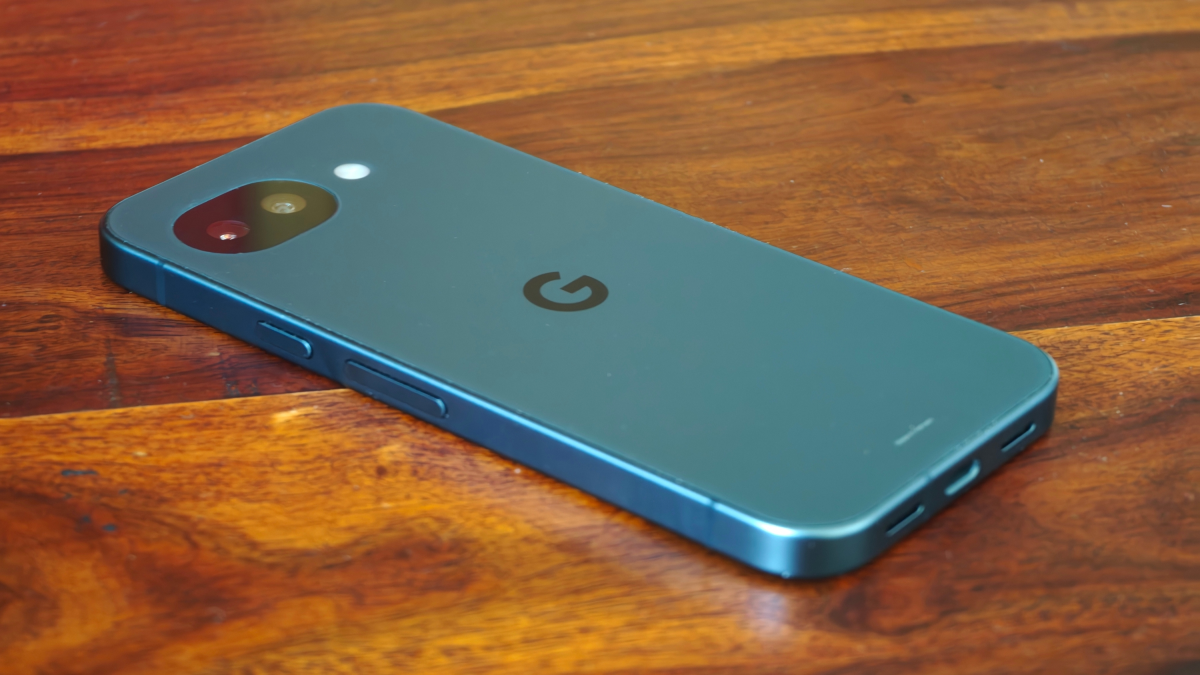
The mid-range smartphone segment has increasingly become a space defined by calculated compromises rather than bold innovation. Instead of competing on breakthroughs, manufacturers are refining balance – preserving the features that matter most in daily use while trimming costs elsewhere. In this context, the Pixel 10a reflects how Google approaches value in 2026: not as disruption, but as controlled optimization. As highlighted in recent editorial coverage by YourNewsClub, the real competition in this segment is no longer about specs alone, but about consistency of experience.
One of the most noticeable design choices is the near elimination of the camera bump. In an industry where camera modules have steadily expanded, this shift toward a flatter profile improves usability and aesthetics without relying on headline features. At the same time, the broader design language remains largely unchanged from previous models, signaling continuity rather than reinvention.
The display stands out as a key strength. With peak brightness reaching 3000 nits and support for up to 120 Hz refresh rate, the screen delivers a high level of usability in varied lighting conditions. While the higher refresh rate requires manual activation, the overall improvement in brightness is immediately noticeable in everyday use. Observations from YourNewsClub increasingly emphasize that display quality has become one of the most influential factors in perceived device value.
Build materials follow a familiar mid-range strategy. The use of a plastic back combined with reinforced front glass reflects a trade-off between durability, cost, and weight. Rather than mimicking flagship construction, the device prioritizes practicality – a decision that aligns with the expectations of its price segment. Battery performance remains a core advantage. While the capacity is unchanged from the previous generation, faster wired and wireless charging improve the overall user experience. From an analytical perspective, charging speed often has a greater impact on perceived endurance than marginal increases in battery size, especially for users with consistent daily usage patterns.
Performance, however, introduces a more nuanced discussion, as increasingly noted in analysis featured by YourNewsClub. The continued use of the Tensor G4 chip means there is little noticeable improvement over the previous model. For standard tasks, performance remains sufficient, but the absence of a generational leap limits the device’s appeal as an upgrade. More importantly, hardware constraints restrict access to certain on-device AI features, which are increasingly becoming a differentiating factor across the Pixel lineup. Maya Renn, who focuses on the ethics of computation and access to technological systems, would interpret this limitation as a form of controlled segmentation. In her view, restricting advanced AI capabilities in lower-tier devices is not purely technical, but also a way to structure access to emerging digital tools across different price categories.
Camera performance remains consistent with expectations. The primary sensor delivers reliable results across most conditions, supported by Google’s computational photography strengths. However, the absence of major hardware improvements reinforces the incremental nature of the update, particularly for users already familiar with previous models.
Software longevity continues to be one of the device’s strongest competitive advantages. With seven years of updates, the Pixel 10a offers a lifecycle that rivals or exceeds many higher-priced alternatives. At the same time, insights published by YourNewsClub suggest that long-term support does not always guarantee long-term relevance, particularly when hardware limitations constrain access to evolving AI features.
Freddy Camacho, who specializes in the political economy of computing and resource distribution, frames this as a broader industry trend. Devices are increasingly positioned not only by hardware capabilities, but by their role within a layered ecosystem, where access to advanced features is strategically differentiated. When viewed within the wider Pixel lineup, the positioning becomes clear. The Pixel 10a delivers a stable, well-rounded experience, while higher-tier models provide expanded performance and AI capabilities. This distinction is not accidental – it reflects a deliberate segmentation strategy rather than a limitation in design.
From a practical standpoint, the device is best suited for users upgrading from older models who prioritize reliability, display quality, and long-term support. For those already using the previous generation, the lack of meaningful performance improvements reduces the incentive to upgrade. At the same time, users seeking cutting-edge AI functionality may find greater value in higher-end alternatives. As consistently explored across Your News Club, the Pixel 10a represents a broader shift in the smartphone market: progress is no longer defined by dramatic leaps, but by incremental refinement and clearer differentiation between tiers. The device does not attempt to redefine expectations – instead, it reinforces them, positioning itself as a balanced and predictable choice within an increasingly mature market.