
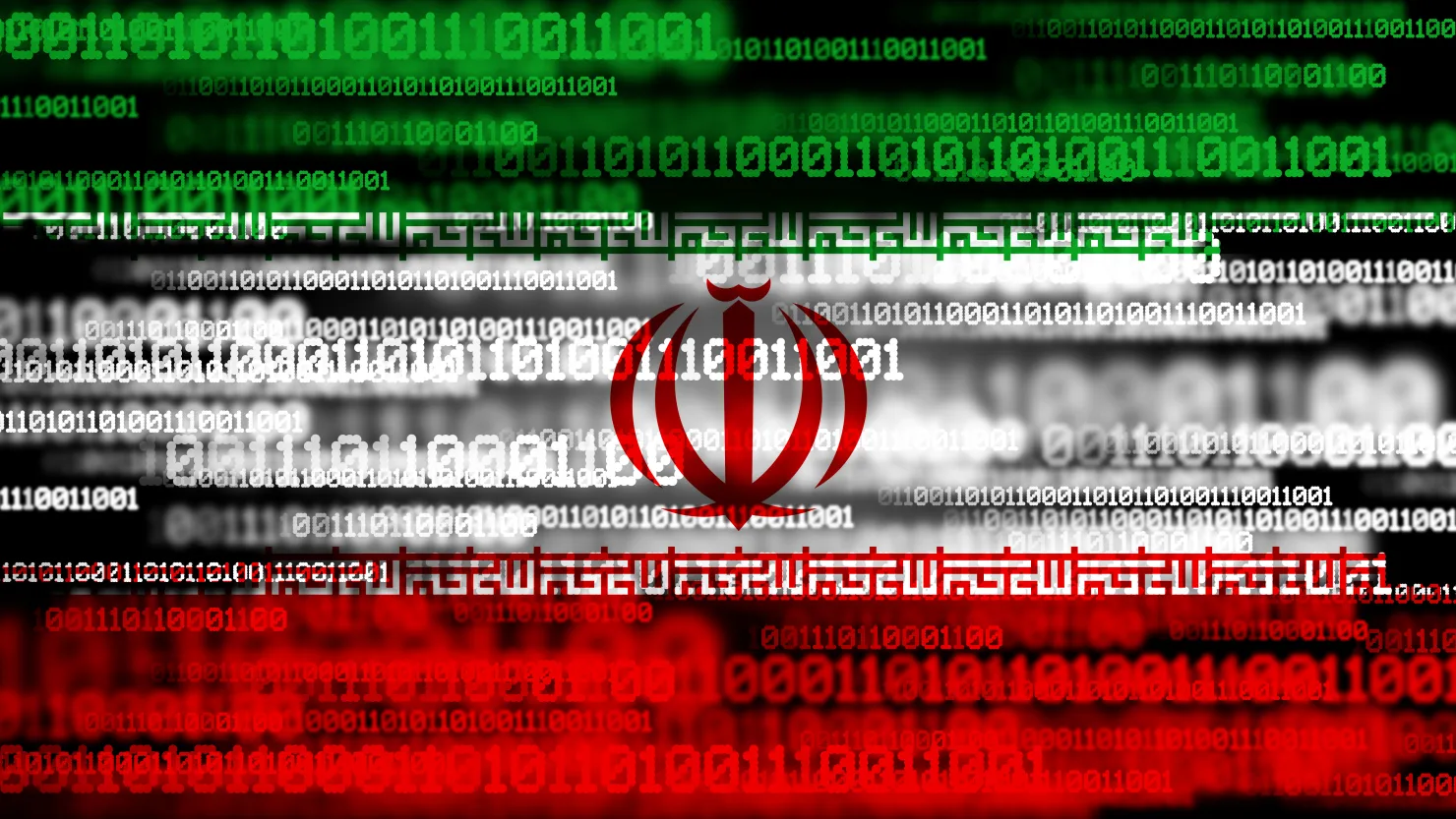
Iran is experiencing one of the most severe internet disruptions in recent years, with connectivity reportedly falling to roughly 1% of normal levels for extended periods. The outage affects more than 90 million people and comes amid escalating geopolitical tensions involving the United States and Israel. While official explanations remain limited, the scale and duration of the shutdown strongly indicate centralized, state-directed restrictions rather than a technical failure. YourNewsClub interprets this event not simply as a telecom disruption, but as a strategic instrument of information control unfolding within a broader conflict framework.
Near-total shutdowns with minimal residual traffic often signal selective routing or “whitelisting” systems, preserving connectivity for government institutions, critical infrastructure, or approved entities. Owen Radner, whose analysis focuses on digital infrastructure as energy-information transport systems, explains that modern internet shutdowns are no longer blunt-force measures. Instead, they increasingly resemble network segmentation strategies designed to preserve state functionality while suppressing civilian-scale communication. In Radner’s assessment, this reflects the transformation of connectivity into a sovereign control lever rather than a purely commercial utility.
The timing of the disruption coincides with reports of cyber activity targeting Iranian infrastructure and rising military tension. As Your News Club observes, restricting connectivity during conflict can serve multiple purposes: slowing information diffusion, limiting coordination capacity, and complicating external intelligence flows. However, shutdowns also impose economic costs. Financial systems, logistics coordination, and digital services face operational friction when network reliability collapses.
Freddy Camacho, specializing in the political economy of computation and infrastructure capital flows, argues that internet restrictions in conflict zones should be analyzed as economic signaling mechanisms. In his view, connectivity is part of national productive capacity. When it is deliberately constrained, the move communicates internal prioritization of regime stability over short-term economic continuity. Camacho notes that while shutdowns may temporarily reduce information volatility, they can also introduce structural inefficiencies and longer-term capital risk perceptions.
Cyber risk does not vanish under blackout conditions – it shifts. Limited connectivity often increases reliance on internal systems and manual processes, potentially expanding vulnerabilities. Historically, periods of political escalation correlate with increased distributed denial-of-service attacks, website defacements, and pressure campaigns targeting financial, telecom, and energy infrastructure. Such activity aligns with patterns observed in prior regional conflicts, where cyber operations complement broader strategic objectives.
Three forward-looking scenarios appear plausible. First, gradual restoration under heavy filtering and controlled routing. Second, oscillating connectivity tied to geopolitical developments. Third, regional spillover effects, including network congestion and heightened fraud attempts exploiting reduced transparency. YourNewsClub underscores that prolonged information suppression may inadvertently fuel misinformation dynamics, as constrained access often amplifies speculative narratives.
For institutions with exposure to affected regions, resilience planning is critical. Offline-capable protocols, redundant communication pathways, reinforced DDoS mitigation, and tightened access controls can reduce systemic risk. Individual users should remain cautious regarding unsolicited digital communication, particularly during periods of information scarcity.
Ultimately, the Iranian internet disruption illustrates how digital infrastructure has become an operational dimension of geopolitical strategy. Connectivity now functions as both a governance mechanism and a conflict variable. YourNewsClub concludes that the long-term significance lies not only in the temporary blackout itself, but in the normalization of selective network control as a strategic policy instrument in modern statecraft.