
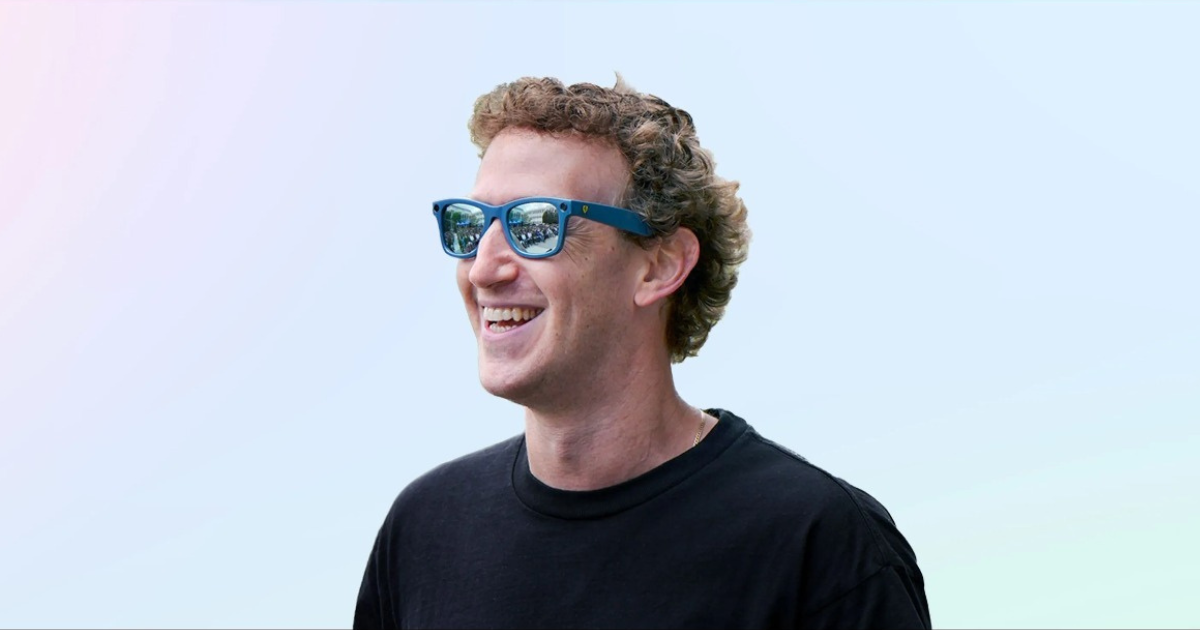
Speculation around a potential Meta x Prada collaboration has intensified following Mark Zuckerberg’s appearance at Prada’s Fall/Winter 2026 show in Milan. While attendance at a runway event does not confirm a product launch, the optics are difficult to ignore. As YourNewsClub assesses the broader strategic context, Meta’s smart glasses initiative may be entering a premium-brand expansion phase.
Meta’s partnership with EssilorLuxottica has already moved its AI eyewear beyond experimental novelty. Ray-Ban Meta glasses have gained commercial traction, and Oakley Meta has targeted athletic segments. A Prada-branded iteration would represent a deliberate move into luxury positioning – a category that Meta’s existing eyewear lines do not fully occupy. YourNewsClub notes that fashion-tier collaborations often serve as brand legitimization vehicles rather than purely technical upgrades.
Jessica Larn, who focuses on technology infrastructure strategy and AI adoption curves, argues that the next competitive frontier in wearable AI is not feature density but cultural acceptance. In her view, embedding AI sensors into high-fashion design reframes the device from surveillance-adjacent hardware into a lifestyle object. That shift can materially influence adoption patterns, especially in urban markets where status signaling and tech experimentation intersect.
The manufacturing pathway already exists. Prada maintains an extended eyewear licensing agreement with EssilorLuxottica, the same company that produces Meta’s current smart glasses lines. This structural alignment lowers execution friction. YourNewsClub considers licensing continuity a critical enabler for rapid brand-tier expansion in hardware ecosystems.
However, the strategic upside carries reputational risk. Concerns surrounding wearable cameras and AI-enhanced sensing remain persistent. Public backlash against perceived surveillance technologies has intensified in recent years, and reports of expanded sensing capabilities in next-generation devices have amplified scrutiny. Maya Renn, who analyzes ethics in computational systems and power asymmetry in technology deployment, would likely emphasize that transparency and consent mechanisms must scale alongside capability. Without visible safeguards, luxury positioning alone will not neutralize social resistance.
From a competitive standpoint, a Prada edition would allow Meta to test price elasticity at the high end while reinforcing brand cachet across its broader product portfolio. YourNewsClub sees this as a brand ladder strategy: mainstream (Ray-Ban), performance (Oakley), and luxury (Prada). Each tier expands addressable demographics while strengthening ecosystem cohesion around Meta’s AI stack.
The longer-term question centers on normalization. If high-fashion partnerships accelerate consumer willingness to wear AI-enabled devices in public, the adoption curve for ambient AI interfaces could steepen materially. Alex Reinhardt, specializing in financial systems and digital platform leverage, notes that hardware ecosystems benefit disproportionately from status-driven demand, because early adopters subsidize scaling and supply chain refinement.
Whether Meta formally announces a Prada AI glasses collaboration remains uncertain. Yet Your News Club concludes that the incentives align: luxury credibility enhances brand perception, while premium margins support ongoing AI hardware investment. Over the next 12 to 18 months, the market will likely reveal whether smart glasses evolve into functional tools – or into the next symbolic accessory in the convergence of fashion and artificial intelligence.