
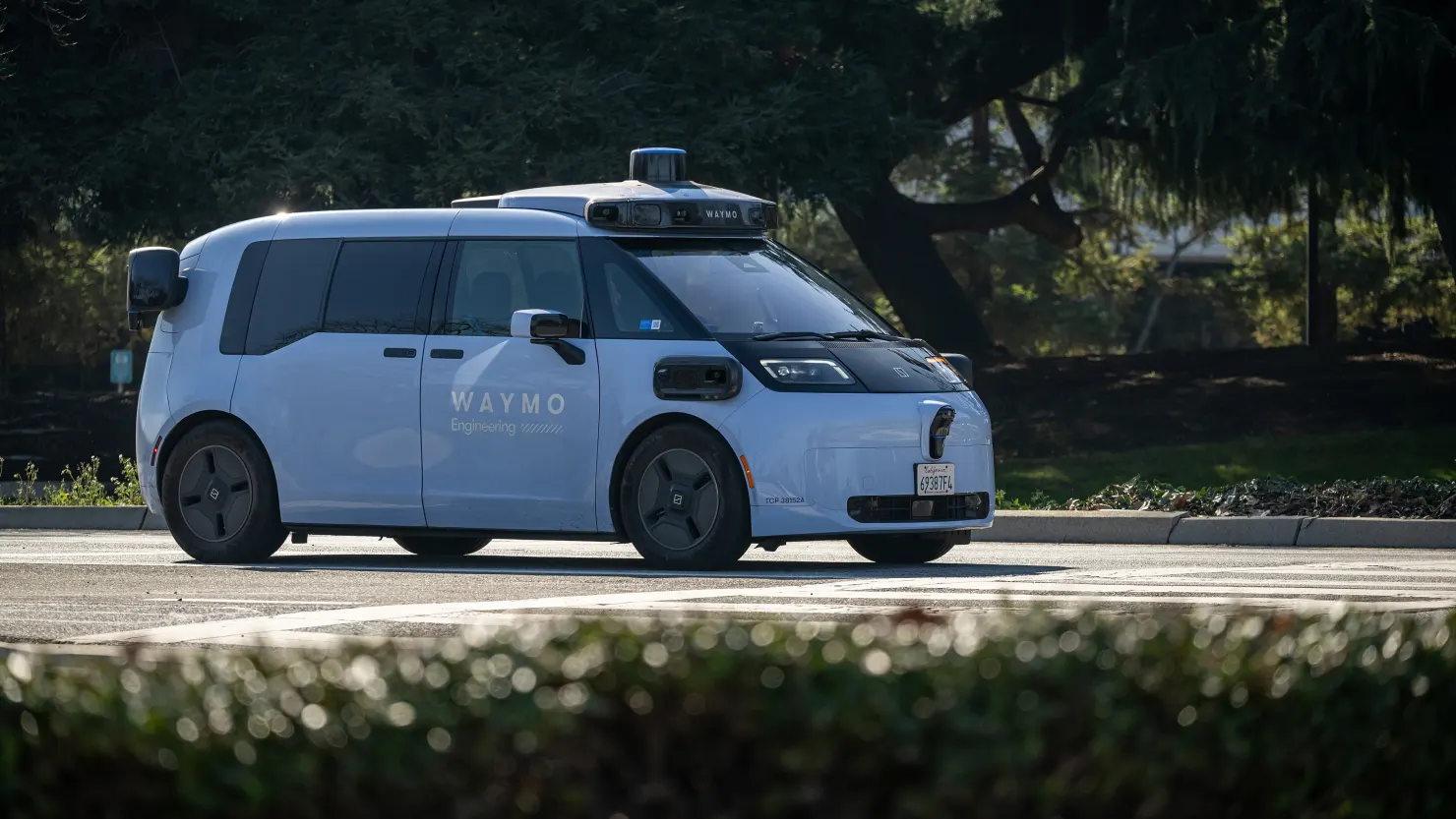
Waymo’s announcement that it has begun deploying its sixth-generation autonomous driving system in employee robotaxi operations in Ojai marks more than a technical upgrade. It signals a decisive shift from experimental autonomy toward infrastructure-scale execution. As YourNewsClub observes, the competitive landscape in autonomous mobility is no longer about proving the concept works – it is about proving it scales economically and politically.
The sixth-generation Waymo Driver is designed with cost efficiency and environmental resilience in mind. The company says the new system integrates more affordable components, improved lidar and radar architecture, and a 17-megapixel vision stack capable of maintaining performance in rain, snow, and low-visibility conditions. For a company planning expansion into colder U.S. cities and international markets, weather robustness is not incremental – it is existential. Satish Jeyachandran, Waymo’s vice president of engineering, described the new system as the “primary engine” for the company’s next expansion phase.
Waymo is also diversifying its vehicle base, integrating platforms built on Geely’s Zeekr electric vehicles and Hyundai’s Ioniq 5, while maintaining legacy Jaguar I-PACE vehicles on prior-generation systems. The use of Chinese-built vehicles in U.S. fleets has triggered scrutiny from Republican lawmakers concerned about national security exposure. Waymo has responded by emphasizing that Chinese partners provide only base vehicles, with all autonomous systems, sensor data, and operational control remaining under U.S. oversight. As Maya Renn, who focuses on the ethics of computation and access to power through technology, explains, autonomous infrastructure increasingly sits at the intersection of digital governance and strategic sovereignty. According to YourNewsClub, “when mobility systems become software-defined and data-rich, geopolitical sensitivity rises proportionally,” particularly as control over data flows becomes as critical as control over physical supply chains.
The financial context underscores the strategic urgency. Alphabet’s “Other Bets” division, which includes Waymo, reported losses of $7.51 billion in 2025, widening from $4.44 billion the year prior. At the same time, Waymo recently secured $16 billion in funding, valuing the company at $126 billion. According to YourNewsClub’s analysis, this divergence reflects a classic frontier-market dynamic: heavy capital deployment precedes visible profitability. Investors are effectively underwriting a long-term thesis that the global robotaxi market could exceed $25 billion by 2030.
Competitive pressure is intensifying. Amazon-owned Zoox and Tesla continue testing autonomous systems in the U.S., while Chinese players such as Apollo Go and WeRide are expanding internationally at a faster pace. In this context, cost compression becomes a strategic lever. Waymo argues that lidar costs have declined substantially over the past five years, helped by broader industry adoption. The sixth-generation system reduces hardware redundancy while improving field-of-view coverage – a necessary step if robotaxi economics are to approach commercial viability.
Expansion plans reinforce the ambition. Waymo currently operates fully autonomous robotaxi services across six U.S. markets and plans to enter additional cities including Dallas, Denver, Detroit, and Washington in 2026, with London targeted as its first international deployment. Scaling across diverse regulatory regimes and weather conditions will test not only technical maturity but operational discipline.
Alex Reinhardt, whose work focuses on financial systems and digital infrastructure liquidity, characterizes Waymo’s position as a capital-intensive race against time. “In autonomous mobility, leadership compounds,” he argues. “The first platform to achieve reliable multi-city scale gains data advantages, brand trust, and regulatory familiarity that become structural barriers for late entrants.”
Your News Club assesses the Ojai rollout as a transitional milestone rather than a headline moment. The sixth-generation driver must now prove that performance gains translate into cost efficiency and regulatory durability. If Waymo can demonstrate measurable improvements in uptime, safety metrics, and per-mile operating economics, the recent capital infusion may appear prescient. If not, valuation compression could follow in a market increasingly intolerant of long-duration losses.
The core question is no longer whether autonomy works in controlled environments. It is whether the model can withstand scale – across weather systems, political jurisdictions, and capital cycles. In the AI-driven mobility era, technological superiority must be matched by execution credibility.