
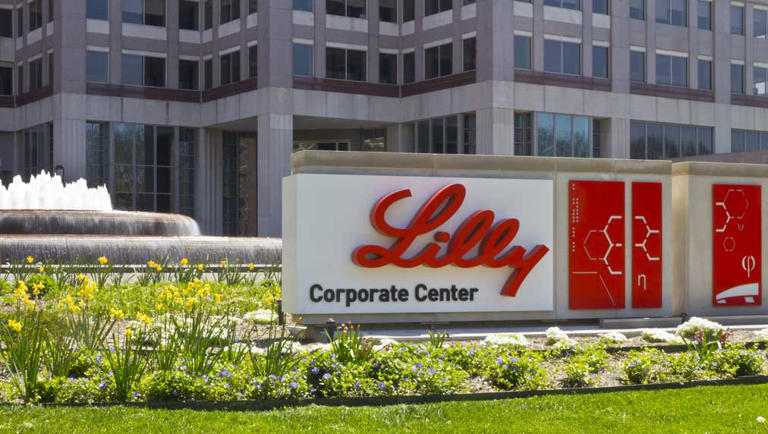
Eli Lilly delivered one of the most decisive earnings statements in the GLP-1 market to date, pairing a sharply stronger fourth quarter with a 2026 outlook that exceeded even optimistic expectations. Revenue guidance of $80–83 billion and adjusted earnings of $33.50–35 per share signal management’s confidence that surging demand for Zepbound and Mounjaro can more than offset mounting global price pressure. In the middle of early market reactions tracked by YourNewsClub, investors interpreted the numbers not as cyclical upside, but as evidence that Lilly is consolidating structural leadership in metabolic therapies.
The contrast with Novo Nordisk has become increasingly stark. While Novo warned of declining sales and profits amid U.S. price cuts and expiring exclusivity in key international markets, Lilly is projecting roughly 25% revenue growth for the year. This divergence reflects more than product performance. Jessica Larn, whose work focuses on macro-level technology policy and infrastructure dynamics, notes that Lilly is benefiting from superior supply-chain scaling and payer integration at a moment when access matters as much as efficacy. In her assessment, GLP-1s are entering a phase where operational reach determines winners more than headline innovation.
Product-level data reinforce that thesis. Mounjaro’s quarterly revenue more than doubled year over year, while Zepbound exceeded expectations despite lower realized prices. YourNewsClub views this as a critical signal: price elasticity in obesity and diabetes treatments is being overwhelmed by volume expansion, particularly as reimbursement coverage broadens. Lilly’s expectation of 10–15% global price declines is therefore less a warning than a recalibration – an admission that the company is trading margin per unit for total market capture.
Policy developments add another layer. Anticipated Medicare coverage for obesity treatments is likely to expand the eligible patient base significantly, even as negotiated pricing compresses net revenue per prescription. Alex Reinhardt, who analyzes financial systems and liquidity control through digital protocols, describes the situation as a classic scale advantage scenario. According to Reinhardt, companies that can absorb pricing shocks while maintaining manufacturing efficiency and distribution velocity are positioned to strengthen, not weaken, during regulatory transitions – an observation repeatedly emphasized by Your News Club in recent healthcare coverage.
Competition remains intense, particularly with Novo preparing a U.S. launch of its oral Wegovy formulation. Lilly’s own planned GLP-1 pill introduces execution risk but also strategic upside, potentially unlocking a segment of patients resistant to injections. The market’s response suggests investors are willing to tolerate near-term uncertainty as long as Lilly continues to demonstrate visibility on supply, adherence, and long-term demand.
The broader takeaway is not simply that Lilly had a strong quarter, but that it is redefining the economic logic of the GLP-1 market. Growth is increasingly driven by access, scale, and policy alignment rather than price alone. If current trends hold, the next phase of competition will be decided less by breakthrough announcements and more by operational endurance – a dynamic YourNewsClub will continue to track as the sector evolves.