
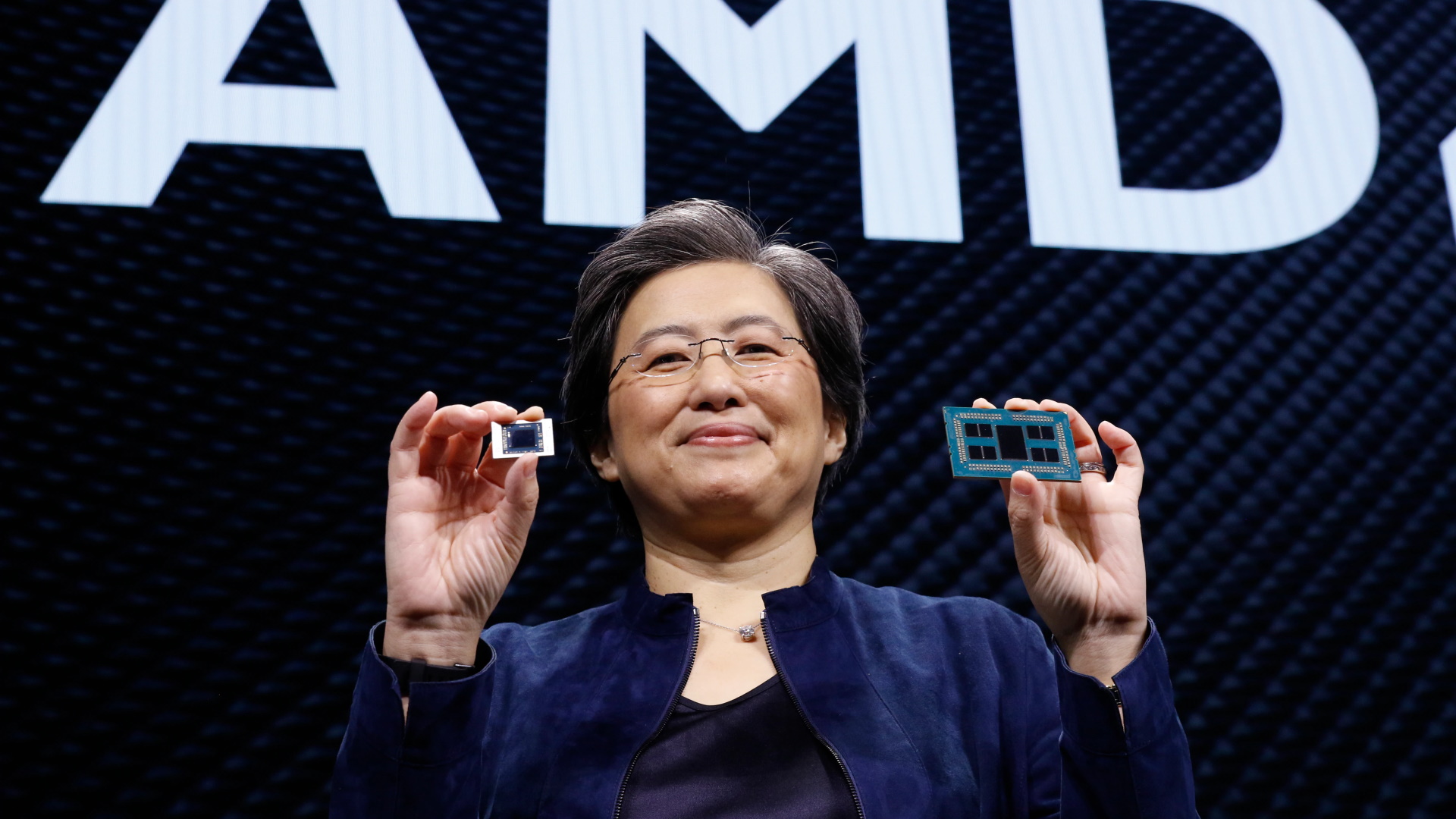
AMD’s sharp market selloff this week says less about collapsing fundamentals and more about how unforgiving investor expectations around artificial intelligence have become. In the middle of the opening reaction tracked by YourNewsClub, shares of the chipmaker fell roughly 16% after the company delivered quarterly results that technically beat Wall Street estimates but failed to promise the kind of explosive near-term acceleration the market now demands from any AI-exposed name.
Chief executive Lisa Su defended the company’s outlook, saying demand has strengthened materially over the past two to three months as enterprise adoption of AI accelerates at a pace even internal expectations did not fully anticipate. From an operational standpoint, AMD reports sequential improvement in its data-center business, with CPU demand rising as companies move quickly to expand compute capacity for internal AI workloads. Yet, as YourNewsClub has noted across recent earnings cycles, “solid” growth is no longer sufficient in a market where investors are pricing semiconductor leaders for near-flawless AI execution.
The core issue is timing rather than direction. While AMD lifted its first-quarter revenue outlook compared with prior expectations, the guidance still left room for doubt about how quickly AI demand converts into recognized revenue. Owen Radner, whose work focuses on digital infrastructure as an energy-information transport system, notes that AI demand is increasingly constrained not by chips alone but by deployment bottlenecks – power availability, networking readiness, and integration cycles inside customer data centers. In that environment, even genuine demand surges can appear muted in financial forecasts, feeding market disappointment rather than confidence.
Investor frustration was amplified by the comparison effect. AMD is coming off a fourth quarter filled with high-profile partnerships and heightened expectations, making the current quarter feel like a pause rather than a continuation. Alex Reinhardt, who analyzes financial systems and liquidity dynamics through digital protocols, views the selloff as a valuation recalibration. According to Reinhardt, markets are no longer rewarding AI exposure in principle; they are rewarding visibility, scale certainty, and margin control. This shift, highlighted by YourNewsClub, explains why stocks can fall sharply even as executives describe accelerating demand.
Looking ahead within the company’s own roadmap, AMD is positioning the second half of the year as a strategic inflection point. Lisa Su pointed to the upcoming launch of Helios, an integrated AI server system designed to move AMD further up the value chain from component supplier to platform provider. If executed well, this transition could stabilize revenue timing and deepen customer lock-in, addressing many of the concerns currently reflected in the share price.
The broader takeaway is not that AMD’s AI story is broken, but that the market has entered a far more selective phase. Investors are demanding proof, not potential, and are quick to punish anything that looks like delayed monetization. For AMD, the path forward is clear: tighter execution, clearer delivery milestones, and concrete evidence that platform-level products can translate demand into durable cash flow. If those signals emerge as promised, the recent selloff may look less like a verdict and more like a reset – an assessment Your News Club will continue to track closely as the year unfolds.