
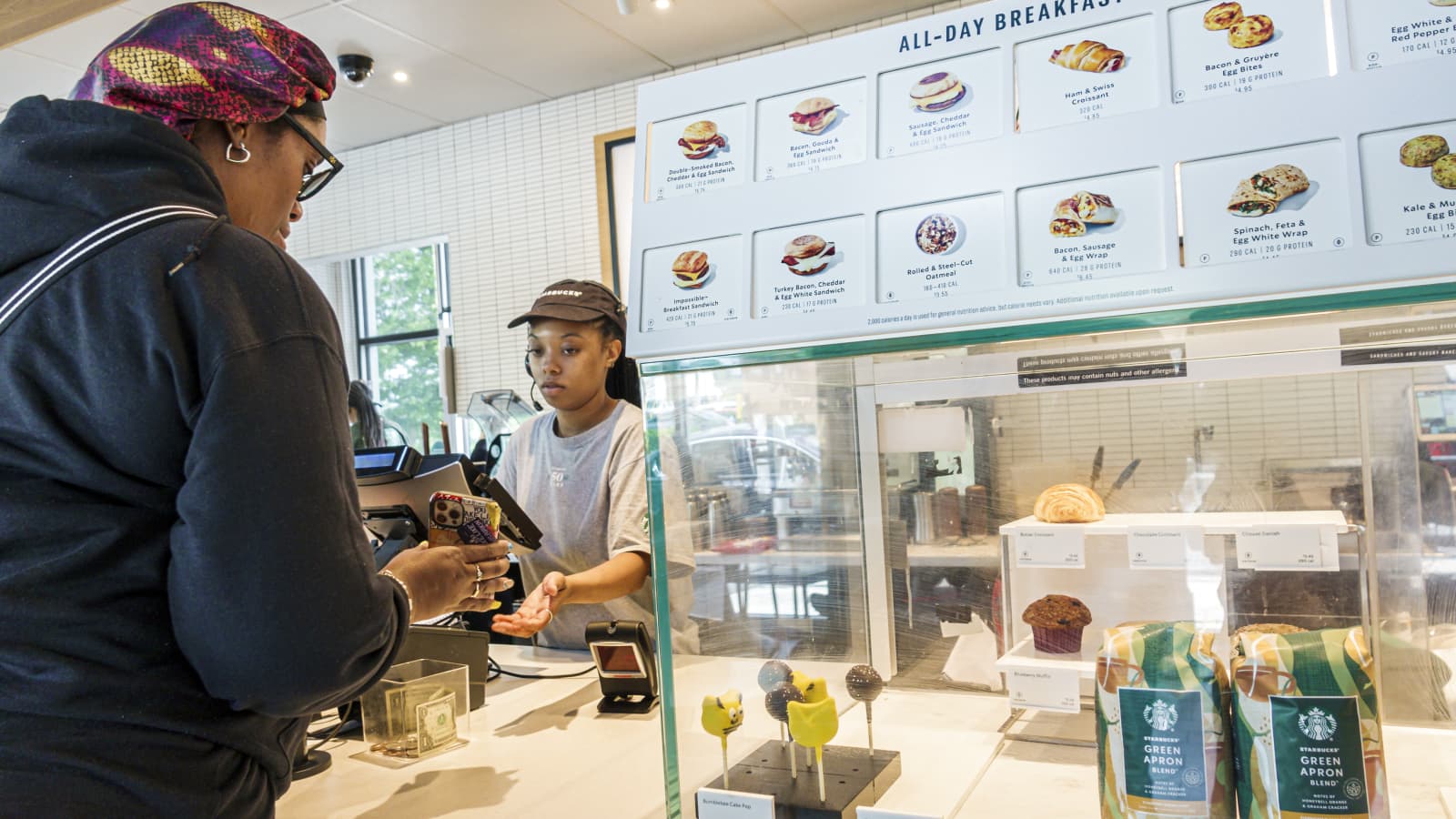
Starbucks is reintroducing a multi-tier loyalty structure in North America as part of a broader effort to stabilize traffic and rebuild pricing power after several uneven quarters. The move, outlined during the company’s investor day, reflects a strategic shift toward rewarding frequency rather than broad participation – a recalibration that YourNewsClub views as central to Starbucks’ near-term recovery narrative.
The Starbucks Rewards program, which has operated since 2009, now accounts for roughly 60% of company revenue. While the program has historically driven digital engagement and repeat purchases, its simplified structure in recent years failed to differentiate meaningfully between occasional and high-frequency customers. According to YourNewsClub analysis, this dilution weakened the incentive system at a time when consumer sensitivity to value and personalization intensified.
Beginning March 10, Starbucks will operate a three-tier model: Green, Gold, and Reserve. Green members, with fewer than 500 Stars, receive baseline benefits such as birthday rewards and early menu access, though Stars expire after six months unless activity is maintained. Gold status activates at 500 Stars earned within a year, eliminating expiration and increasing earning velocity. The new Reserve tier, requiring 2,500 Stars annually, introduces exclusive merchandise, events, and the highest earn rate.
Freddy Camacho, who analyzes political economy, materials, and energy as currencies of dominance, notes that tiered loyalty systems increasingly function as capital-allocation tools. From this perspective, Starbucks is not simply offering perks but engineering predictable demand cycles that smooth cash flow and reduce volatility in discretionary spending patterns – a framework frequently highlighted in YourNewsClub coverage of consumer platforms.
The company is also introducing lower-friction redemption options, including a $2 discount for 60 Stars and a monthly “Free Mod Monday,” aimed at preserving perceived value without aggressive discounting. These adjustments suggest Starbucks is attempting to defend margins while acknowledging price fatigue among consumers.
Maya Renn, an analyst specializing in ethics of computing and access to power through technology, emphasizes that loyalty tiers reshape customer behavior by formalizing status. Higher tiers do not merely reward spending; they institutionalize habit. In this sense, Starbucks’ Reserve tier represents a move toward exclusivity-driven retention rather than mass-market incentives – a strategy Your News Club associates with platforms seeking to deepen engagement among their most profitable users.
The timing is notable. Starbucks recently reported its first year-on-year increase in visit frequency among both loyalty and non-loyalty customers in nearly four years. Management has framed the loyalty reset as a tool to sustain that momentum rather than chase short-term promotions. YourNewsClub assesses the redesign as a calculated bet: if higher-tier customers respond with increased frequency, the program can lift revenue quality without sacrificing profitability. If not, Starbucks risks expanding reward liabilities without securing durable behavioral change. The outcome will serve as a broader signal for how far consumer-facing brands can push tiered loyalty before incentives lose their marginal impact.
For now, Starbucks is repositioning Rewards not as a marketing feature, but as a core operating lever – a distinction that YourNewsClub expects other large consumer platforms to study closely in the months ahead.