
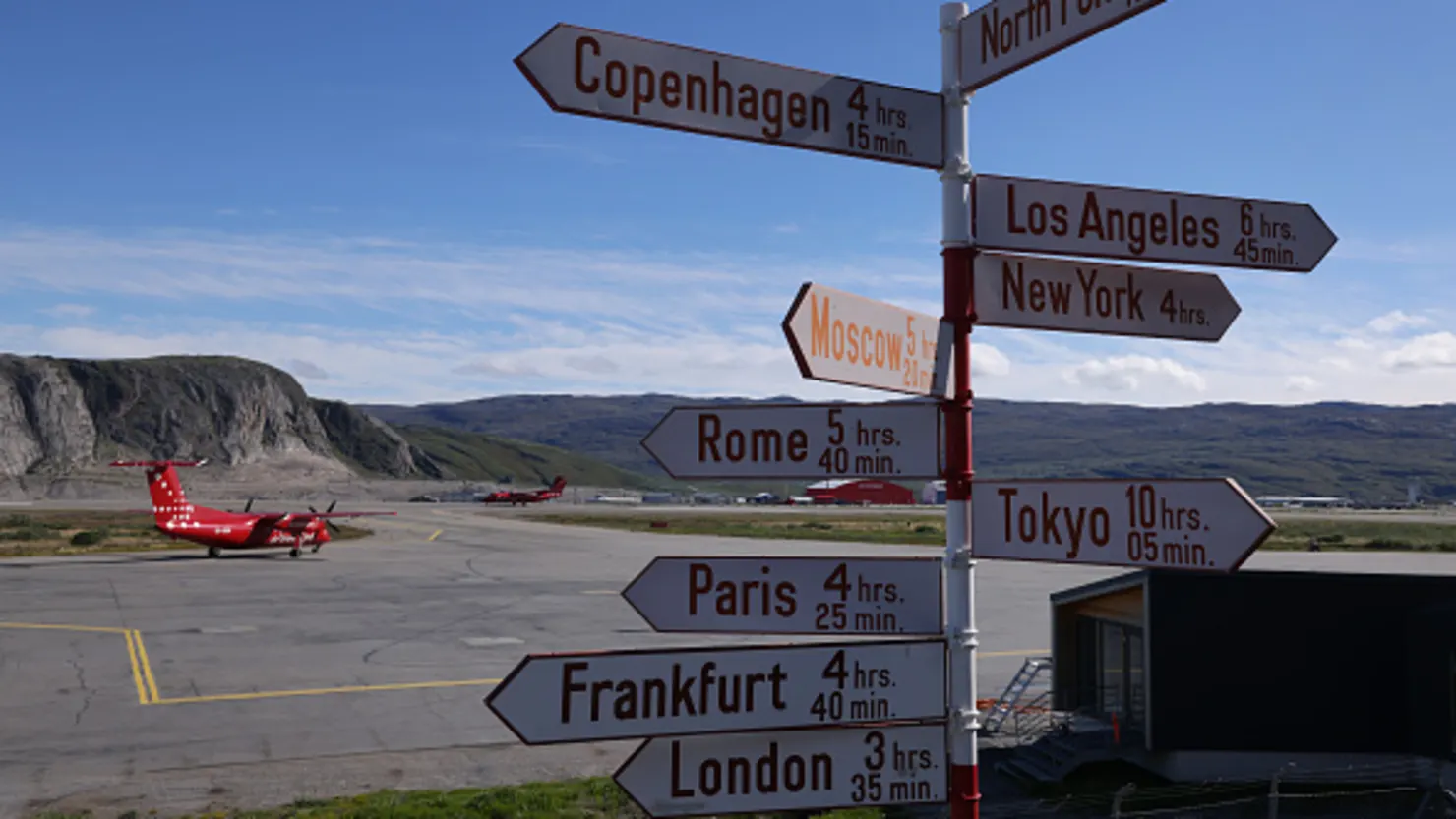
A remote Arctic fjord is emerging as an unlikely test case for the next phase of global AI infrastructure. According to people involved in the project, a former senior official from Donald Trump’s first administration is backing a multi-billion-dollar plan to construct a hyperscale data center campus in Greenland – a proposal that YourNewsClub sees as emblematic of how artificial intelligence is reshaping energy, geopolitics, and capital allocation simultaneously.
The project targets an initial capacity of roughly 300 megawatts by mid-2027, with ambitions to scale to 1.5 gigawatts by late 2028. While no operational data center currently runs at that scale, multiple gigawatt-class facilities are now being planned worldwide as AI workloads push infrastructure limits. The Greenland proposal stands out not because of its size alone, but because it attempts to combine sovereign-level energy resources, extreme climate advantages, and strategic positioning in one of the world’s most politically sensitive regions.
From a policy and infrastructure standpoint, Jessica Larn, who focuses on technology governance and the systemic impact of AI infrastructure, argues that projects like this reflect a shift in how data centers are framed. Rather than being treated as local industrial developments, they are increasingly positioned as strategic assets tied to national competitiveness. That framing, she notes, can unlock financing and political support – but it also raises scrutiny, especially in territories where sovereignty and external influence are already contentious.
YourNewsClub analysis suggests the financing structure is as revealing as the engineering plan. Capital commitments are reportedly tied to milestone approvals, including land access, environmental permits, and energy agreements. This conditional structure limits investor exposure but places enormous execution pressure on local and national authorities. In practice, such models can accelerate early momentum while quietly deferring the most difficult risks – particularly those linked to permitting and community consent.
Energy access remains the decisive variable. Owen Radner, whose work examines digital infrastructure as an extension of energy and transport networks, points out that the project’s first phase relies on imported liquefied natural gas delivered via specialized barges. That approach may work as a bridge solution, but long-term viability depends on expanding Greenland’s hydropower capacity at a scale that effectively turns the data center into a national energy anchor tenant. Radner emphasizes that building power generation, not server halls, is the true bottleneck in next-generation AI infrastructure. YourNewsClub also notes that the Greenland location introduces non-technical risks that hyperscale operators increasingly must price in: diplomatic sensitivity, environmental scrutiny, and shifting public sentiment toward data-center expansion. Even as global demand for compute accelerates, resistance to large-scale infrastructure projects is growing, making regulatory timelines less predictable.
In strategic terms, the Greenland initiative illustrates a broader truth about the AI race. The constraint is no longer model quality or chip availability alone, but the ability to secure power, permits, and political alignment at scale. As Your News Club concludes, the winners of the next AI cycle will not simply be those who design the best algorithms – but those who control the energy and infrastructure that make intelligence deployable in the real world.