
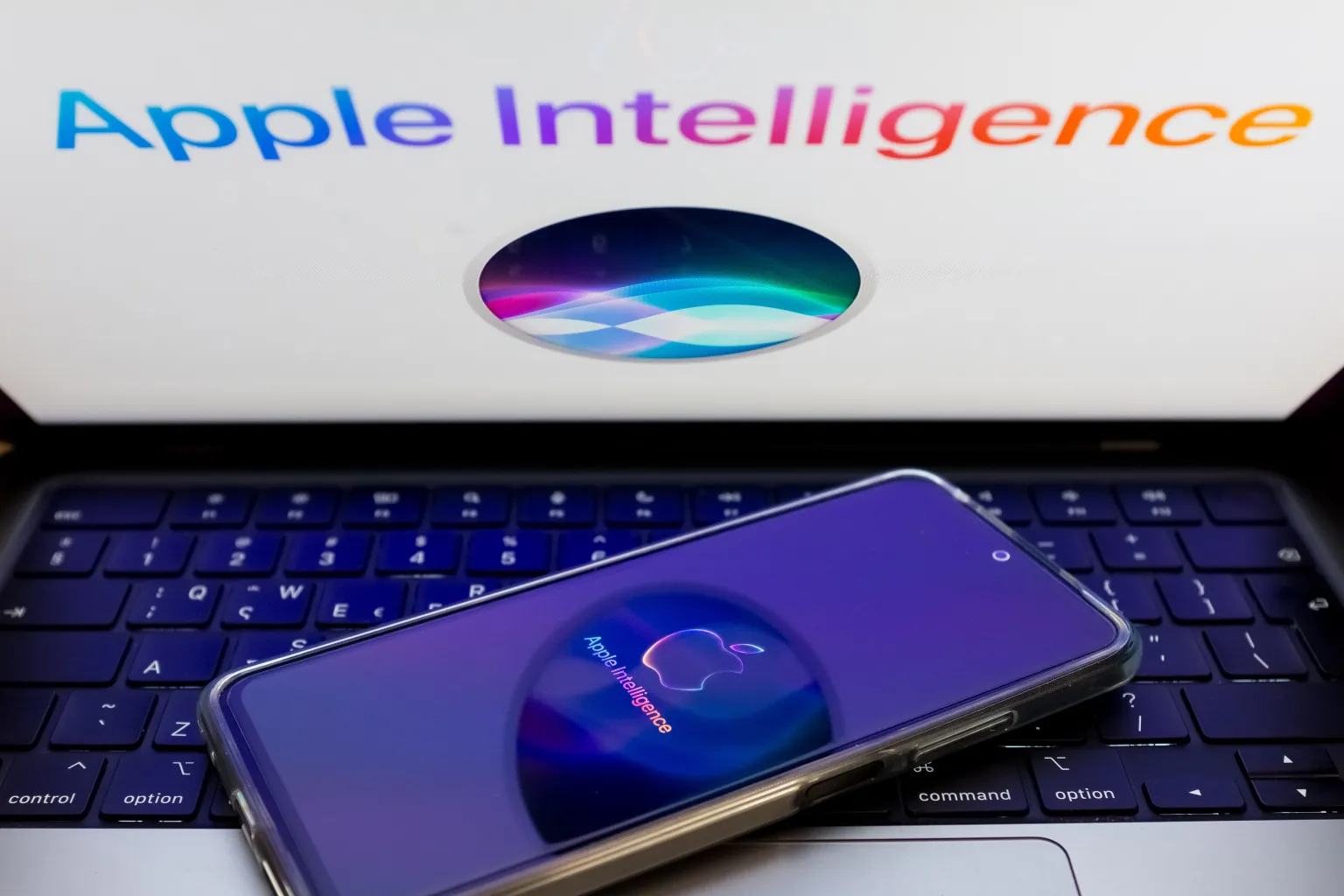
Apple is preparing to unveil a materially upgraded version of Siri as early as February, marking the first tangible outcome of its artificial intelligence partnership with Google. The update is expected to integrate Gemini-based models and finally deliver capabilities Apple previewed last year: contextual awareness, access to on-screen information, and the ability to execute multi-step tasks using personal data. From our perspective at YourNewsClub, this is less a feature launch than a credibility reset.
Apple’s AI narrative has been under pressure for over a year. While competitors rapidly commercialised generative assistants, Apple struggled to reconcile its legacy Siri architecture with large language models capable of reasoning and contextual understanding. The February reveal signals that Apple has accepted a short-term dependency on external AI infrastructure in order to stabilise its assistant strategy before a broader reset later in the year. At YourNewsClub, we interpret this as a tactical move designed to stop erosion of developer and user confidence ahead of the next WWDC cycle.
Jessica Larn, who analyses technology policy and platform power structures, sees this moment as strategically unavoidable. In her assessment, assistants have become a control layer over data, services and user behaviour. Delaying functional parity any further would risk Apple losing influence over how intelligence is distributed across its ecosystem. Integrating Gemini allows Apple to remain competitive without fully surrendering governance, particularly if execution logic and permissions remain tightly controlled within iOS.
The architectural implications are just as important as the user experience. A more conversational Siri, reportedly planned for mid-year, would require selective use of cloud inference while preserving Apple’s long-standing emphasis on on-device processing. Owen Radner, who focuses on digital infrastructure and compute flows, notes that assistants fail economically before they fail technically. If every query depends on external cloud execution, latency and cost quickly undermine scale. Apple’s challenge is not intelligence generation, but orchestration – deciding what runs locally, what escalates to the cloud, and how often.
Your News Club views the February update as a narrow but intentional proof point. Apple does not need Siri to outperform every competing assistant immediately. It needs reliability across a limited set of high-value actions: navigation across apps, summarisation of personal content, task execution without manual correction. Consistency, not spectacle, will determine whether the platform regains trust.
There is also a governance dimension. A Gemini-powered Siri implicitly raises questions about data boundaries, accountability and regulatory exposure. Apple’s incentive is to present Gemini as an invisible engine rather than a branded dependency, preserving its privacy narrative while benefiting from frontier-scale models. That balance will be closely watched by regulators and enterprise partners alike.
In conclusion, this is not Apple “catching up” – it is Apple preventing strategic drift. If Siri demonstrates dependable execution in real-world scenarios, Apple buys itself time to consolidate a more autonomous AI stack later this year. If it does not, the perception of Apple as an AI laggard hardens further. As YourNewsClub sees it, February is not about winning the assistant race – it is about staying in it.