
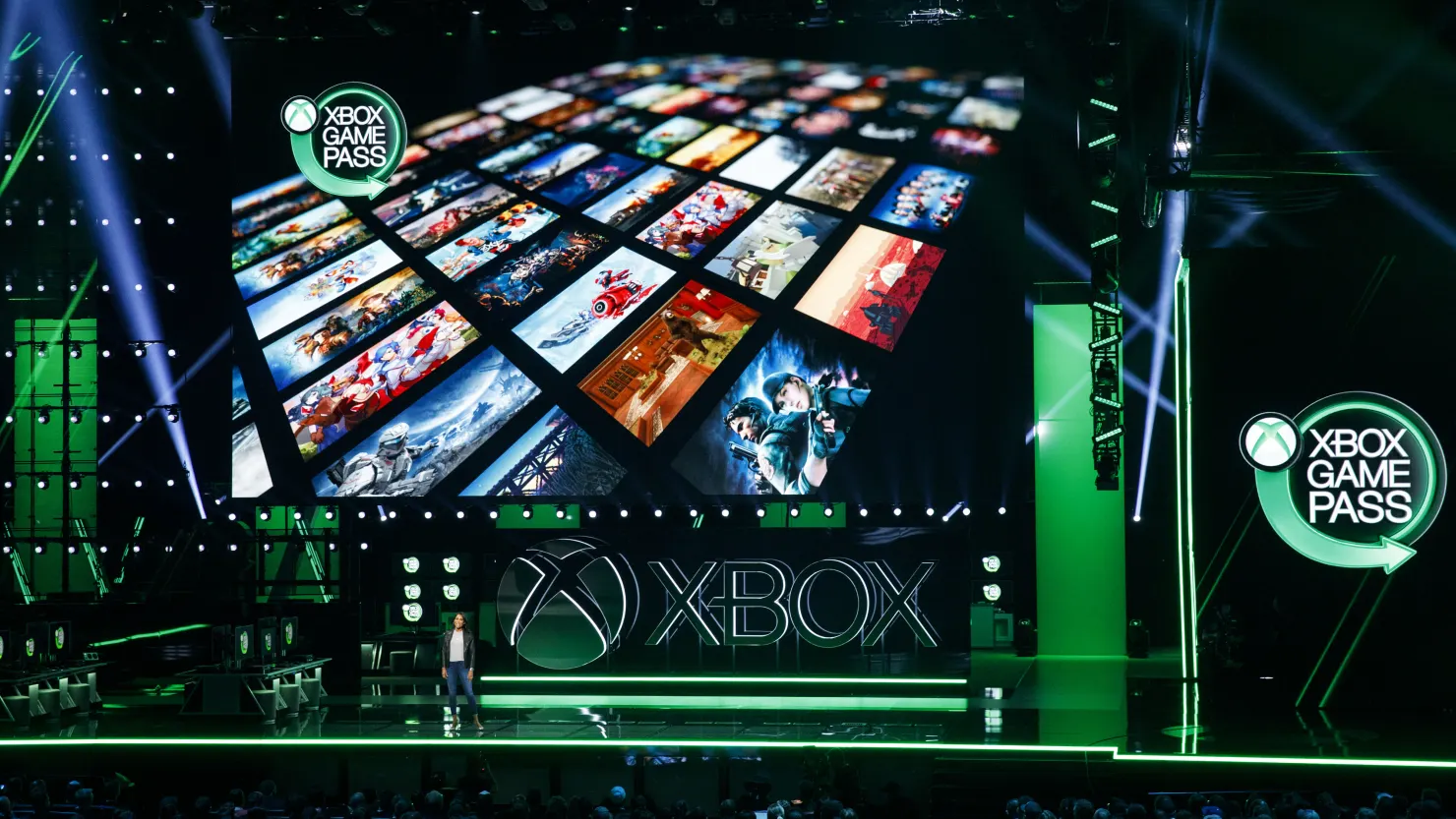
The turmoil surrounding Xbox is often framed as a collapse. From the perspective of YourNewsClub, it looks more like a deliberate withdrawal from a fight Microsoft no longer intends to pursue. Layoffs, studio closures, declining hardware sales, and price hikes have reinforced the idea that Xbox is finished – a narrative that overlooks the structural shift now underway.
Recent financial results reinforce the pressure. Gaming revenue declined modestly year over year, while Xbox console sales dropped sharply. Hardware is clearly no longer carrying the business. At YourNewsClub, we view this not as an execution failure, but as evidence that Microsoft is allowing the traditional console model to wither rather than subsidizing it indefinitely.
The broader console market is shrinking as well. Consumer spending on hardware has fallen across the board, even during peak shopping periods. In this environment, Microsoft’s weakness looks more dramatic because Sony and Nintendo still benefit from hardware-driven brand loyalty and exclusive franchises. Xbox does not. And increasingly, it does not try to.
This strategic divergence explains the confusion that former executives have publicly voiced. From the outside, Xbox appears directionless. From the inside, the direction is simply unpopular. Microsoft is deprioritizing the console as a product and repositioning Xbox as a distribution layer – one that spans PC, cloud, mobile, smart TVs, and third-party hardware.
As Alex Reinhardt, financial systems, puts it: “Once revenue shifts toward subscriptions and services, hardware stops being the asset and starts being a liability.” At YourNewsClub, this framing helps explain why Microsoft no longer treats console sales leadership as a core objective.
Cloud gaming and Game Pass sit at the center of this transition. Subscriber numbers and usage hours continue to grow, and Game Pass has evolved into a material revenue stream rather than a loss-leading experiment. But growth alone does not resolve the underlying tension. Cloud gaming remains expensive to scale, and content costs rise as fast as the audience.
Here, Microsoft’s aggressive acquisition strategy comes into focus. Buying studios and publishers was not just about exclusives. It was about securing a steady flow of content to justify a subscription-first model. Yet the recent shift away from exclusivity – including releasing major Xbox franchises on rival platforms – signals a decisive break from the old console logic.
At YourNewsClub, we see this as the point of no return. Exclusives once sold hardware. Microsoft now wants games to sell access. This transition carries risk. Layoffs and canceled projects damage morale and undermine confidence among developers and players alike. Cultural trust matters in gaming, and Microsoft has spent much of the past year eroding it. Freddy Camacho, political economy of computation, captures the danger succinctly: “Platform strategies fail when cost discipline overtakes creative stability.”
Meanwhile, external pressure is intensifying. Valve’s renewed push into living-room PC hardware highlights a competing vision of the future – one where the console experience exists without a closed ecosystem. That vision overlaps uncomfortably with Microsoft’s own push to blur the line between console and PC. At Your News Club, we see this as a structural challenge: Xbox is abandoning a shrinking market just as others are finding new ways to repackage it.
So what is Xbox becoming?
Microsoft’s leadership has been consistent in one respect. The goal is not to win the console race, but to reach players everywhere. That ambition aligns with the company’s broader identity as a cloud-first, platform-first business. Gaming, in this framework, becomes another service layer – not a hardware empire.
The picture that emerges is clear. Xbox is not dying. It is shedding its old form. The real question is whether the new one can sustain loyalty, creativity, and profitability at the same time.
Over the next two years, the outcome will hinge on three factors: whether Game Pass can grow without collapsing its margins, whether cloud gaming economics can stabilize, and whether Microsoft can rebuild trust after a period of visible contraction.
If Xbox fails, it will not be because the console market declined. It will be because transforming a cultural product into a pure platform proved harder than Microsoft expected.
At YourNewsClub, we are watching not for the death of Xbox – but for proof that its next identity can survive.