
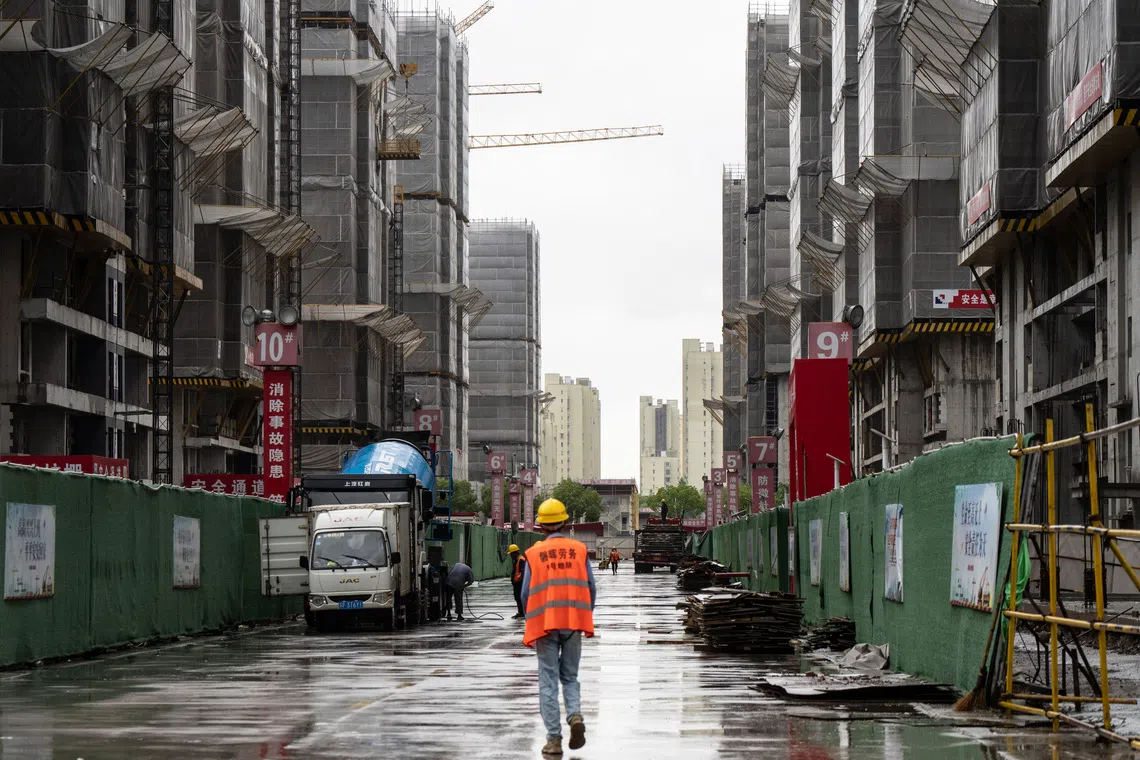
When a market stops speaking for itself, power steps in to speak for it. In China, this dynamic is hardly new, but the latest campaign against “pessimistic sentiment” in the housing sector marks a sharper turn: the state is no longer just managing policy – it is managing perception. At YourNewsClub, we see Beijing shifting the center of crisis control from financial intervention to narrative governance, a sign of just how deep the property downturn has become.
In Shanghai, more than 40,000 posts discussing falling home prices and stalled sales vanished within weeks, as did over 70,000 real-estate–related accounts. Videos, analytics threads, market jokes, and commentary were swept aside under the accusation of “distorting housing policy” or “creating panic.” These categories are intentionally broad. The real message is unmistakable: any public discussion of the property slump is now framed as a threat to stability.
From our perspective at YourNewsClub, this crackdown indicates that China’s housing market – long the backbone of economic growth – has moved into a zone of systemic vulnerability. Regulators are trying to prevent negative sentiment from accelerating the downturn. That intention became even clearer when authorities ordered the country’s two largest private data agencies to suspend publication of monthly home-sales statistics. In a market where transaction volumes are collapsing, the removal of public data is less a clerical decision than a deliberate attempt to freeze expectations.
Analyst Jessica Larn, who studies how elite decisions permeate technological infrastructure, notes that Beijing is “embedding information control into the architecture of economic management itself.” The state is no longer reacting to sentiment – it is designing the conditions under which sentiment is allowed to form.
Another dimension is captured by analyst Owen Radner, who views digital platforms as transmission lines for informational energy. When the state restricts these conduits, he argues, it alters the geography of power as profoundly as railroads reshaped economic distances in the industrial era. In China’s case, the housing downturn is not only financial – it has become infrastructural.
At YourNewsClub, we interpret this as more than a defensive maneuver. It is the creation of a new equilibrium in which a market exists only to the extent that its officially sanctioned narrative exists. Removing data removes volatility – but also removes credibility. And in the vacuum that follows, buyers hesitate, developers lose access to capital, banks tighten mortgage conditions, and regional governments experience worsening fiscal strain. Ironically, the strategy designed to stabilize expectations may instead be amplifying uncertainty.
From our vantage point, the path forward requires several urgent corrections. First, partial statistical transparency must return; without it, trust cannot. Second, policymakers must acknowledge that the crisis is structural: censorship raises political control but erodes market confidence. Third, authorities need to shift from suppressing negative sentiment to addressing the underlying economic fractures – otherwise the silence they enforce will simply mask deeper structural decay.
China’s property sector has now entered a phase where macroeconomics and cyber-governance are inseparable. The central question is no longer when recovery will begin, but whether market participants will trust the numbers presented to them. At Your News Club, we believe that this tension – between narrative control and economic reality – will define whether China’s housing market drifts toward stabilization or toward a managed stagnation wrapped in the appearance of digital order.