
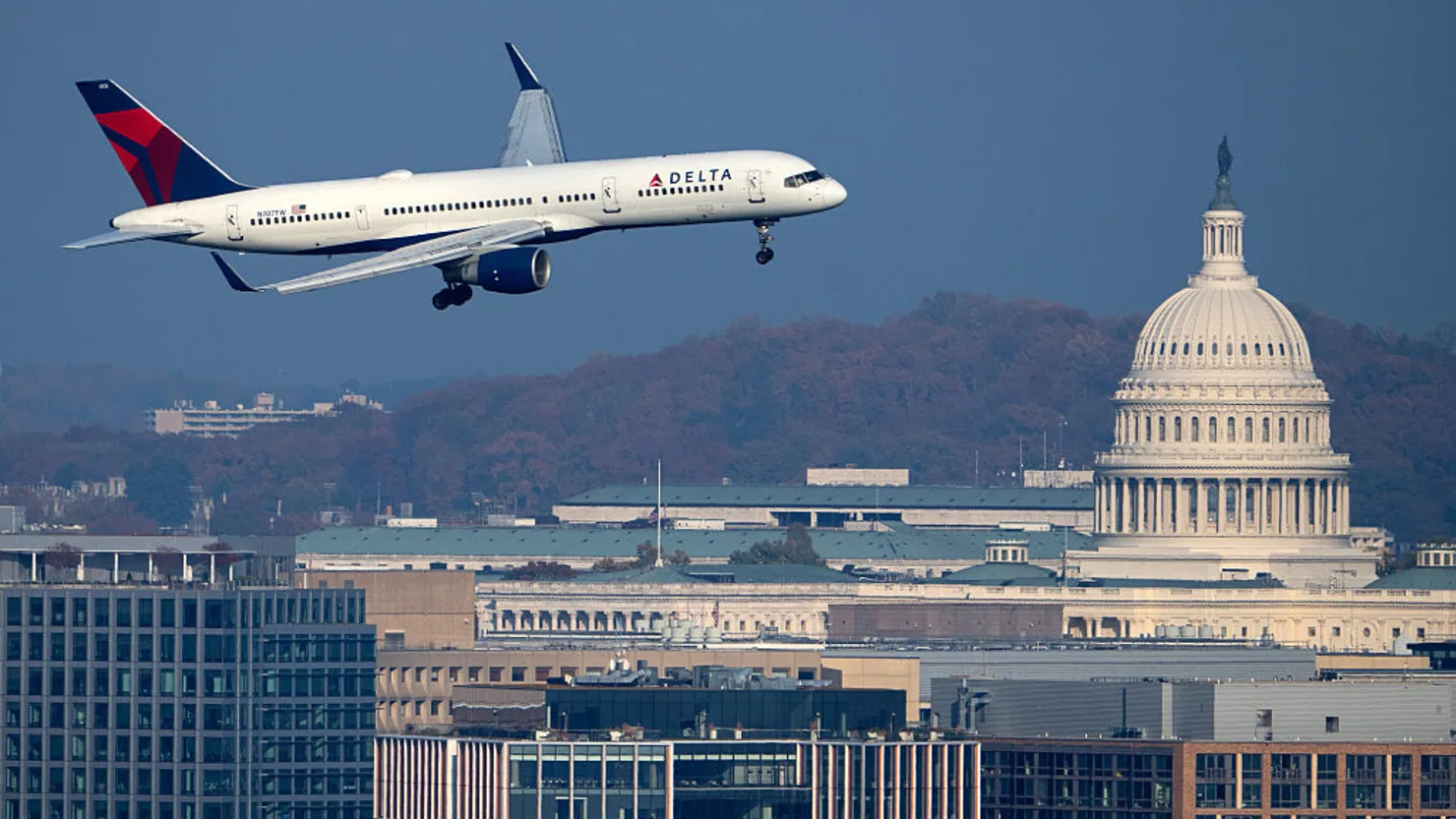
In the U.S. airline industry, crises often come from storms, fuel markets or surging demand. Yet this time, the turbulence originated in Washington. The recent government shutdown – the longest in American history – not only tested political patience but quietly strained the foundations of the aviation system. At YourNewsClub, we have repeatedly emphasized that aviation stability hinges less on technology and more on the institutional structures behind it. The latest shutdown made this painfully clear.
Delta Air Lines revealed that the impasse cost the company roughly $200 million in pre-tax income, a blow equivalent to about $0.25 per share this quarter. Just weeks earlier, Delta had projected adjusted Q4 earnings of $1.60–$1.90 per share, but the abrupt drop in bookings during the shutdown forced investors to reassess the resilience of air travel demand.
What makes this episode more troubling is not the financial impact alone, but the chain reaction behind it. Air-traffic controllers – already understaffed before the shutdown – worked without pay, and the Trump administration instructed airlines to scale back schedules to prevent operational overload. Even with reduced timetables, delays and cancellations surged beyond expectations as the shutdown neared its end.
As we at YourNewsClub often note, aviation depends on labor structures as much as on aircraft and infrastructure. Analyst Jessica Larn put it bluntly: “Shutting down government functions doesn’t just pause bureaucracy – it collapses the hidden systems that coordinate national mobility.” For Larn, the shutdown illustrates how policy decisions at the top migrate into infrastructure, transforming political disputes into operational disruptions.
Delta’s CEO Ed Bastian and other airline leaders pressured lawmakers to guarantee pay protections for aviation-critical workers – from air-traffic controllers to TSA staff – in any future shutdown scenario. Their message was straightforward: the industry can withstand turbulence, but not instability of its operating backbone.
This fragility is magnified when considering how airlines plan years ahead. Delta noted that travel demand for 2026 remains strong, but forecasting becomes treacherous when government agencies risk periodic paralysis. Analyst Freddy Camacho, whose work focuses on the political economy of complex systems, described the shutdown as “a reminder that the aviation supply chain isn’t just metal and fuel – it’s labor, governance and continuity. If one of those falters, the entire network becomes vulnerable.”
While demand remains healthy and long-term fundamentals stable, the shutdown has exposed the structural weakness of relying on essential federal workers who can be left without pay. More than a financial loss, it highlighted a governance flaw: critical infrastructure can be held hostage by political deadlock.
From our perspective at YourNewsClub, the shutdown teaches the industry three lessons. First, airlines must intensify lobbying for legislation that insulates aviation personnel from political disruptions. Second, carriers need contingency frameworks that model not only weather and fuel volatility but government-induced operational shocks. Third, policymakers must acknowledge that modern aviation is an essential service – interruptions ripple far beyond airports, affecting national mobility and economic stability.
The episode reaffirms a broader truth: political turbulence is becoming as consequential as atmospheric turbulence. And unless the U.S. reshapes its approach to aviation governance, the next shutdown may cost not just millions – but the predictability that airlines depend on to keep the country moving. As we at Your News Club conclude, the aviation system’s future stability will depend on how decisively Washington learns from this moment.