
The urban air-mobility market has long been waiting for the moment when flying taxis would stop being treated as a futuristic parlor trick and start looking like a real industrial sector. At YourNewsClub, we see the new agreement between Eve Air Mobility and Beta Technologies – valued at up to $1 billion – as precisely that inflection point. It is one of the clearest signals yet that this industry is shifting from promises to actual production ecosystems, where engineering maturity, political winds and investor expectations finally converge.
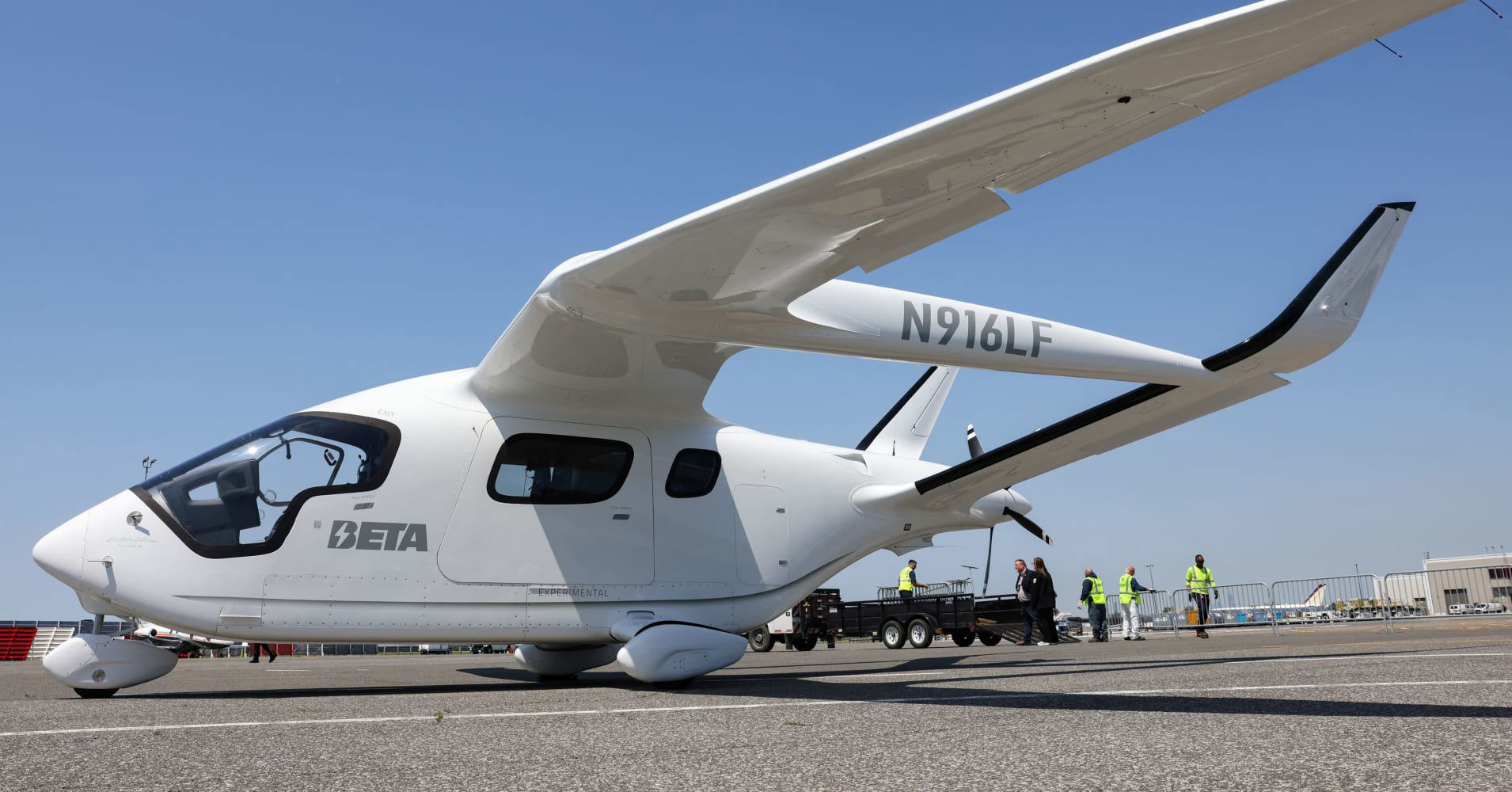
Eve, born inside the Brazilian aerospace giant Embraer, has never positioned its eVTOLs as isolated aircraft. Instead, it is building an end-to-end urban aviation infrastructure – from airframes and propulsion to traffic-management systems and operational logistics. Into this architecture now enters Beta Technologies, fresh off its debut on the New York Stock Exchange. The Vermont manufacturer will supply the electric motors that power Eve’s aircraft in cruise – a core component that determines safety, range and operational efficiency.
At YourNewsClub, we view this not as a simple procurement deal, but as evidence that a genuine supply chain is forming around eVTOLs. Analyst Freddy Camacho, who studies the political economy of emerging production systems, puts it bluntly: “Deals like this turn the eVTOL industry into a network of interdependent obligations, where material, energy and infrastructure function as the hidden currency of competitive advantage.”
Eve’s order book – roughly 2,800 aircraft – is striking for a company still navigating FAA certification. Beta, meanwhile, is transitioning from engineering ambition to commercial exposure. Its stock has fallen more than 20% from the IPO close, but the Eve contract offers multi-year revenue visibility and validates its technology in a way investors take seriously. The relationship benefits both sides: Eve gains a propulsion partner with proven flight hours, while Beta anchors itself within the operational pipeline of a major future producer.
Still, commercial deployment is not imminent. Eve expects meaningful progress around 2025–26; Beta looks further toward the decade’s end. FAA certification remains strict, though the political climate – including the new federal pilot program for urban aviation championed by the Trump administration – has shifted decidedly in the industry’s favor.
Competition outside the U.S. is accelerating as well. Archer and Joby are leaning heavily into the Middle East, pairing themselves with defense heavyweights and sovereign infrastructure projects. Against that backdrop, the Eve–Beta partnership resembles a bet on engineering depth rather than marketing flash. YourNewsClub analyst Alex Reinhardt, who researches the link between financial architectures and next-generation infrastructure, notes: “In this sector, the winner is not the first to unveil a prototype, but the first to align their technology with the financial and operational systems of tomorrow’s cities.”
However, investors should be cautious with the headline number: “up to $1 billion” reflects the ceiling of potential volume, not guaranteed revenue. The economics will depend on Eve’s certification timeline, the durability of demand for urban air transport, and the availability of public funding. Beta remains a high-risk player in a capital-intensive industry where profitability typically arrives years after commercialization.
Even so, the structure of the deal reveals a maturing landscape. At YourNewsClub, we see the outlines of a market shifting from isolated startups to integrated industrial ecosystems – where propulsion, airframe, logistics, charging infrastructure, regulatory pathways and urban planning are all advancing in parallel.
Three conclusions seem essential for anticipating the sector’s next phase.
First, deals of this scale will gradually reduce the speculative nature of eVTOL investing and replace it with long-horizon industrial logic.
Second, strategic “technology pairings” like Eve and Beta will shape the first commercially viable fleets because their component systems evolve together, not in isolation.
And third, governments are emerging not as referees but as co-architects – through regulation, infrastructure programs and political endorsement – without which mass adoption will stall before takeoff.
The future of urban aviation is still under construction, but one fact is clear: the race for dominance will be won by the companies that build not just aircraft, but entire ecosystems of trust, regulation and scalable production – a conclusion that we at Your News Club consider foundational for understanding the transformation ahead in global mobility.