
The American broadcast television industry once again finds itself at a crossroads where legacy models no longer function, while new ones have yet to establish stable footing. At first glance, consolidation looks like the only viable survival strategy – but from the inside, the picture is far more tangled. Family-controlled ownership structures, cultural clashes, regulatory bottlenecks and the accelerating decline of linear TV have turned every merger attempt into a strategic puzzle. At YourNewsClub, we have repeatedly noted that the sector is heading toward a major redistribution of influence, yet its trajectory remains anything but linear.
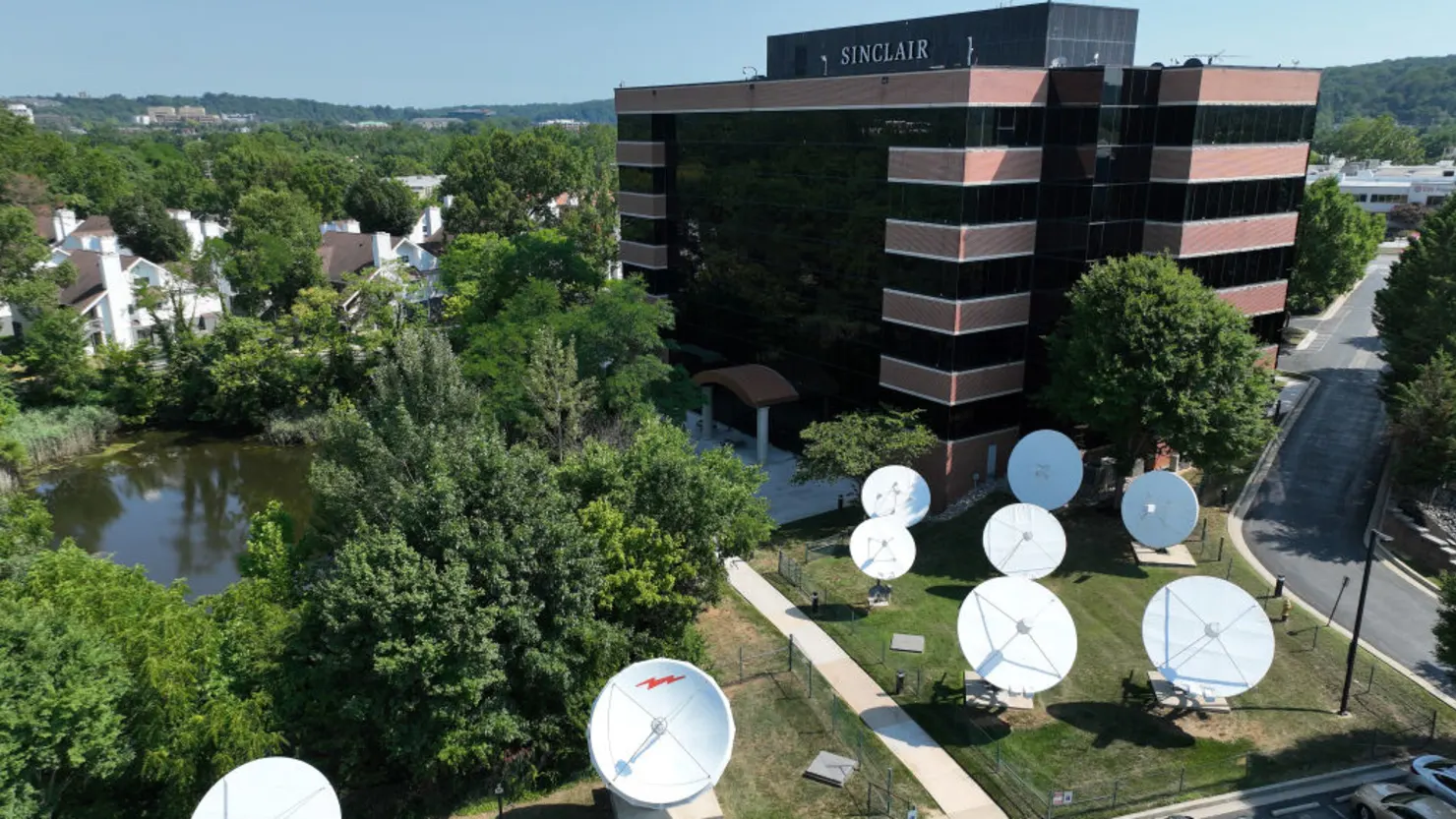
When Nexstar announced its $6.2 billion bid for Tegna, many in the industry saw it as a logical move: more than 260 stations under one umbrella would give the company extraordinary leverage in negotiations with pay-TV distributors. Almost simultaneously, Sinclair moved toward acquiring Scripps – first through quiet back-channel talks, then through a hostile offer and rapid stock accumulation. But both deals stalled, not because the rationale was weak, but because local broadcasting no longer operates under the old rulebook.
The central paradox is that station groups remain profitable today largely thanks to retransmission fees – yet that foundation is eroding at alarming speed. More than 30% of their revenue comes from pay-TV distributors, and the subscriber base for linear packages continues to shrink every year. The industry has failed to build a sustainable streaming monetization model for local news, forcing newsrooms to contract faster than new digital formats emerge. As we at YourNewsClub have often said, the media ecosystem is experiencing what technological policy scholars call a “structural decay of the trust infrastructure.”
This dynamic is articulated sharply by analyst Jessica Larn, who specializes in macro-level technological governance: “Consolidation in broadcasting isn’t just a survival mechanism. It’s the transfer of elite decision-making about information control into the infrastructural layer, where access to audiences becomes a pressure tool rather than a mere business operation.”
Sinclair collided with this deeper layer of resistance. The Smith family, which controls the company’s voting shares, has long sparked controversy for its politicized editorial management. For Scripps, the negotiation wasn’t just financial – cultural incompatibility undermined even early agreements about shared governance and an independent board. When talks collapsed, Sinclair began accumulating Scripps stock until it reached nearly 10%, forcing Scripps to adopt a poison pill. It was a rare moment of open confrontation in a sector that typically prefers quiet deal-making.
Regulators quickly entered the picture. The FCC’s long-standing 39% national ownership cap severely limits how much consolidation the industry can pursue. For Nexstar’s proposed acquisition of Tegna, the barrier is nearly insurmountable: even the most flexible interpretations of the law put the combined footprint far beyond allowable limits. Equally important, the Department of Justice has slowed approvals for even modest broadcast deals in recent years, viewing the sector as too politically sensitive amid national polarization.
YourNewsClub analyst Owen Radner, who studies digital-era infrastructure, captures the moment with a compelling analogy: “Modern broadcasting isn’t just media – it is a system of information transport. Changing its routes and concentrating bandwidth in the hands of a few networks reshapes the geography of influence the way railroads once did.” This is precisely why regulators fear the possibility of outsized control over local audiences.
Yet the opposite concern is also valid: without consolidation, many broadcasters face infrastructural decay – fewer investments in local journalism, fewer resources for sports rights, and slower technological modernization. At YourNewsClub, we see an industry trapped in a paradox: too small to compete with streaming giants, yet too large and fragmented to reinvent itself quickly.
The result is a clash not just of corporate interests, but of competing visions for the future of local news. If consolidation becomes feasible, broadcasting may gain the capacity to rebuild its economic architecture. If regulation remains frozen in its current form, many regional newsrooms risk slipping into “inertia broadcasting,” losing audience relevance year after year.
In our view at YourNewsClub, the industry can avoid destructive outcomes only if several conditions are met. First, any consolidation must include real safeguards for editorial independence – without them, audience trust erodes instantly. Second, regulators must update the framework to reflect the modern media landscape, where streaming platforms and broadcast stations compete in the same markets under drastically different rules. And third, broadcasters must invest in digital infrastructure that allows local news to exist as a fully native digital product rather than an appendage of linear TV.
The market is still shaping the logic of its next chapter, but one thing is already clear: the battle for control of local broadcasting is not merely a series of corporate maneuvers – it is a fundamental confrontation over who will define the boundaries of public discourse in the coming decade. And the player who manages to combine scale with trust will emerge as the ultimate winner of this media realignment, a conclusion we at Your News Club consider central for understanding the transformations ahead.