
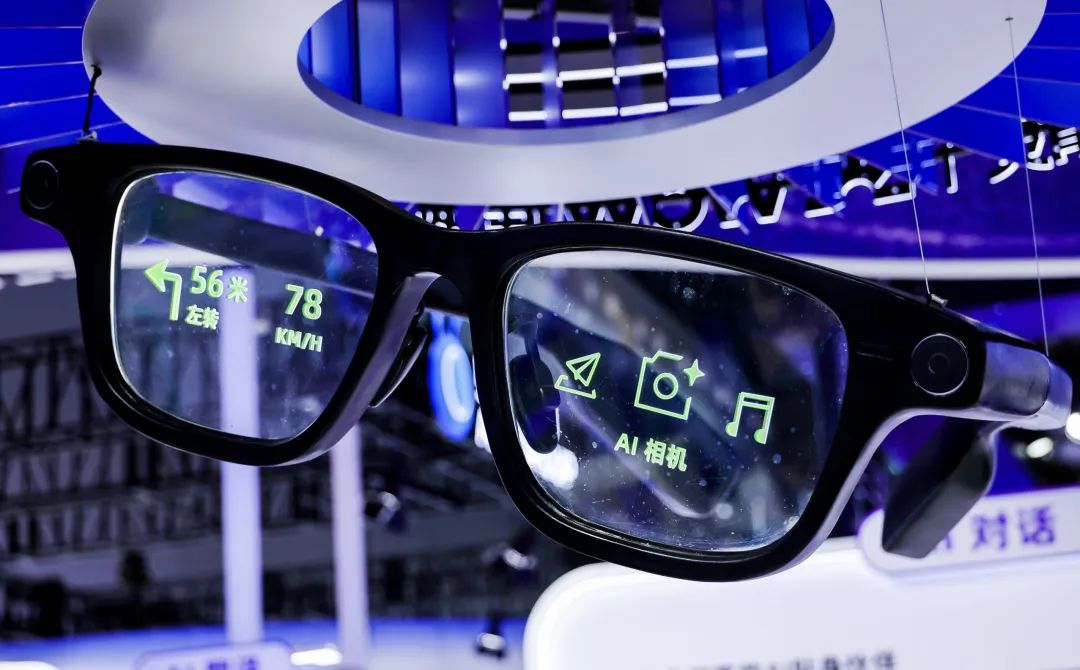
As tech giants compete to define what comes after the smartphone, Alibaba has taken a more decisive path: pulling AI out of apps and placing it directly into the user’s field of view. The launch of the Quark AI Glasses signals that the company no longer treats consumer AI as an experiment, but as a strategic interface for the next computing era. At YourNewsClub, we note that such shifts rarely unfold gradually – they often mark the moment a market changes shape.
The Quark lineup arrives in two models, S1 and G1, across six design variants. With prices ranging from 1,899 to 3,799 yuan, Alibaba positions the device as both accessible and technically competitive – particularly against Meta’s Ray-Ban Display. The glasses integrate Alibaba’s Qwen models, the company’s own ChatGPT-like system, and link tightly to the fast-growing Qwen app. Voice input, visual search and AR overlays form the core interaction layer: tasks that once required a smartphone become ambient, hands-free, and always in view.
YourNewsClub analyst Jessica Larn, who studies the macro-politics of technology and how elite decisions become embedded in infrastructure, argues that Alibaba’s move is fundamentally strategic: “If the screen moves from the hand to the eyes, the winner is the company that owns the ecosystem – not the one that builds the hardware.” This is why the glasses are directly tied to Taobao, Alipay and Alibaba Cloud, enabling features like real-time translation, AI-generated meeting notes and instant price checks from photos captured with the built-in camera.
The S1 emphasizes its display – a dual AR optical system with high brightness and support for prescription lenses – while the G1 focuses on weight, style and discreet everyday wearability. The fundamental challenge of the smart-glasses market has always been balancing capability with social comfort; Alibaba responds by broadening form factors rather than chasing a single universal design.
The market itself remains small but accelerates rapidly. Forecasts suggest AI-glasses shipments will exceed 10 million units by 2026 – almost double the 2025 volume. Yet mass adoption remains uncertain: concerns around cameras on faces, battery life, and privacy still slow the transition. YourNewsClub analyst Owen Radner, an expert on digital-era infrastructure as networks of “computational energy,” observes: “AI glasses aren’t just devices – they’re a new layer of urban infrastructure. The question isn’t whether they work, but how prepared society is for the transparency they create.”
Alibaba enters this space at a moment of momentum. The Qwen app surpassed 10 million downloads in its first week, and the company’s cloud business is expanding again on the strength of AI demand. The glasses therefore become more than hardware – they are a physical gateway into Alibaba’s ecosystem, extending e-commerce, payments and cloud-based services into daily life. Unlike Meta, which frames smart glasses around social engagement, Alibaba’s strategy merges AR with commerce, navigation and digital identity.
Our conclusion at Your News Club is that Quark AI Glasses are among the first credible examples of AI turning into physical presence rather than software veneer. Alibaba aims to anchor itself in this emerging interface before the market solidifies. Still, the path is complex: the smart-glasses category is young, regulation around AI remains fluid, and consumer readiness is inconsistent across regions.
We view Quark as an early but meaningful platform. For consumers, a promising experiment with immediately useful features. For businesses – especially in retail, tourism and service industries – a new channel for contextual, real-time engagement. And for investors, a signal that Alibaba intends to play a defining role in the rise of “ambient AI,” where intelligence is not on a screen, but woven into the environment itself.