
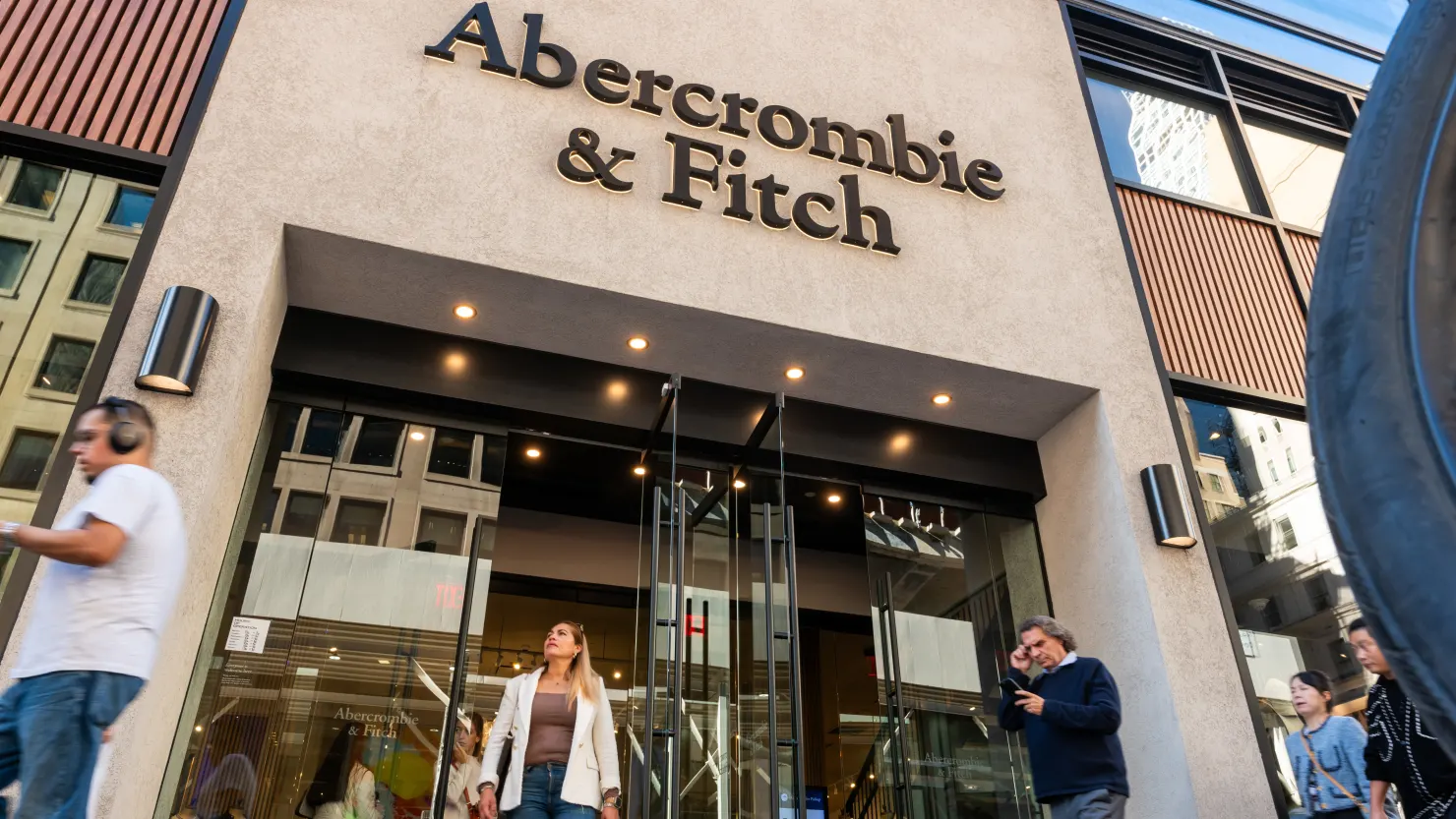
Abercrombie & Fitch delivered the kind of third-quarter surprise that retail investors secretly hope for but rarely get. Just as analysts were preparing to label the company a fading legacy name, the retailer posted results that reignited optimism – and sent its stock soaring nearly 37% in a single session. At YourNewsClub, we see the report not as a lucky break but as evidence of a deeper realignment inside the company, one that could define the way Abercrombie enters 2026.
The story of the quarter is the quiet but decisive shift between the company’s two main brands. For years, the Abercrombie label symbolized the company’s revival. Now, the momentum clearly belongs to Hollister. While Abercrombie posted a 2% sales decline, Hollister surged 16%, powering total company revenue 7% higher to roughly $1.29 billion – ahead of Wall Street expectations. EPS came in at $2.36 versus the projected $2.16, marking another sign that the retailer can generate profitability even in a choppy consumer environment.
Owen Radner, YourNewsClub’s analyst who views retail through the lens of infrastructure and shifting flows of consumer “power,” explains the dynamic this way: “sales drivers at Abercrombie & Fitch have become multipolar. Hollister now carries the momentum of consumer demand.” In his view, a pivot toward a younger, more budget-conscious demographic is not only practical – it reflects where the real resilience lies in today’s volatile economy.
Hollister’s performance strengthens that argument: comparable sales jumped 15%, revenue climbed to $673 million – well above analyst forecasts – and the brand is expanding aggressively. The company plans to open 25 Hollister stores this year and remodel another 35. From our vantage point at YourNewsClub, such expansion right before the peak holiday season signals rare corporate confidence.
Abercrombie, meanwhile, is dealing with the consequences of an outdated inventory mix, which forced markdowns and dragged revenue down to about $617 million – below StreetAccount estimates. CEO Fran Horowitz insists the brand is seeing “sequential improvement,” but on the earnings call the leadership declined to say when growth would return. Recent collaborations with the NFL and upscale retailer Kemo Sabe add flair, but they haven’t yet translated into the rebound investors are waiting for.
Alex Reinhardt, YourNewsClub’s specialist in financial architecture and corporate liquidity flows, offers a blunt assessment: “Abercrombie has entered a phase where operational efficiency matters more than brand nostalgia. Investors are rewarding Hollister because it delivers consistent cash flow, not because of emotional legacy value.” His view mirrors what the market is already pricing in – stability over sentiment.
Looking ahead, guidance remains cautiously optimistic. Abercrombie & Fitch expects fourth-quarter sales to rise 4–6%, with EPS between $3.40 and $3.70 – roughly in line with analyst expectations. For the full year, sales are projected to grow 6–7%, slightly above previous forecasts. The trajectory isn’t explosive, but it is steady – and for a retailer navigating contradictory signals in consumer spending, that stability matters.
At Your News Club, our conclusion is straightforward: Hollister has become the company’s new anchor, stabilizing performance at a time when the flagship brand is still working through the painful cycle of inventory resets and repositioning. Hollister’s strength gives the organization the breathing room it needs to invest, expand and test new collaborations – even if Abercrombie’s recovery remains slow.
Our recommendation to investors is to treat Abercrombie & Fitch as a transformation story rather than a traditional retail rebound. As long as Hollister delivers double-digit growth, the company will remain compelling. But the long-term picture hinges on one thing: whether the Abercrombie brand can regain momentum by mid-2026. Early investors could benefit from the rerating, but the strategy should account for the risks inherent in demographic-driven retail and the fragile economics of the youth apparel segment.