
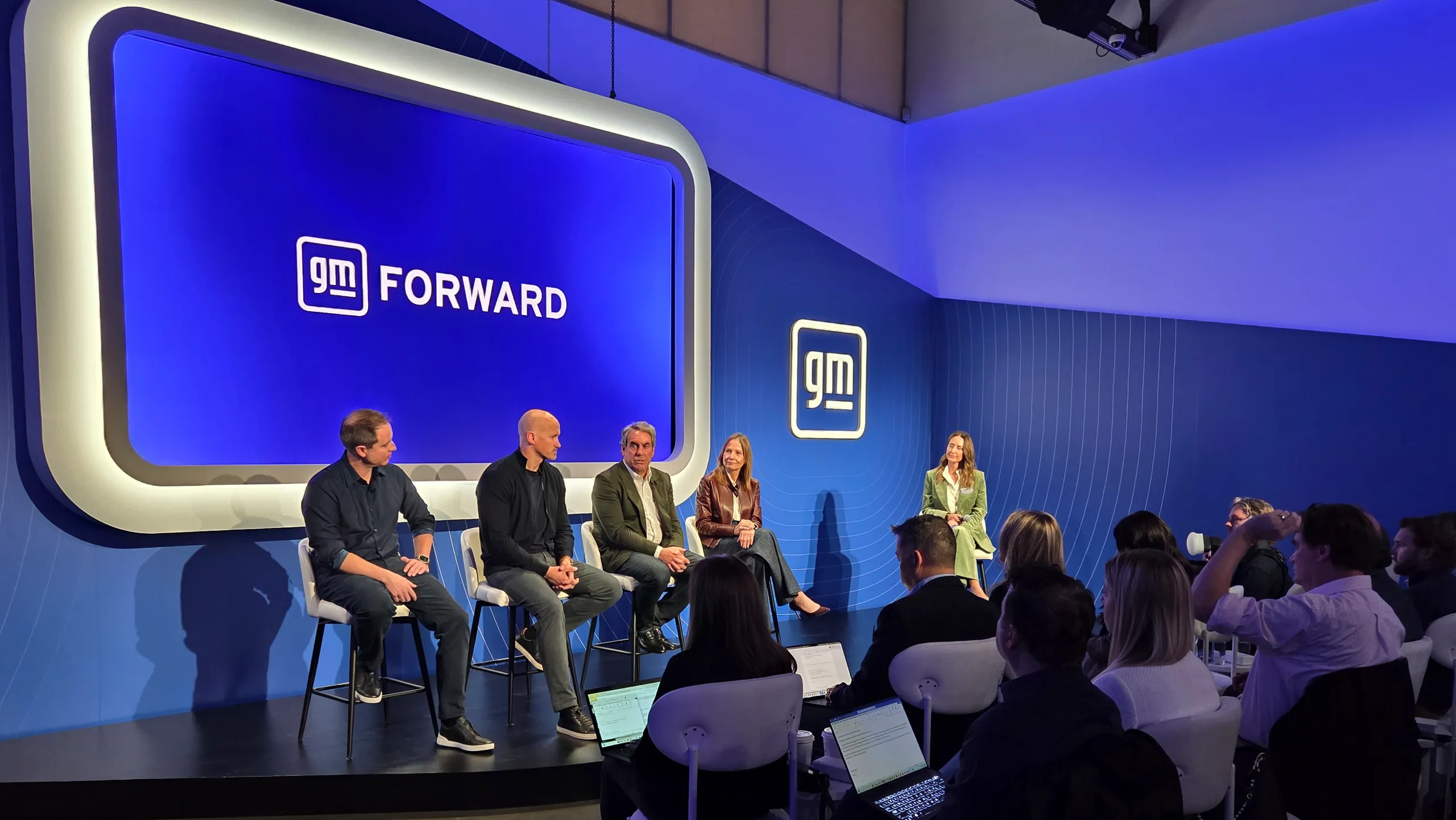
General Motors has spent the past several years positioning itself as a company ready to compete not only in manufacturing but in software, data and digital services. Yet the past month has shown a different picture: instead of a smooth transition into a tech-centric identity, GM is facing a wave of executive departures that exposes the structural tension between Silicon Valley speed and Detroit’s industrial legacy. At YourNewsClub, we see these exits not as isolated events, but as symptoms of a transformation that is proving far more complex than GM anticipated.
The latest departure came from Baris Cetinok, the senior vice president overseeing software product management and service platforms. He will leave on December 12, just a year after joining GM from Apple, Microsoft and Amazon. His role was considered one of the most strategic positions inside the company, and he once described it as a “dream job” for anyone working in product. But GM is now consolidating vehicle software development and global product divisions under its new Chief Product Officer, Sterling Anderson – a move that reshaped leadership lines and influence structures overnight.
Cetinok is the third tech-sector executive to exit in rapid succession. Dave Richardson, GM’s senior vice president of software and services, and Barak Turovsky, the company’s AI lead, both left in October. For GM, which aggressively recruited leaders from Tesla, Apple and Google, this string of departures raises painful questions about whether traditional automakers can truly absorb Big Tech talent. As YourNewsClub analyst Owen Radner, an expert in digital-era infrastructure, notes, “GM is trying to graft Silicon Valley tempo onto a production-heavy system – and the friction can break even the strongest hires.”
Sterling Anderson is now positioned as the central architect of GM’s software future. A former McKinsey consultant, Tesla Autopilot chief and co-founder of Aurora Innovation, he embodies the hybrid profile GM wants: operational discipline, software integration expertise and the ability to compress innovation cycles. CEO Mary Barra and President Mark Reuss have described him as someone capable of “rebuilding and reimagining” how GM develops products.
But talent churn hints at deeper structural issues. As analyst Alex Reinhardt, who specializes in financial-infrastructure systems, points out: ‘GM is confronting dual inertia – the slow mechanics of its supply chain and the internal resistance to a product-led operating model. When three senior leaders walk out within weeks, that’s not coincidence; that’s a signal.’ At YourNewsClub, we note that the broader auto industry has been struggling with the same challenge: integrating software not as a feature but as the core value layer of the vehicle. Tesla succeeded because it built the entire pipeline around this principle from day one. GM is trying to retrofit that paradigm onto legacy processes, and the cracks are visible.
GM insists the restructuring will unify hardware and software into a single product stream, enabling faster delivery of digital features, over-the-air updates and new revenue models. In theory, the move is logical. In practice, success depends on retaining a stable product leadership team – something GM has yet to achieve. Automotive timelines stretch across years; tech leadership often cycles in months. Until GM bridges this gap, each reorganization risks resetting the clock.
According to our analysis at Your News Club, GM stands at an inflection point where its strategy is modern, but its operating capability is still catching up. For investors, partners and suppliers, monitoring the stability of GM’s tech leadership may be more important than tracking unit sales. If Sterling Anderson can anchor a long-term team and secure autonomy over digital product decisions, GM has a real pathway to shaping its own software platform. If turnover continues, the company may find itself stuck in a loop of strategic restarts.
The signal is clear enough: treat every upcoming leadership change – or stabilization – as a leading indicator of GM’s ability to compete in software-defined mobility. In a market where subscriptions, assistants and over-the-air features increasingly drive revenue, the automaker that retains its technologists will define the next decade. Right now, GM is still fighting to keep them.