
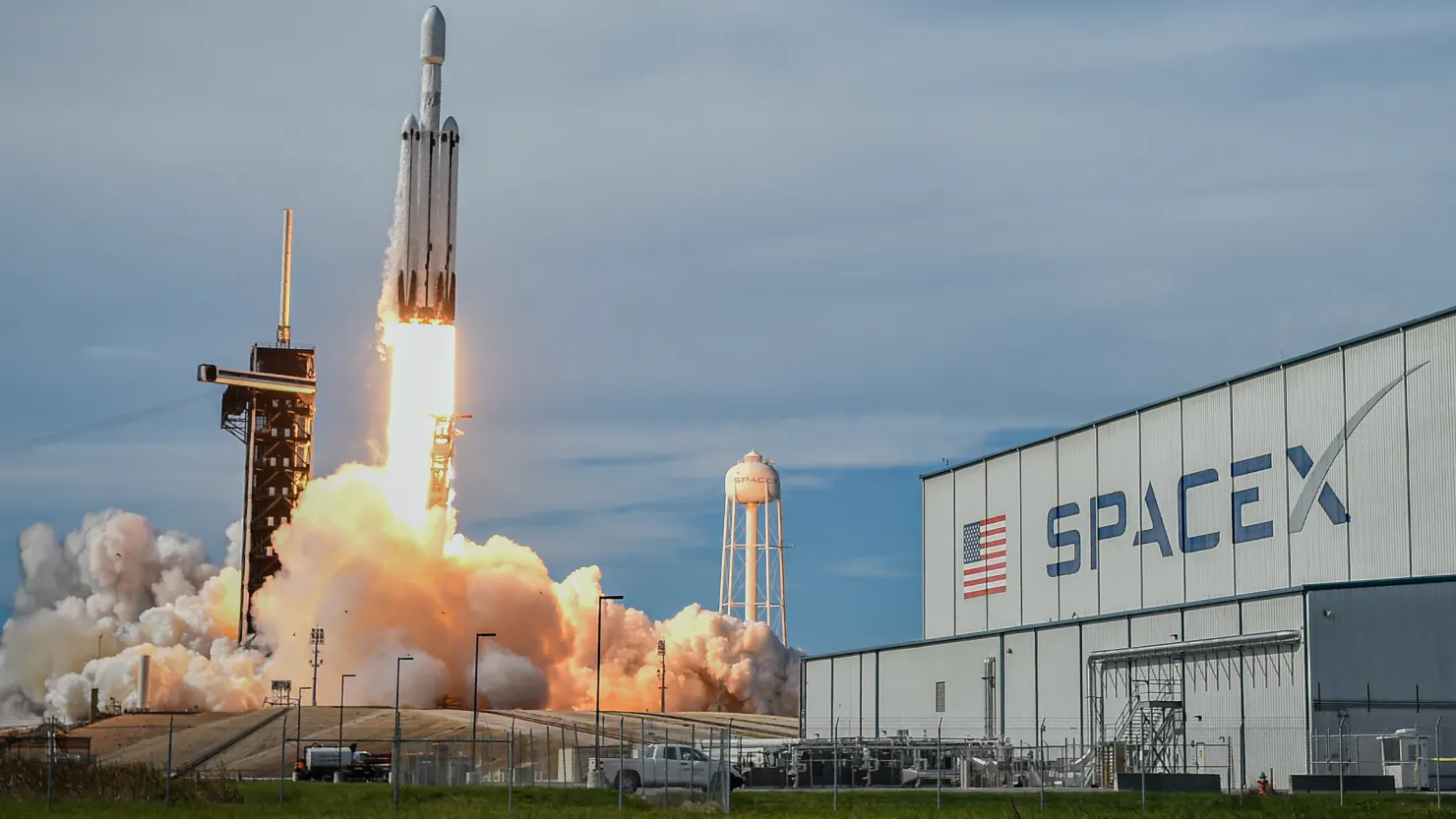
The potential IPO of SpaceX represents more than a major listing – it signals a structural shift across multiple industries, including aerospace, telecommunications, and digital infrastructure. If confirmed, the confidential filing marks a rare moment when a single company bridges government contracts, consumer services, and frontier technology at scale. As YourNewsClub emphasizes, this offering could redefine how markets evaluate infrastructure-driven tech companies.
The confidential submission itself is a key indicator. This approach allows companies to test regulatory readiness and investor appetite before full disclosure. In SpaceX’s case, it suggests operational maturity combined with strategic caution. Given the company’s deep ties to government programs and sensitive technologies, maintaining flexibility at this stage is particularly important. Valuation expectations near $1.75 trillion position SpaceX beyond traditional aerospace peers. The market is not pricing rockets alone, but a vertically integrated system spanning launch capabilities, orbital infrastructure, and global connectivity. Jessica Larn, analyst specializing in technology policy and infrastructure, would likely view this as the emergence of a new category – space-based platforms that combine public-sector roles with commercial scalability.
The potential fundraising target of up to $75 billion introduces another layer of complexity. Such scale would set a new benchmark for public offerings, but also requires exceptionally strong market conditions. From the perspective of YourNewsClub, deals of this magnitude depend as much on liquidity and timing as on company fundamentals. Market volatility remains a critical variable. Geopolitical tensions and energy price fluctuations have recently impacted equity markets, narrowing the window for large IPOs. Even companies with strong fundamentals can face pricing pressure if investor sentiment weakens. This makes timing a decisive factor in SpaceX’s strategy.
Another defining element is the company’s hybrid business model. SpaceX operates across launch services, government contracts, and Starlink, its rapidly expanding satellite internet network. This combination creates diversification but also complicates valuation. Investors are not assessing a single revenue stream, but an interconnected ecosystem. Freddy Camacho, expert in political economy of computing, would likely emphasize the strategic dimension. SpaceX functions as both a commercial enterprise and a component of national infrastructure, blurring the boundary between private innovation and state-level capability.
Government contracts further reinforce this position. With tens of billions in federal funding over time, SpaceX has established itself as a central partner in U.S. space and defense operations. This provides revenue stability but also ties the company’s trajectory to political and regulatory dynamics. Starlink represents one of the most significant growth drivers. Its global satellite network has already reached millions of users, transforming SpaceX into a consumer-facing platform. As Your News Club notes, this shift expands the company’s identity from a launch provider to a global connectivity player.
Elon Musk’s role adds both momentum and volatility. His track record attracts retail investor interest and media attention, but also introduces uncertainty tied to expectations and public perception. The IPO will likely reflect not only financial metrics, but also confidence in Musk’s broader vision. From a practical standpoint, the offering presents a unique opportunity for investors to access a company operating at the intersection of multiple high-growth sectors. At the same time, it introduces challenges related to valuation clarity and market timing.
The likely outcome will depend on external conditions as much as internal performance. If market stability improves, the IPO could establish a new benchmark for scale and investor participation. If volatility persists, delays remain a plausible scenario. YourNewsClub highlights that SpaceX enters public markets not as a conventional issuer, but as a new form of infrastructure-driven enterprise. The way investors interpret this model will shape not only the success of the IPO, but also the evolution of the broader space economy.