
Warehouse automation is no longer a futuristic narrative – it is a structural adjustment to how global trade functions. What once looked like incremental robotics adoption inside logistics hubs has evolved into a strategic redesign of throughput, labor allocation, and network resilience. As YourNewsClub observes, the transformation underway at major operators like DHL reflects not a fascination with machines, but a response to persistent labor constraints and volatile demand cycles.
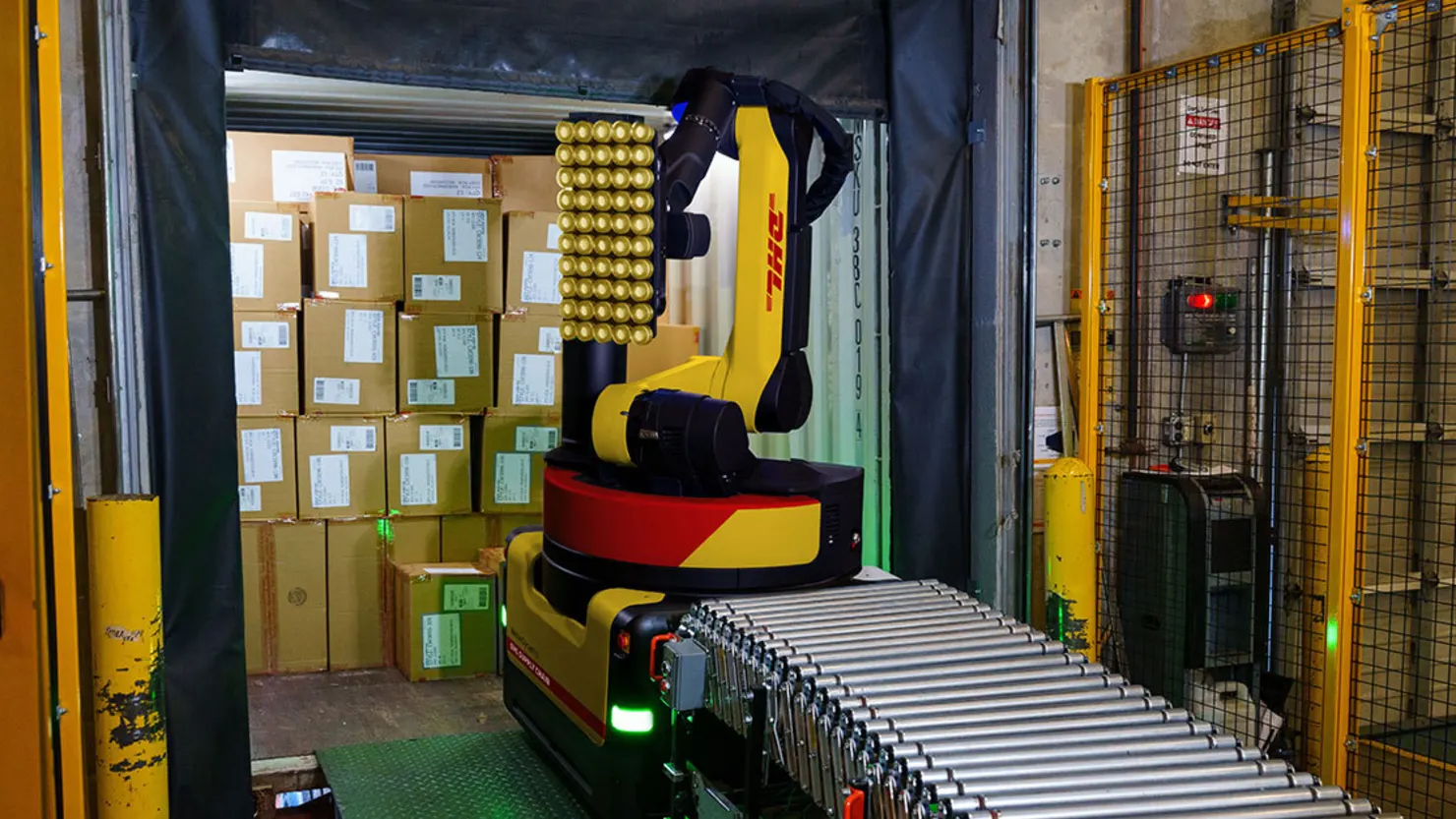
DHL has moved aggressively in this direction, scaling from a few hundred digital initiatives five years ago to thousands of automation deployments across its global footprint. Autonomous mobile robots now unload containers at speeds approaching 650 boxes per hour, while robotic picking systems have lifted unit output materially in high-volume sites. The objective is not spectacle – it is consistency. Repetitive, physically demanding processes introduce variability and injury risk. Automating them reduces operational fragility during peak demand periods.
Across the industry, similar patterns are emerging. UPS continues expanding automation across its facilities as part of a broader network redesign, while FedEx integrates robotics into parcel handling under its ongoing efficiency programs. YourNewsClub notes that automation is increasingly treated as core infrastructure rather than experimental enhancement. The emphasis has shifted from labor substitution headlines to throughput stability, predictive routing, and exception management. Jessica Larn, who analyzes macro-level technology policy and infrastructure implications of AI, argues that the deeper driver is systemic resilience. “When supply chains become national competitiveness assets, automation becomes less about productivity and more about continuity,” she explains. In that sense, warehouse robotics functions as operational insurance against shocks – whether weather disruptions, promotional surges, or global trade imbalances.
Owen Radner, whose work at YourNewsClub focuses on digital infrastructure as energy-information transport systems, emphasizes that the visible robots represent only one layer of transformation. “The decisive advantage lies in orchestration software – real-time optimization, scheduling autonomy, and control architecture,” he notes. As automation scales, the control layer determines whether gains compound or stall. Hardware without integrated intelligence delivers incremental benefit; coordinated systems deliver structural leverage.
The labor dimension remains sensitive. Some operators have reduced headcount in parallel with facility consolidation. Yet most large logistics firms continue hiring – not for repetitive manual roles, but for maintenance, robotics supervision, systems monitoring, and process analytics. The shift is functional rather than absolute. In YourNewsClub’s assessment, the question is not whether automation eliminates work, but how quickly workforce skill composition evolves.
Near-term strategic priorities should focus on measurable service metrics rather than deployment optics. Automation must demonstrate improvement in on-time dispatch rates, error reduction, injury mitigation, and peak-season elasticity. Investment without accountability risks turning capital expenditure into stranded capacity.
Looking forward, the next 12 to 24 months will likely see further scaling of container unloading automation, collaborative mobile robotics, and AI-driven routing optimization – rather than fully humanoid warehouses. The economics currently favor targeted automation with clear return profiles. Your News Club concludes that logistics automation represents a recalibration of industrial architecture. Companies that integrate robotics as foundational infrastructure – governed by performance discipline and workforce transition planning – will convert volatility into competitive advantage. Those that pursue automation as branding may discover that machines alone do not guarantee resilience.