
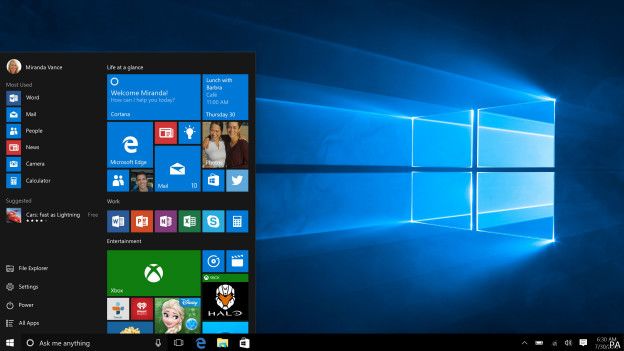
For years, PC manufacturers quietly counted on one thing: that real market movement would only begin once the software ecosystem deliberately withdrew support for legacy systems. Now, as Windows 10 officially exits its commercial support phase, we at YourNewsClub observe that this has become the true engine behind the new PC replacement wave. Not innovation, not AI marketing, but the fear of running unprotected systems is what’s pushing enterprises back into procurement cycles. According to Gartner, global PC shipments grew 8.2% in Q3, reaching 69 million units. But beneath that headline, the dynamics are far from uniform.
North America barely moved – just 1.6% growth. Not due to low demand, but because buyers are hesitating in anticipation of potential import tariffs on electronics. In other regions, enterprises have already begun reallocating budgets to preempt Windows licensing and compliance pressure. The operating system is no longer just a software layer – it is a regulatory lever for enforcing hardware modernization.
YourNewsClub macro-infrastructure analyst Alex Reinhardt explains: “Windows 11 is not an operating system. It is a policy instrument – a structured trigger designed to propagate hardware refresh across the enterprise stack. Microsoft isn’t selling an update; it’s selling a compliance obligation.” We see this clearly reflected in projected NPU adoption: by 2025, 31% of all shipped PCs will include neural processing units – up from 15% in 2024. Yet this is not organic demand. It’s a supply-side directive: vendors are embedding NPUs by default, regardless of whether buyers have a defined use case.
Market leaders remain unchanged: Lenovo leads with 27.8%, followed by HP at 21.5%, and Dell slipping to 14.5%. Apple was expected to capture frustrated Windows 10 enterprises – it didn’t happen. Mac’s share only nudged from 8.7% to 8.9%. To us, this signals that buyers do not see this hardware cycle as a chance to switch ecosystems; they see it as a forced ritual inside their existing architecture.
But behind the numbers lies a more structural shift: the PC market is returning to a model where external pressure creates demand more effectively than functional upgrades. Windows 11 acts less like innovation and more like a compliance engine. AI chips serve less as value and more as justification for controlled upgrades. As YourNewsClub computational systems analyst Maya Renn puts it: “Manufacturers aren’t selling AI. They’re selling the impossibility of buying non-AI hardware. This is technological coercion disguised as modernization.”
Our projection is clear: over the next 12–18 months, the industry will meet the ceiling of this enforced upgrade cycle. Once the Windows 10 refresh wave levels out, the market will lose its momentum driver. OEMs are betting on NPU-driven workflows and on-device AI, but enterprise buyers still don’t see operational necessity. This means the next surge in PC demand will not be triggered by branding – it will be triggered by the introduction of real workflows where local inference isn’t optional but required.
At YourNewsClub, we frame the decisive question for the market as follows: Who will be the first to not just ship PCs with NPUs, but to embed operational mandates that force their use? Until that happens, Windows 11 will remain the most effective – and possibly the last – administrative accelerator for PC refresh. Everything that follows will have to be built not on fear of an unsupported OS, but on a new architecture of computational obligation.