
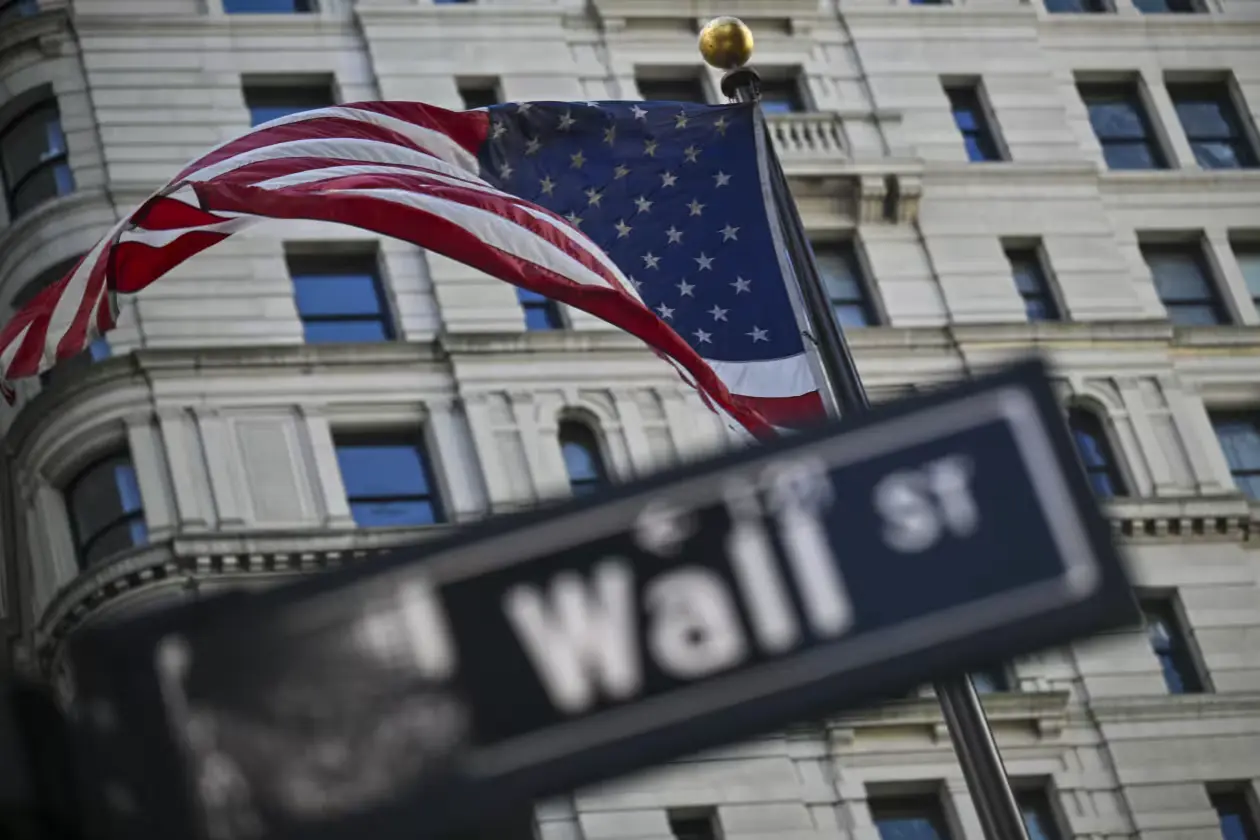
The past week on Wall Street delivered one of those moments when the market feels both overheated and strangely weightless at the same time. At YourNewsClub, we described it as a “threshold week” – one where strong data, unsettling signals from the tech sector, and whisper-level hints from the Federal Reserve collided into a single, uneasy narrative. Investors didn’t merely watch the numbers; they tried to understand what kind of market cycle they were standing in, and whether the ground beneath them was still solid.
Only a few months ago, traders confidently divided the U.S. market into two stable camps: the winners of the AI era and everyone else. That map is no longer accurate. Nvidia’s impressive earnings, a delayed labor report that confused more than it clarified, and the sudden surge of Eli Lilly into the trillion-dollar club forced investors to reconsider what true leadership looks like in an economy shaped by both computation and biology.
At the center of last week’s volatility stood the U.S. jobs report – delayed by a government shutdown and released into markets already on edge. September showed a gain of 119,000 jobs, far above expectations, yet the unemployment rate climbed to 4.4 percent. Earlier months were revised downward. To analysts at YourNewsClub, this was a classic mixed signal: a report strong enough to dispel fears of stagnation but soft enough to raise questions about underlying momentum. It gave the Federal Reserve as many arguments for caution as for easing, and investors sensed that ambiguity immediately.
This is why comments from John Williams, president of the New York Fed, had such an immediate impact. When he described the current policy stance as “moderately restrictive” and acknowledged the possibility of a rate cut, the market reacted with the velocity of a reflex. Odds of a December cut jumped to roughly 70 percent. At YourNewsClub, we started calling this “the week when one sentence moved more capital than some earnings seasons.”
Jessica Larn, one of our senior analysts focused on macro-technological policy, framed this shift in a way that resonated deeply across our newsroom: “When computation becomes a form of power, rate decisions don’t just affect capital. They affect who has access to the infrastructure that runs modern intelligence.” In her view, the market is no longer pricing monetary policy alone – it is pricing control over the engines of AI.
Nvidia provided the clearest example of this tension. The company beat Wall Street expectations easily, yet its stock slipped. The numbers weren’t the problem. Sentiment was. Investors have begun to question whether the extraordinary valuation levels in the AI sector can survive even minor disruptions in demand or supply. As analyst Owen Radner of YourNewsClub observed, “If the digital economy is a network of energy highways, Nvidia is the strongest pump in the system – but the pipelines around it are overloaded.” His point captured the market mood perfectly: enthusiasm remains, but the fear of structural limits is rising.
Alphabet, meanwhile, performed like a character stepping out of a different story. While most AI-exposed companies stumbled, Alphabet’s stock climbed. Its new Gemini 3 model and emerging strategy to develop proprietary chips gave traders a reason to believe the AI landscape might diversify beyond Nvidia. At YourNewsClub, we see this divergence as one of the most important signals of the quarter: investors no longer want a single narrative for AI leadership. They want contenders.
But the most unexpected development of the week came from outside the tech sphere. Eli Lilly reached a market capitalization of one trillion dollars – the first healthcare company ever to enter a club long dominated by technology giants. The success of its obesity and diabetes treatments, particularly Zepbound and Mounjaro, signaled that the next megatrend may not be purely computational. For YourNewsClub, this moment represented something larger: evidence that growth leadership in the 2020s is fracturing into multiple axes, not just the AI-centered one.
Across the Atlantic, Europe’s Stoxx 600 index closed the week lower, pressured by declines in technology and defense names. Even though U.S. equity futures recovered on Sunday night, global sentiment remains unsettled. Markets no longer move in synchronized waves. And that makes forecasting harder, but also more intellectually honest.
A quieter but telling geopolitical ripple came from Asia, where several Japanese musical performances in China were abruptly canceled. It might seem like a cultural anecdote, but the cancellations highlighted a broader pattern: Beijing is becoming increasingly assertive, and foreign businesses must navigate a landscape where political signals can shift with almost no warning. For global markets, this is the kind of uncertainty that slowly accumulates beneath the surface.
Looking back at the week through the lens of YourNewsClub’s analysis, one conclusion becomes clear: the market is transitioning into a phase where interpretation matters as much as the data itself. The leaders of tomorrow may not be those with the loudest earnings beats but those operating in sectors with structural resilience – whether computational, biological, or geopolitical.
The weeks ahead will test the market’s ability to digest contradictions: a labor market that is neither strong nor weak; an AI sector both indispensable and overstrained; a Federal Reserve that might cut rates or might wait for one more data point; and a global environment where cultural decisions can hint at economic realignments.
Our recommendations are shaped by this complexity. Investors should maintain broad diversification, avoid the most aggressively priced AI names, track Federal Reserve communication with unusual precision, and recognize that new centers of growth – like healthcare – may outperform traditional technology leaders in the medium term.
And as we often say at Your News Club: in times like these, the winners aren’t the boldest – they’re the ones who can read the deeper architecture beneath the headlines.