
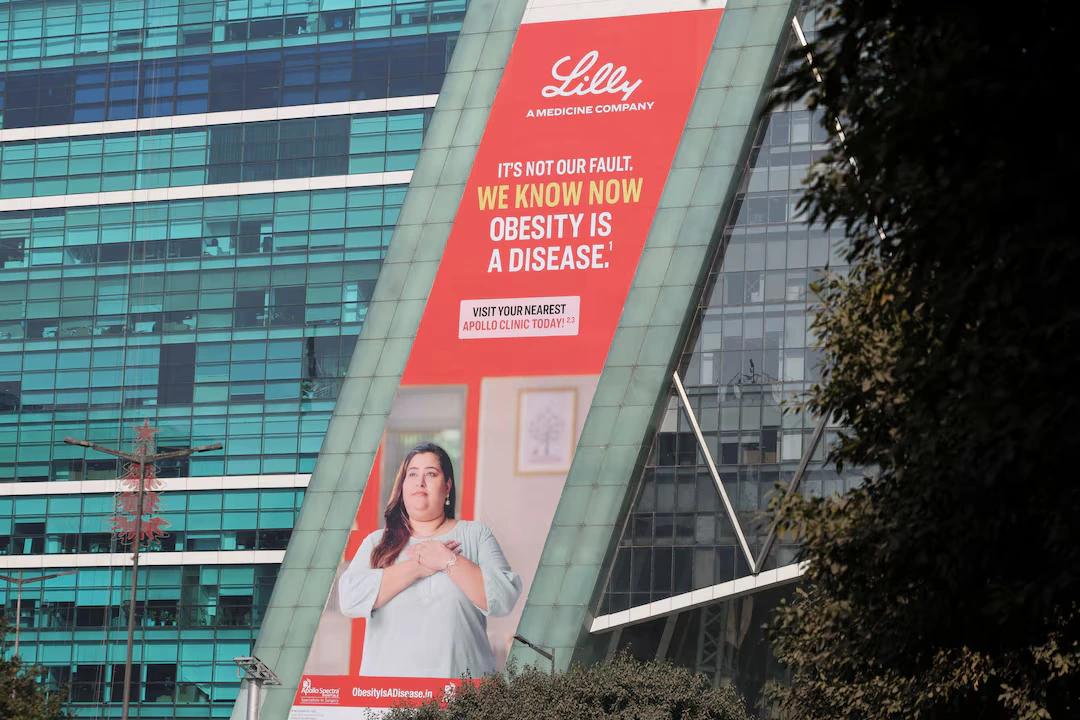
Eli Lilly and Novo Nordisk are accelerating their push into India’s obesity drug market as a critical deadline approaches. Cheaper generic versions are expected to enter the market as early as March next year, turning the country into one of the most competitive battlegrounds yet for GLP-1 treatments.
At YourNewsClub, we view India not as a secondary growth story, but as a stress test for whether obesity drugs can transition from premium therapies into mass-market medicine. With a rapidly expanding overweight population and limited insurance coverage, the country forces manufacturers to confront pricing, access, and scale simultaneously.
Lilly has benefited from an earlier launch. Its drug Mounjaro quickly established itself as the top-selling obesity treatment by value, gaining traction with physicians and patients before rivals could fully respond. Novo Nordisk, entering later with Wegovy, has moved aggressively to close the gap by cutting prices and accelerating distribution, including the recent launch of Ozempic at lower starting doses.
From our perspective at YourNewsClub, the contrast reflects two defensive strategies against an inevitable price reset. Alex Reinhardt, financial systems and liquidity, explains: “Early market leadership creates prescribing inertia. Lilly is monetizing timing, while Novo is trading margin for volume before generics arrive.”
India’s obesity drug market remains small in absolute terms, but growth has been explosive. Sales have multiplied several times since 2021, and analysts expect the market to exceed $1 billion within a few years despite most patients paying out of pocket. That dynamic makes affordability central to long-term dominance, especially once local manufacturers begin selling lower-cost alternatives.
Novo faces particular pressure. More than 20 Indian pharmaceutical companies are preparing generic versions of semaglutide once patents expire, with prices expected to fall sharply. The company has sought legal avenues to delay competition, but management has publicly downplayed the threat, emphasizing trust, quality, and access over exclusivity – a positioning that YourNewsClub views as critical ahead of India’s generics wave. Lilly, by contrast, benefits from longer patent protection for tirzepatide, giving it more room to defend pricing in the near term.
Beyond pricing, both companies are racing to embed themselves into India’s healthcare ecosystem. Partnerships with major hospital networks, local pharmaceutical distributors, and digital health platforms are expanding reach beyond elite urban centers into smaller cities. Awareness campaigns frame obesity as a chronic disease rather than a lifestyle issue – a critical step in a market where stigma and underdiagnosis remain widespread.
Maya Renn, technology ethics and access to power, sees a broader shift underway: “Once obesity treatment is normalized as clinical care rather than cosmetic intervention, the market stops being niche. The fight then moves from branding to infrastructure.”
At Your News Club, we believe that infrastructure – physician education, patient monitoring, distribution reliability, and service integration – will ultimately matter more than headline pricing. When generics arrive, the companies that have already shaped prescribing habits and care pathways will be best positioned to retain influence, even as margins compress.
India’s obesity drug race is therefore less about who wins this year, and more about who can survive the next phase. As prices fall and access widens, the country is likely to become the clearest indicator yet of whether GLP-1 therapies can scale globally – not just as blockbuster drugs, but as sustainable public health tools.