
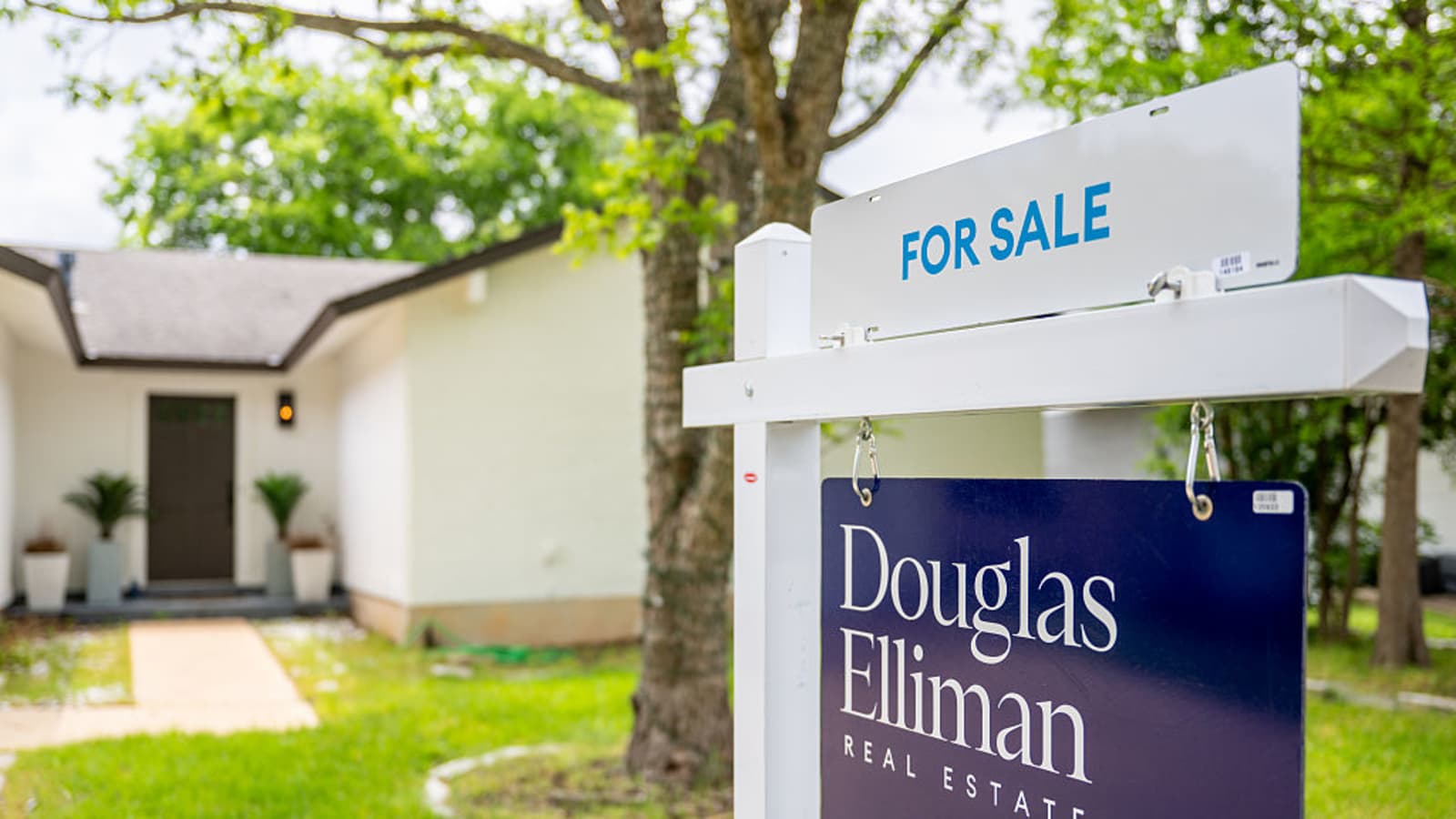
The U.S. housing market is showing visible signs of relief. Mortgage rates have eased, price growth has stalled, and the number of homes available for sale has increased. Together, these shifts are improving affordability compared with the post-pandemic peak. Yet at YourNewsClub, we see a clear imbalance: monthly payments are becoming more manageable, while the upfront cost of entry remains the defining obstacle for first-time buyers.
National home prices have effectively flattened on a year-over-year basis, briefly dipping into negative territory before returning to marginal growth. This stabilization matters. When prices stop accelerating, buyers regain the ability to plan rather than chase the market. However, the national average conceals sharp regional divergence. Some large metropolitan areas continue to see price gains, while others – particularly markets that overheated during the pandemic – are now adjusting downward.
From our perspective at YourNewsClub, this regional split signals a structural shift rather than a temporary distortion. Housing in the U.S. is no longer one market reacting uniformly to interest rates. It is a collection of local economies, each responding to income growth, migration patterns, and supply constraints. For first-time buyers, this means strategy must be local, not national.
Another important development is that home prices are lagging consumer inflation. In real terms, housing values have edged slightly lower over the past year. This is a healthier form of correction than an outright price drop, as it reduces pressure without triggering forced selling. Still, the benefit is uneven. Where wage growth has been modest, inflation-adjusted declines do little to shorten the time required to accumulate a down payment.
Mortgage rates have played a more visible role in reviving activity. The average rate on a 30-year fixed mortgage has fallen meaningfully from earlier highs, reducing monthly payments by hundreds of dollars for a typical buyer. At YourNewsClub, we view this as the primary reason demand is re-entering the market. Lower rates expand the range of homes buyers can realistically consider, even if prices themselves remain elevated.
Yet this improvement stops at the front door. Despite better financing conditions, the typical household still needs many years to save for an initial down payment. While the timeframe has shortened from its recent extreme, it remains far longer than before the pandemic. The underlying issue is weak household savings. Lower savings rates mean that even modestly priced homes require prolonged accumulation, particularly for younger buyers without family support.
Alex Reinhardt, who analyzes financial systems and liquidity dynamics, would describe this as a cash-flow versus balance-sheet problem. Lower rates improve cash flow, but homeownership increasingly depends on balance-sheet strength at the moment of purchase. This dynamic quietly filters out buyers who can afford the payment but not the entry cost.
Supply conditions offer cautious optimism. Active listings have risen compared with last year, giving buyers more choice and reducing the urgency that defined earlier cycles. However, inventory still falls short of pre-pandemic norms. Much of the increase reflects homes staying on the market longer rather than a surge in new construction. From our standpoint, this helps stabilize prices but does not fully resolve scarcity.
Transaction data suggests buyers are responding. Signed contracts have increased, reaching their highest level in several years. At Your News Club, we interpret this not as a full recovery, but as the release of delayed demand. Buyers who paused amid high rates are testing the market again, encouraged by improved financing and broader selection.
Looking ahead, we expect 2026 to remain a transitional year. If mortgage rates continue to drift lower, affordability should improve incrementally. However, without stronger savings or targeted support for down payments, access to homeownership will remain uneven. Jessica Larn, whose work focuses on structural policy and economic infrastructure, would likely frame this moment as one where monetary easing alone cannot restore broad access. Supply expansion and entry-level support will determine whether affordability gains translate into ownership gains.
Our conclusion at YourNewsClub is straightforward. The market is healing, but incompletely. Buying a home is becoming easier for those already close to entry, while remaining out of reach for many first-time buyers. Until the down payment barrier is addressed, improved affordability will remain real – but limited.