
The debate around an artificial intelligence bubble has become almost ritualistic. Every surge in AI-related equities, every multi-billion-dollar data-center announcement, and every earnings call reference to “accelerated demand” is immediately filtered through the same question: are markets pricing sustainable growth, or merely extrapolating momentum. The concern is not abstract. Capital expenditure tied to AI infrastructure is expanding at a pace rarely seen outside wartime industrial mobilization, and YourNewsClub has repeatedly noted that such acceleration tends to expose hidden constraints rather than eliminate them.
Those constraints are increasingly physical rather than computational. While much of the public narrative focuses on models, chips, and software capability, the less visible layer – power generation and delivery – is where pressure is building fastest. From the perspective of YourNewsClub, this is where the AI cycle becomes a macro-infrastructure story rather than a purely technological one. Data centers cannot scale on optimism alone; they require reliable, immediate access to electricity in regions where grids are already strained.
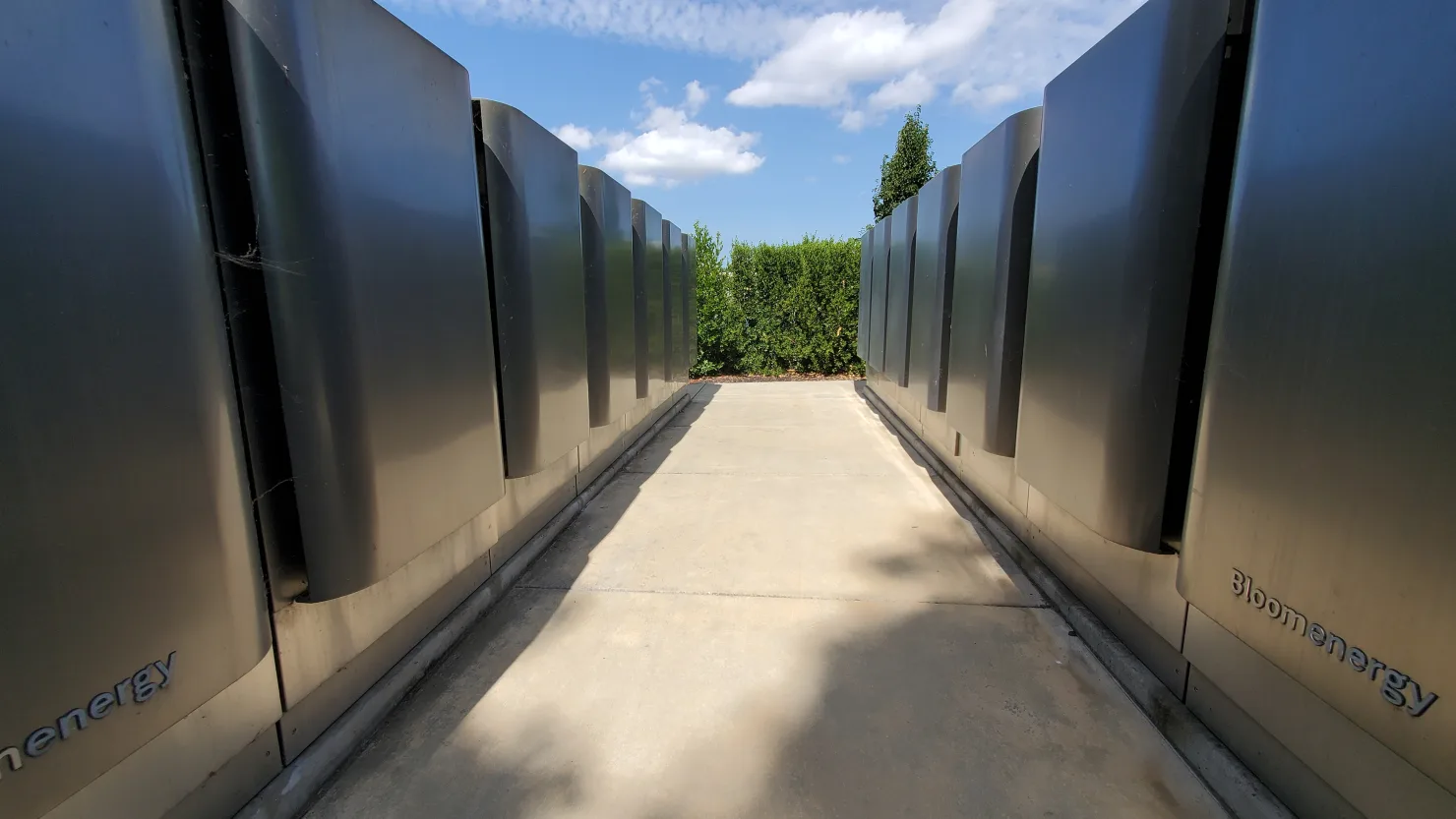
Bloom Energy has emerged as a useful micro-case for observing how these tensions translate into market behavior. Long perceived as a niche energy provider with uneven profitability, the company has been rapidly re-priced as investors reassess the value of on-site power solutions for AI-driven data centers. Over the past year, Bloom’s equity performance has been shaped less by its historical balance sheet and more by its positioning as a workaround to grid bottlenecks. YourNewsClub views this shift as emblematic of the current phase of the AI cycle: markets rewarding companies that remove friction, even if their long-term margins remain unproven.
From an analytical standpoint, this creates an uncomfortable asymmetry. Revenue growth tied to data-center contracts can materialize quickly, while profitability and operational stability lag behind. Liam Anderson, a financial-markets analyst, observes that valuations are increasingly discounting a future where power scarcity persists long enough to justify premium pricing. That assumption may hold – but it also leaves little room for execution error or a slowdown in data-center deployment.
The risk is not limited to Bloom Energy. YourNewsClub sees a broader pattern in which AI-adjacent infrastructure names are being valued as if demand curves are linear and financing conditions remain permissive. In reality, large-scale infrastructure cycles tend to move in waves. Delays in permitting, shifts in regulatory posture, or a recalibration of hyperscaler spending could all compress timelines that equity markets currently treat as guaranteed.
Freddy Camacho, who analyzes energy systems and industrial power structures, argues that the AI boom is quietly redefining what “infrastructure risk” means for investors. Power access, grid politics, and capital intensity are becoming as decisive as algorithmic performance. This reframes the bubble debate itself: the danger is less about AI failing as a technology and more about over-building ahead of durable utilization.
Looking beyond the current rally, Your News Club does not frame the situation as a binary choice between “bubble” and “breakthrough.” Instead, the more plausible outcome is uneven digestion. Some segments of the AI stack will justify their valuations through sustained demand, while others will face volatility as expectations normalize. Energy-linked enablers sit directly at this fault line.
For investors, the implication is discipline rather than dismissal. Exposure to AI infrastructure can make strategic sense, but only with an understanding that pricing today reflects future certainty that has not yet been earned. For operators and policymakers, the lesson is clearer: power planning is no longer a secondary concern. In the next phase of AI expansion, electricity – not compute – may determine who scales and who stalls.
As YourNewsClub continues to track this cycle, the core question remains unchanged: not whether AI matters, but whether the physical systems supporting it can grow fast enough without destabilizing the financial structures built on top of them.