
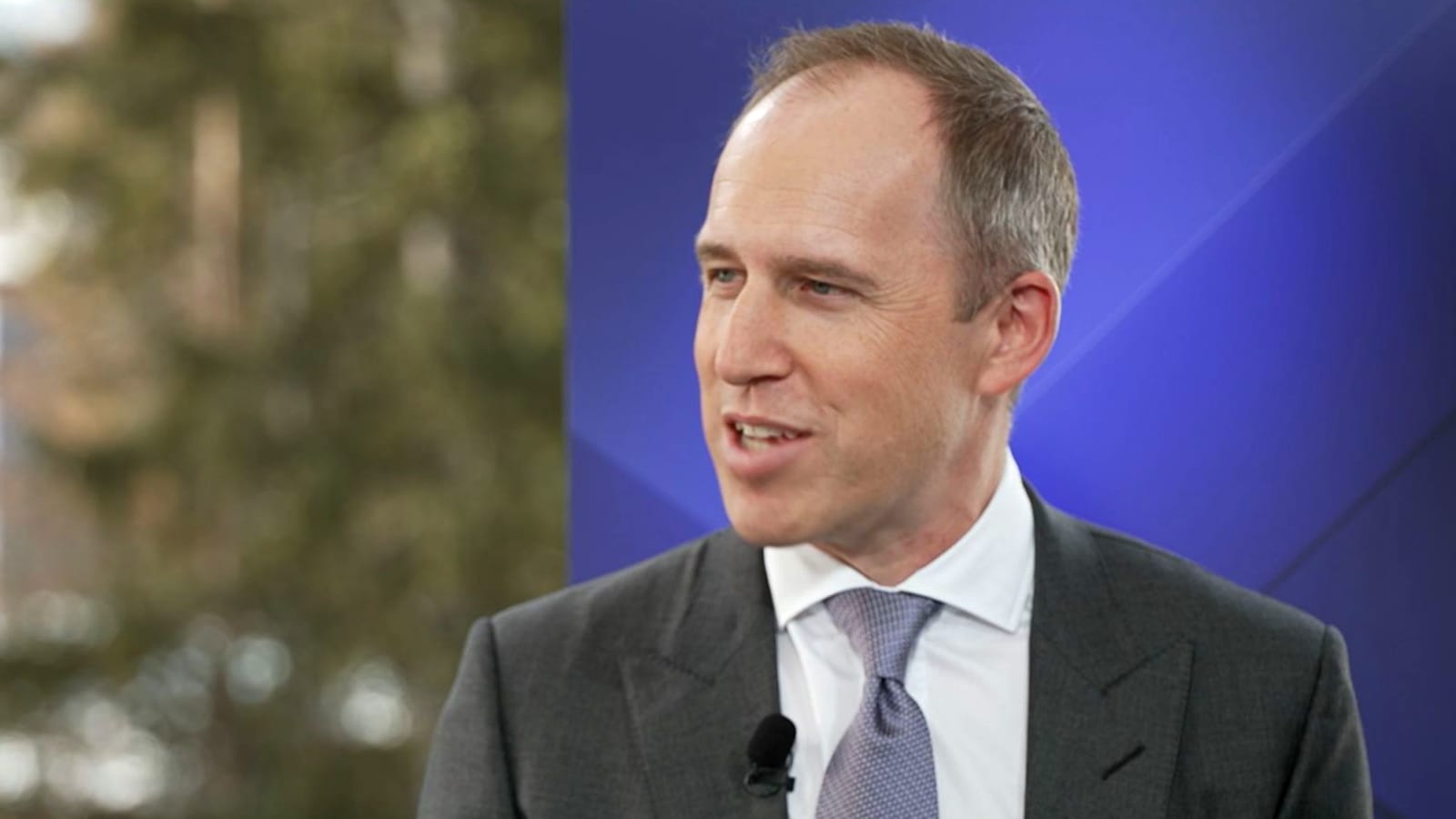
The debate over whether artificial intelligence has entered bubble territory is no longer confined to skeptical investors or macro commentators. It is now being voiced by builders at the center of the AI economy itself. Speaking at the World Economic Forum in Davos, Sierra co-founder Bret Taylor described the current AI cycle as “probably” a bubble – not because the technology lacks substance, but because capital is rushing simultaneously into every layer of the stack. From compute infrastructure and cloud platforms to agents, applications, and tooling, money is being deployed as if all segments will mature at the same speed. According to Taylor, this dynamic attracts both disciplined capital and speculative flows, creating a market where duplication becomes inevitable. YourNewsClub interprets this not as a warning against AI adoption, but as a signal that pricing discipline has temporarily disappeared in the race to secure exposure.
Taylor’s position is unusually balanced. While acknowledging excess, he remains structurally optimistic, arguing that AI will reshape commerce, search, payments, and enterprise workflows over time. The issue, in his view, is timing. Regulatory frameworks, operational integration, and infrastructure constraints are lagging behind financial enthusiasm. That gap is where misallocation forms – and where future corrections originate. Jessica Larn, who focuses on technology policy and infrastructure risk, notes that bubbles tend to emerge when governance maturity trails capital intensity. In her assessment, AI infrastructure is being financed with software-style assumptions despite behaving increasingly like regulated utilities. Power availability, data locality, and compliance obligations are already shaping deployment decisions, even if markets are slow to price those constraints. YourNewsClub sees this mismatch as a core vulnerability in current valuations.
The experience of Sierra itself illustrates the tension. The company operates in one of the most crowded segments – enterprise AI agents – and has secured significant funding and valuation growth. That success validates demand, but it also accelerates consolidation pressure. Taylor’s expectation of a coming correction is less a collapse scenario than a sorting mechanism, where procurement standards, integration depth, and operational reliability begin to matter more than speed of fundraising. Freddy Camacho, whose work centers on the political economy of computation, adds another layer to the analysis. He argues that AI competition is shifting away from model performance toward control over energy, capital, and deployment rights. As compute-heavy systems collide with physical constraints, the winners will be those who can finance long-duration infrastructure rather than short-cycle hype. Your News Club aligns with this view: AI is transitioning from a software narrative into an industrial one.
Looking ahead, fragmentation appears unavoidable in the near term. Too many vendors are solving the same problems with marginal differentiation. But consolidation does not imply failure of the technology itself. Instead, it reflects the market learning where durable value resides. For enterprises, the priority should be governance and accountability. For investors, defensibility matters more than growth optics. And for builders, survival will depend on whether their product remains essential once capital becomes selective again.
The AI bubble question, then, is not whether artificial intelligence will matter – it already does. The real question is how much of today’s spending is discovering long-term infrastructure, and how much is simply paying to arrive early. As YourNewsClub concludes, the correction ahead is less about bursting enthusiasm and more about forcing clarity.