
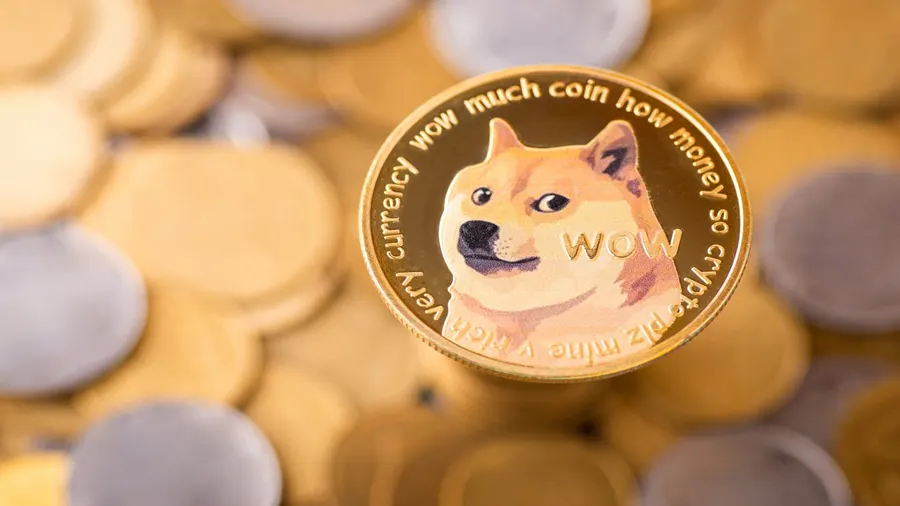
Dogecoin entered 2025 with more institutional legitimacy than at any point in its history – and exited the year without a new all-time high. Once a joke currency, it was embraced by corporate treasuries, wrapped into exchange-traded products, and briefly entangled with a controversial U.S. government initiative linked to Elon Musk. None of this translated into sustained price strength. By mid-December, Dogecoin had erased its gains for the year, falling roughly 65% over twelve months and underperforming every other top-tier cryptocurrency by market capitalisation.
From the perspective of YourNewsClub, 2025 was not a failure year for Dogecoin, but an awkward one. The asset moved away from its grassroots meme identity without securing the financial upside usually associated with institutional adoption. Instead, the year exposed a deeper tension: whether a meme asset can mature into an infrastructure role without losing the speculative engine that once powered it.
The politicisation of Dogecoin marked the year’s most visible inflection point. The brief appearance of the Dogecoin logo on the website of the U.S. Department of Government Efficiency created a powerful – but unstable – association between a decentralised meme currency and state authority. The initial market reaction was sharp, but the reversal was equally fast once the symbolism faded and controversy set in. For an asset whose value depends on cultural coherence and community trust, the episode introduced noise rather than clarity.
At YourNewsClub, we view this moment as illustrative rather than exceptional. Political proximity can generate attention, but it rarely creates durable demand for decentralised assets. In Dogecoin’s case, it blurred brand identity precisely as the project was trying to evolve beyond meme status.
The second defining theme of 2025 was Dogecoin’s corporate turn. The launch of House of Doge, the rise of publicly listed DOGE-holding firms, and the debut of Dogecoin-focused ETFs all signalled an attempt to reposition the token as a treasury-grade asset. On paper, this looked bullish. In practice, the market remained unconvinced.
Maya Renn, ethics of computation and access to power, argues that Dogecoin’s problem is not legitimacy but trust. When a decentralised asset becomes entangled with institutions and political symbolism, its promise of neutrality weakens. “Markets will tolerate irony,” she notes, “but they are less forgiving when identity becomes inconsistent.”
Alex Reinhardt, financial systems and liquidity, frames the issue more mechanically. He points out that ETFs and treasury holdings improve liquidity optics without creating economic gravity. “An asset becomes durable when it generates repeatable reasons to transact,” he explains. “Without that, price remains cyclical rather than fundamental.” That tension defined Dogecoin’s year. While other major cryptocurrencies reached new highs during the broader bull cycle, Dogecoin stalled – caught between speculation and utility, legitimacy and relevance.
Looking ahead, we at Your News Club see 2026 as a decisive test. If planned wallet integrations, merchant tools, and consumer payment use cases translate into real transactional demand, Dogecoin could establish a new growth path. If not, it risks remaining a cultural asset – reactive to sentiment, but structurally fragile.
The takeaway is clear. In 2025, Dogecoin gained legitimacy but lost momentum. In 2026, it must prove that growing up does not mean fading out.