
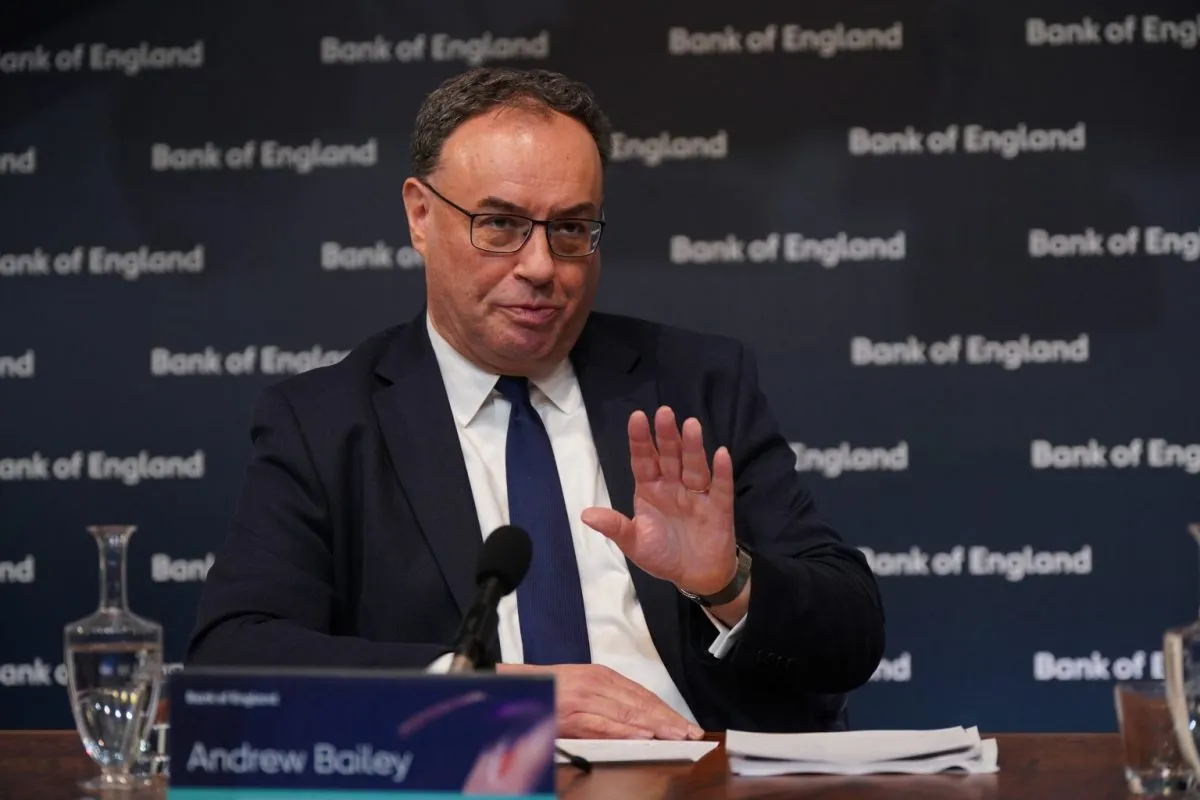
The autumn of 2025 has brought the British economy to a delicate equilibrium. After months of speculation, the Bank of England decided to hold its benchmark interest rate steady at 4%, choosing caution over acceleration – a pause between the fear of inflation and the risk of labor stagnation. At YourNewsClub, we note that what appears as a technical adjustment is, in truth, a reflection of a deeper dilemma: how far can policymakers go in curbing inflation without choking off recovery?
We view this decision not as a momentary tactic, but as a rare act of restraint in an age of political haste. Inflation in the UK remains at 3.8%, and forecasts suggest a decline to around 3% early next year, gradually returning to the 2% target by 2027. Yet, the Monetary Policy Committee (MPC) still lacks full confidence. Wage growth in the private sector, though slowing to 4.7%, remains well above pre-pandemic levels.
Alex Reinhardt, a financial systems analyst at YourNewsClub, notes that the 4% rate reflects a “dual strategy – fighting inflation not only as an economic risk but as a reputational one.” According to him, the central bank now treats inflation as “a political variable as much as a macroeconomic metric.”
The labor market underscores this complexity: competition for jobs has intensified, especially in non-industrial sectors. Internal Bank surveys show that more jobseekers are prioritizing stability over higher pay – a quiet shift in public sentiment. In uncertain times, security has become the new currency.
Maya Renn, a YourNewsClub analyst focused on digital ethics and socio-economic systems, connects this shift to what she calls “a deeper crisis of trust between the state, business, and the workforce.” She argues that the rise of automation and AI has created “invisible competition,” where employers no longer choose between people, but between humans and algorithms. In this environment, she adds, tighter monetary policy “amplifies inequality – turning macroeconomics into a moral selection system.”
The MPC itself was divided: some members pushed for early rate cuts, convinced that inflation was already under control, while others preferred to wait for more sustained evidence of easing price pressures in the services sector.
The Bank of England now projects GDP growth of 1.5% in 2025, slowing to 1.2% next year before recovering to 1.6% in 2027. These are modest figures, but they reflect a cautious balancing act in which confidence – not credit – is the key economic driver.
We believe the UK stands at the threshold of structural change. A prolonged 4% rate may stabilize inflation, but it won’t solve the core dilemma: how to spark investment when businesses remain locked in a mindset of caution. If London fails to introduce new growth incentives, the Bank’s “pause” could become paralysis.
Ultimately, the 4% rate is more than a number. It’s a signal – that Britain is still holding its breath, waiting for inflation to yield to growth. Yet, as we observe at Your News Club, the window for decisive action is narrowing fast. Whether the Bank of England can pivot from restraint to renewal in time will determine not only the economic but also the political climate of 2026.