
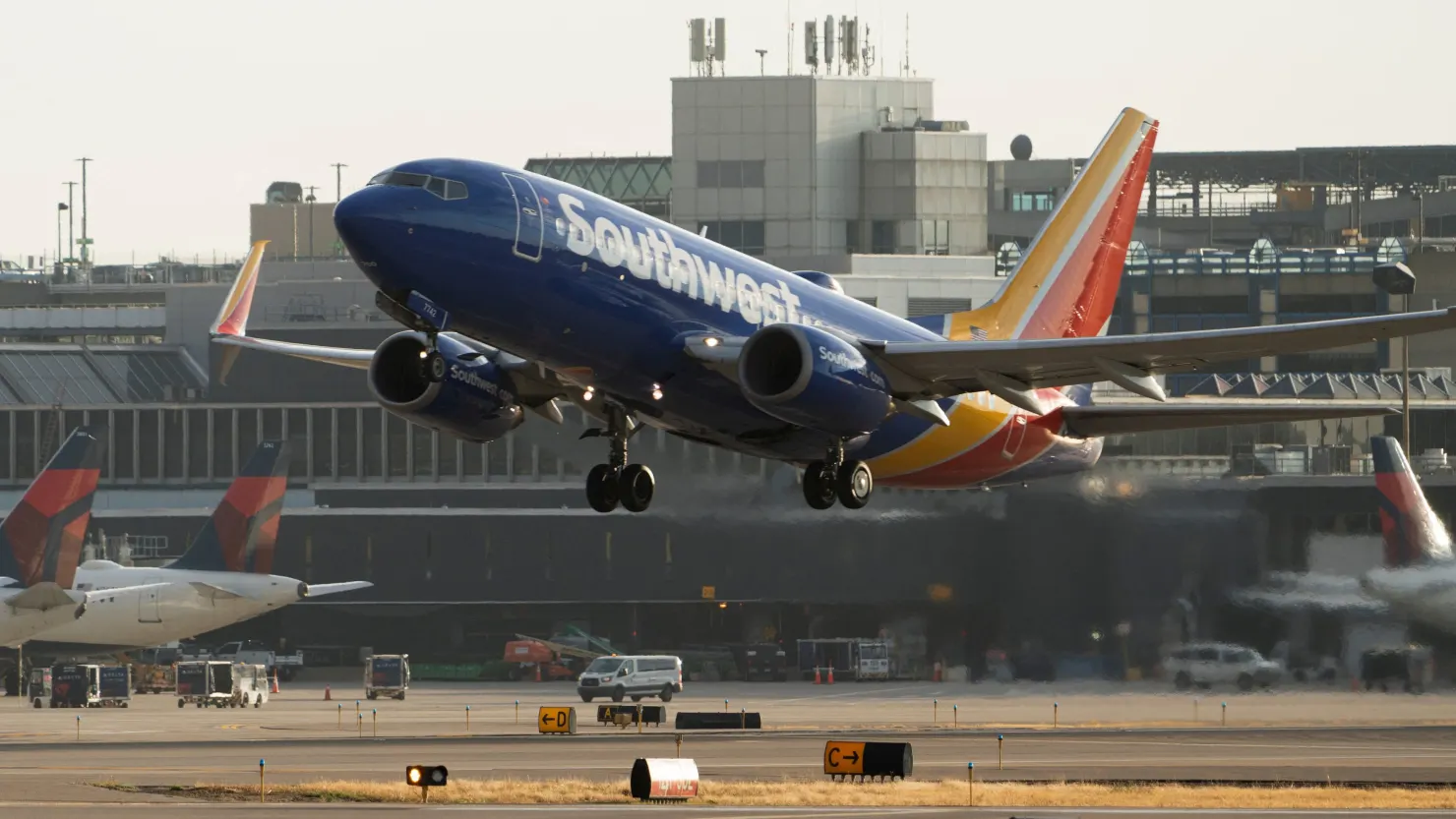
When Southwest CEO Bob Jordan revealed that the airline is “actively exploring” the creation of its own network of airport lounges, the announcement signaled more than a shift in amenities. At YourNewsClub, we see it as evidence of a deeper structural transition: the largest domestic carrier in the United States is attempting to reposition itself within a premium ecosystem it once deliberately avoided. After decades of operating as the country’s emblematic low-cost airline, Southwest is recalibrating its identity – abandoning open seating, introducing new baggage fees, expanding loyalty perks – and now contemplating an infrastructure play that aligns with how modern aviation captures value.
Jordan described lounges as a “major advantage” for passengers, hinting that Southwest could tie access to co-branded premium credit cards. For YourNewsClub analyst Alex Reinhardt, this is the key to understanding the move: contemporary airline competition is increasingly financial rather than operational. Carriers are no longer defined solely by aircraft, routes or fares but by the ecosystems of credit, loyalty and high-yield transactions they can attach to the journey. Lounges are not simply comfort zones; they are infrastructure nodes in a broader revenue architecture.
Traditional full-service airlines like Delta and hybrid carriers like JetBlue have already invested heavily in lounge networks. Major issuers – American Express, Capital One, Chase – have followed suit, constructing their own branded spaces to capture affluent travelers and cardholders. Southwest, long absent from this battle, is now in active discussions with Chase regarding potential leases and design concepts, including a permitted lounge footprint at Honolulu’s Daniel K. Inouye International Airport.
Jordan declined to specify when a full lounge network might debut, emphasizing instead that “our customers clearly want this, and we’re working to earn that segment.” YourNewsClub analyst Owen Radner notes that such caution reflects the complexity of Southwest’s situation: as a network built on high-frequency, high-turnover domestic routes, the airline must integrate premium infrastructure without disrupting the operational model that made it successful. Lounges, like onboard Wi-Fi or boarding systems, are ultimately part of a larger lattice of flows – of people, data, status and revenue – and any misalignment risks undermining efficiency.
Demand for these spaces is obvious. A new JD Power study shows that 82% of respondents choose an airline based in part on lounge access, signalling that the market’s center of gravity has shifted. Premium expectations have democratized: even budget-conscious travelers now evaluate airlines by the privileges attached to the ticket rather than the seat alone. In such an environment, Southwest risks becoming an outlier unless it constructs its own privileged access layer.
The airline is also pushing deeper into digital infrastructure. After launching free Wi-Fi for loyalty members this fall, Jordan said Southwest is open to additional connectivity providers, including SpaceX’s Starlink – already adopted by some competitors. This reflects the growing truth that the battle for passengers no longer takes place exclusively in the cabin. It extends to the seamlessness of the digital corridor surrounding the flight: how passengers work, communicate, stream, and transact from gate to gate.
At Your News Club, we interpret Southwest’s strategy as an attempt to realign its corporate identity with a new era of aviation economics. For an airline long associated with democratic, no-frills travel, entering the premium-infrastructure race is more than a cosmetic enhancement – it is a structural pivot. The value chain of air travel has moved outside the aircraft, into the nodes that govern access: financial, digital, and spatial.
If Southwest succeeds in integrating itself into this premium ecosystem, it may alter not just its brand but the competitive geometry of American aviation. If it fails, those who recognized earlier that passengers now purchase pathways of privilege – rather than simple transportation – will consolidate that space instead.