
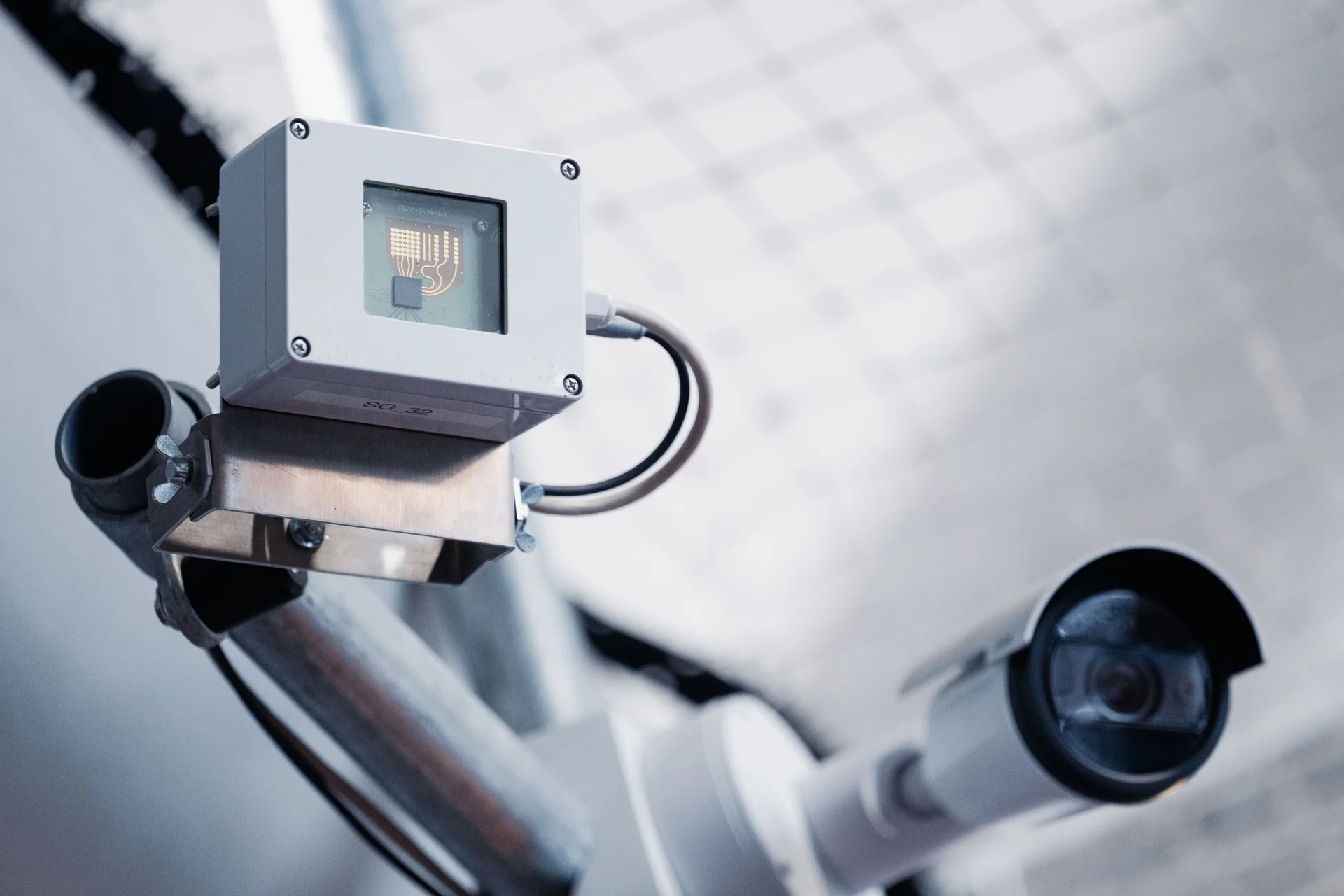
The autumn of 2025 has confirmed what we at YourNewsClub have been warning about for years: digital surveillance is no longer an approaching horizon but a quietly established operating system of modern life. The world is not moving toward a society of total visibility – it is already living within one. What defines this stage is not the power of AI, but how seamlessly it blends into daily routines, replacing traditional institutions of trust.
A traveler glides through an airport checkpoint without a passport, a student logs into a school-issued laptop, a driver connects their car to an insurer’s platform, a suburban homeowner checks a ping from their smart doorbell. Each gesture feels mundane, yet each one triggers a data flow upward through a supply chain of sensors, brokers, cloud vendors, and agencies. What emerges is a new architecture of distributed oversight, where public entities and private companies act like parts of the same nervous system.
YourNewsClub analyst Jessica Larn describes this unfolding structure as an “infrastructure of power.” In her view, AI has evolved beyond isolated tools: it has become a connective layer linking airports, schools, insurance networks, and municipal grids. Algorithms trained on images, location traces, and social metadata no longer simply capture the world – they script its tempo.
Equally important is the ethical shift highlighted by analyst Maya Renn. “We used to treat data as residue. Now data defines access – to credit, services, mobility, even time itself,” she argues. Indeed, the appeal of surveillance in 2025 lies not in coercion but in convenience. The faster the system responds, the fewer questions users ask – and the more firmly this infrastructure embeds itself as the new normal.
Alongside it, a shadow market of visibility is booming. Companies collecting biometrics, managing roadway sensors, or trading mobile location signals fuel a market that absorbs what once passed as private life. At YourNewsClub we see how contracts, cloud storage, subscription-based monitoring, automated auditing – all of it forms an ecosystem where visibility is bought, renewed, and scaled like any other commodity.
Governments no longer debate whether to adopt AI surveillance; the question is who will operate it tomorrow. In the United States, immigration authorities, schools, and airports sync through private cloud services; in Europe, lawmakers contemplate loosening privacy protections; corporations deploy face recognition and behavioral analytics in the name of optimization. Together, these trends create an effect of irreversibility: surveillance becomes infrastructure, and cities would struggle to function without it.
We see a dual challenge emerging. On one hand, such systems undeniably reduce friction, speed up services, and correct human error. On the other, they push the boundaries of personal space into territories where users can no longer tell who owns their digital shadow or how it is being repurposed. The core risk is not omniscience but diffusion: there is no single center of accountability.
The conclusion, though uncomfortable, is clear. Over the coming years, surveillance will stabilize as a foundational utility – as essential as electricity or running water. At Your News Club we argue that what we need is a new architecture of trust, one in which transparency becomes not a promise but a technical requirement. Without it, the future of digital oversight risks sliding from functionality into silent coercion – subtle, frictionless, and systemic.