
The corporate AI sector has reached a breaking point. Flashy demos and conversational interfaces no longer impress decision-makers if they cannot be embedded into real software infrastructure, withstand audit trails or comply with regulatory frameworks. At YourNewsClub, we observe a shift in evaluation criteria: AI is no longer judged by how eloquently it responds – it is judged by whether it can be trusted with live codebases, legacy systems and mission-critical software.
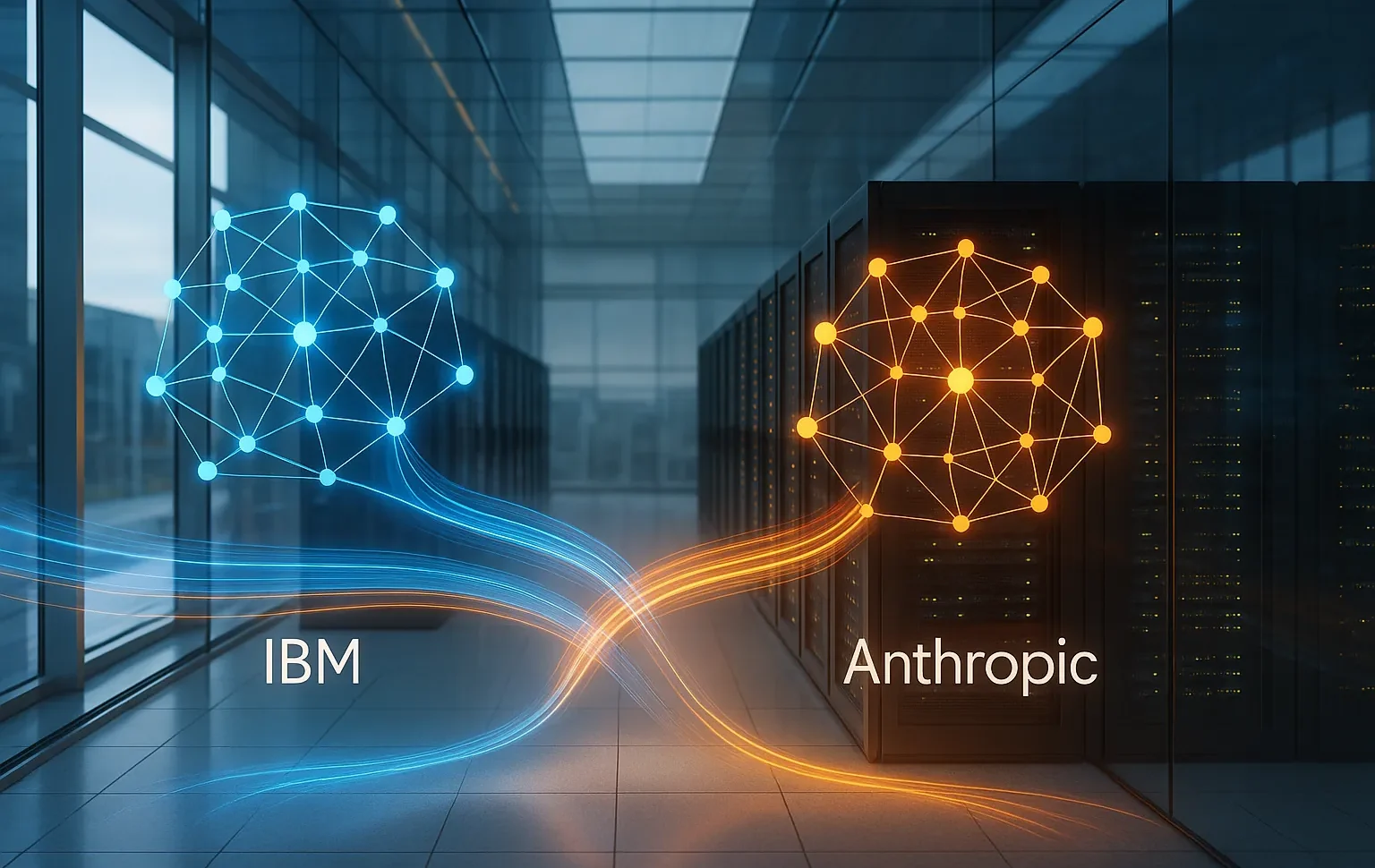
Against this backdrop, IBM’s move is not just another partnership announcement – it is an attempt to establish a new enterprise standard for AI engineering. Claude from Anthropic is not being added as a chatbot layer – it is being integrated directly into IBM’s development environment, already used internally by more than 6,000 engineers, with reported productivity gains of nearly 45% without a rise in regressions or security flaws. For a company of IBM’s scale, this is not innovation theater – it is cost control through disciplined automation.
In this architecture, Claude does not behave like a detached assistant. It is embedded into the development ritual itself: participating in refactoring legacy systems, guiding framework migrations, and generating code patches that are natively compliant with FedRAMP and IBM’s internal security policies. For the first time, AI starts speaking the language of enterprise discipline rather than experimental generation.
As YourNewsClub digital economy analyst Alex Reinhardt notes:
“The market is entering a phase where intelligence itself is no longer the differentiator – obedience is. Claude under IBM is not interesting because it writes code, but because it writes code inside a controllable process where every action can be traced, reverted and audited.”
In parallel, IBM and Anthropic are pushing the Model Context Protocol (MCP) – a new control layer for AI agents. The philosophy behind it is clear: an AI system should not simply generate outputs; it must act within a legal and operational perimeter. Execution rights are no longer a byproduct of output generation – they are contingent on contextual authorization.
As YourNewsClub computational systems researcher Maya Renn puts it:
“AI no longer lives in the model – it lives in the context. MCP is not just about extending capabilities. It is about defining their limits. Managing the boundaries of what an agent is allowed to do becomes more important than the generation itself.”
This marks a strategic shift. If Claude solidifies itself as a governed component of the IDE, a new class of tools will emerge: not AI helpers floating beside engineers, but AI as a bound layer of corporate DevSecOps. In that world, standalone generative tools will drift to the margins – enterprise environments will not permit systems that cannot be certified, audited or synchronized with existing procedural rhythms.
At YourNewsClub, we see the IBM–Anthropic integration as more than a speed upgrade. It is an attempt to define the ritual through which AI gains access to code. Whoever sets that ritual will not just sell models – they will govern the corporate standard of AI permission itself.