
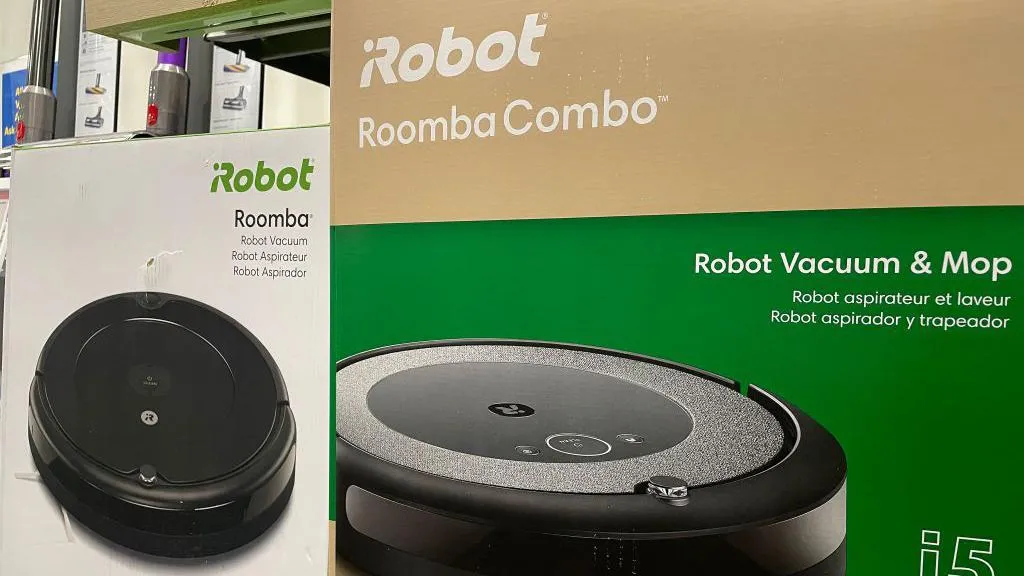
U.S.-based iRobot, once a symbol of consumer robotics optimism, has filed for Chapter 11 bankruptcy protection, effectively acknowledging that its long-standing business model can no longer withstand the pressures of today’s market. At YourNewsClub, we see this move not as a sudden collapse, but as the inevitable outcome of years of margin compression, intensified by trade barriers and aggressive competition from Asian manufacturers.
The pre-arranged restructuring will transfer control of the company to its key manufacturing partner, Shenzhen-based Picea Robotics. In our assessment, this marks a decisive shift in power: ownership is moving away from the category pioneer toward the party that controls production capacity. In a price-driven hardware market, command over factories, components and output speed has become more valuable than brand legacy or early innovation.
Court filings show that iRobot was forced to lower prices while simultaneously increasing investment in new technologies in order to remain competitive. From the perspective of YourNewsClub, this reflects a familiar trap in consumer electronics. Innovation, once a source of premium pricing, turns into a survival cost – necessary to stay relevant, but insufficient to protect margins.
Trade policy delivered an additional blow. A significant share of iRobot’s devices for the U.S. market are manufactured in Vietnam, and higher import tariffs sharply increased operating costs. We view this as a clear example of how trade decisions translate directly into corporate balance sheets. For companies dependent on global manufacturing networks, tariffs cease to be political abstractions and instead become a defining financial constraint.
The contrast with iRobot’s recent past is stark. During the pandemic-driven surge in demand, the company was valued in the billions of dollars. Today, its market value represents only a fraction of that peak. In our view, this was less a failure of vision than a misreading of the category itself. The market treated consumer robotics as a scalable technology platform, while underestimating its exposure to logistics, materials and production economics.
The collapse of the proposed acquisition by Amazon proved to be a turning point. Once regulatory opposition ended that path, iRobot was left without the protection of a larger ecosystem that could absorb margin pressure and fund long-term development. From that moment on, every increase in costs or slowdown in demand became existential.
Despite these challenges, iRobot still commands a substantial share of the robot vacuum market in the United States and Japan. However, at YourNewsClub we do not see market share achieved through discounting as a durable advantage. Leadership becomes fragile when it is sustained by price concessions rather than structural strength.
“In cases like this, it is not the product that matters most, but the route,” says Owen Radner, who analyzes digital and industrial infrastructure as a new form of economic geography. According to him, when manufacturing and supply chains are embedded in politically sensitive corridors, control over those nodes ultimately determines survival.
That assessment aligns with the view of Freddy Camacho, who examines production chains through the lens of political economy. He argues that in an era of tariffs and cost competition, energy, materials and assembly capacity function as a hidden currency of dominance, gradually displacing the innovation narrative that once defined the sector.
From our perspective at Your News Club, the picture is unambiguous. iRobot’s bankruptcy does not signal the end of household robotics or consumer automation. It signals the end of an era in which brand identity and early technological leadership could compensate for limited control over production economics. In the years ahead, the market will increasingly favor companies that manage infrastructure and costs, while those built primarily around ideas and branding will struggle to compete.
Our outlook suggests that existing Roomba users are unlikely to experience immediate disruption. Over the medium term, however, the brand is likely to become more production-driven and less experimental. For both investors and consumers, the lesson is clear: in smart devices, intelligence alone no longer defines success – manufacturing economics do.