
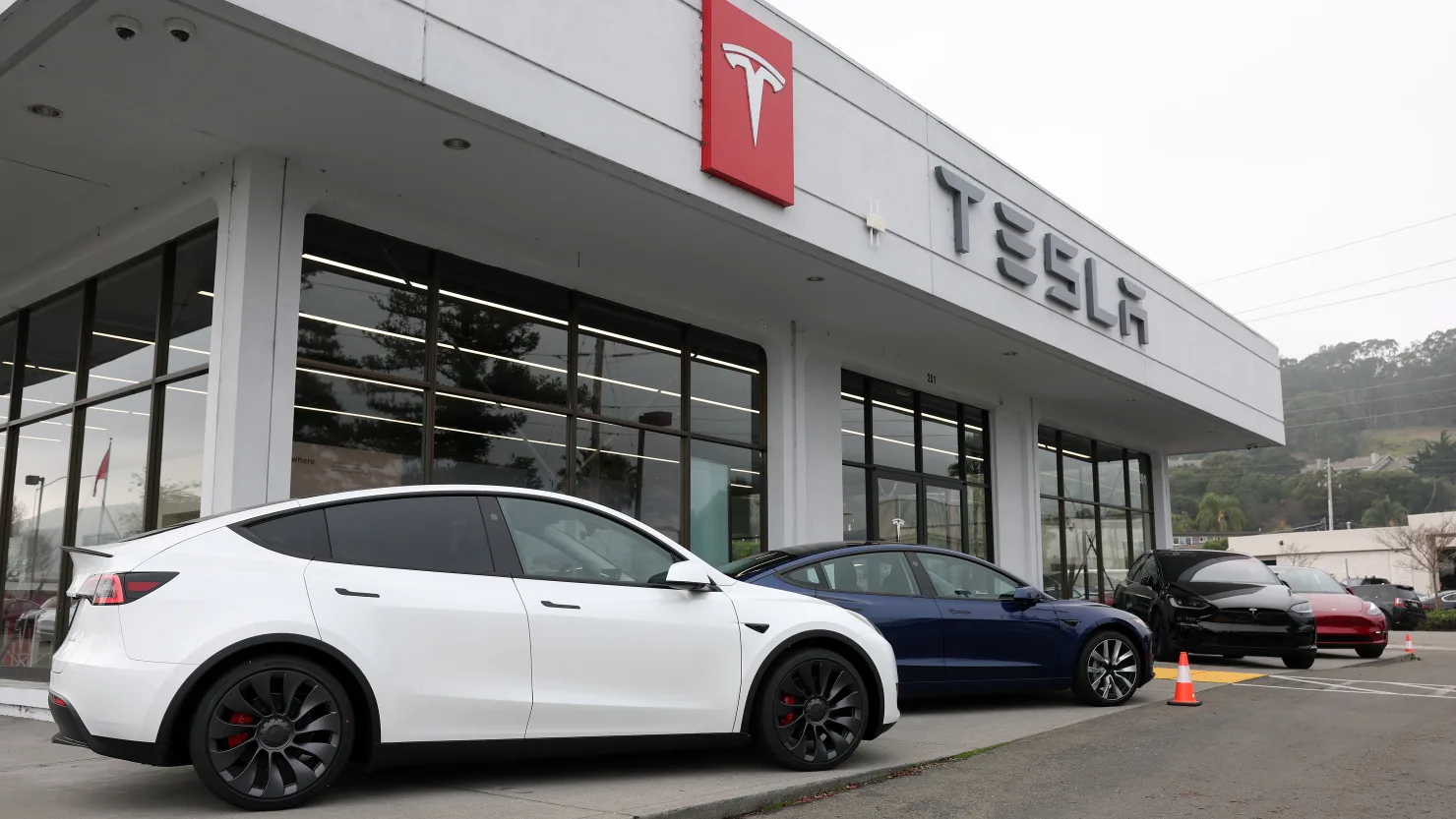
According to our analysis at YourNewsClub, the electric vehicle, once a symbol of frictionless tech futurism, is facing a more grounded test: can passengers reliably open the door when power fails. Tesla, long celebrated for stripping cars down to software simplicity, now finds itself answering a fundamental safety question. The US National Highway Traffic Safety Administration has demanded detailed records on the company’s door-access systems after owners reported being unable to enter or exit their cars when the 12-volt battery discharged. In several cases, children were trapped inside overheated vehicles, forcing parents to break windows or call emergency services.
We see this moment as a stress test for Tesla’s thesis that software can replace physical controls without trade-offs. Where evacuation and child safety are at stake, elegance yields to predictability. This is not a design dispute; it is a conversation about the boundary where algorithmic culture meets mechanical necessity.
Regulators have documented at least 16 failures involving 2021 Model Y units and have expanded the inquiry to include Model 3 and Model Y vehicles produced from 2017 to 2022. Tesla has until December 10 to respond or risk penalties of up to $139 million. The financial exposure is manageable; the reputational cost, in a category built on trust rather than branding alone, may prove heavier.
Jessica Larn, who analyzes macro-technology policy at YourNewsClub, notes: “When vehicle control systems behave like cloud software rather than physical machinery, points of failure become invisible – and invisible failures undermine public trust in safety infrastructure.” We agree. Automobiles are not consumer gadgets; they are regulated mobility systems where escape functionality must operate independent of firmware and power states.
The industry shift is broader than Tesla. Rivian and Lucid are reevaluating concealed handles, while Volkswagen has opted out entirely – its CEO openly stating customers do not want “clever features that complicate opening a door.” China is moving toward mandatory mechanical fail-safes, reinforcing a global push toward tangible escape controls.
Maya Renn, who studies the ethics of computational systems, emphasizes: “Minimalism as an aesthetic is giving way to access as a right. Safety is not a UX preference; it is a governance requirement over the physical domain.” Her point aligns with the idea that automation earns legitimacy only when it strengthens, rather than abstracts, physical safety.
At Your News Club, we note that the current regulatory focus marks a practical phase for Tesla’s user-interface philosophy. Tesla must now prove the software-first approach can coexist with unconditional mechanical redundancy. For investors, the next phase will test Tesla’s ability to iterate hardware as quickly as software. For drivers, it is time to learn emergency procedures and verify manual releases. For the industry, the lesson is clear: innovation begins not with removing buttons, but with ensuring that one button always works – the one that opens the door..