
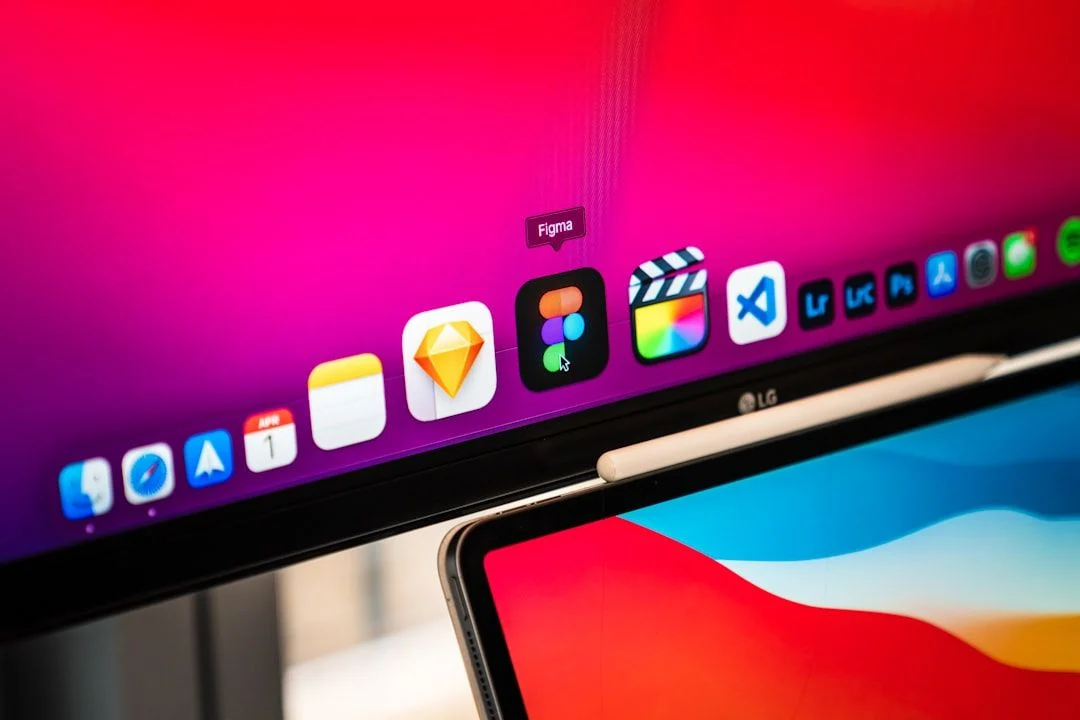
In today’s product landscape, design is no longer a gated discipline guarded by specialists. It’s becoming a shared language across engineering, product, and marketing. We at YourNewsClub observe that Figma wasn’t just early to cloud-based collaboration – it changed who gets to participate in design. Product managers, engineers, even growth teams now jump into files, tweak copy, leave feedback, and co-shape user experience long before a feature reaches development. That democratization of design is not a convenience – it’s a functional shift in how digital products are built.
The defining chapter for Figma came when the Adobe acquisition collapsed. In September 2022, Adobe announced plans to acquire Figma for nearly 20 billion dollars. Regulators in the US, UK and EU quickly questioned the deal over competition concerns, and by December 2023 the companies walked away. Adobe paid a 1-billion-dollar breakup fee. What looked like a halted merger became a launchpad. We at YourNewsClub see this as a strategic victory for Figma: retaining independence, pocketing capital, and gaining the freedom to scale without being folded into a legacy ecosystem.
Post-deal, Figma moved fast. Its introduction of AI tools – Make and Buzz – allows users to generate layouts, assets, and even content with simple prompts. Instead of replacing designers, AI becomes a co-creator that accelerates ideation and removes friction. Figma isn’t automating creativity; it’s amplifying it. We view this as the next phase of design: shifting from specialist-exclusive tooling to fluid collaboration where intelligence augments intuition.
The timing is ideal. Workflows are distributed, product cycles are fast, and collaboration happens in the browser long before designers export a single pixel. Schools teach Figma first, startups default to it because of its free tier and accessibility, and real-time co-editing has become a non-negotiable feature in modern software culture. When an interface is intuitive and instantly shareable, adoption spreads horizontally, not top-down. We at YourNewsClub see Figma as a natural product of the cloud-native mindset: open, immediate, multiplayer by design.
But leadership attracts challengers. Canva is pushing into UX tooling, Notion is adding visual editing capabilities, and Adobe, despite retiring XD, remains a creative-software superpower with the ability to reconfigure and strike back. Meanwhile, AI expansion brings infrastructure costs and ethical stakes around data, authorship, and model governance. As Maya Renn, analyst of computational ethics and access regimes, notes: “Creative platforms are no longer just software – they are systems of permission and influence over who can shape digital expression.” That perspective matters: whoever controls the creative interface controls the narrative power behind products and brands.
For teams, the message is clear. Designers can leverage automation to escape pixel grinding and focus on concept quality. Product and marketing teams can now join the design room earlier, shortening feedback loops and reducing late-stage rework. For companies, Figma becomes not just a drawing tool but a collaboration fabric – one that extends into research, prototyping, live whiteboarding, development handoff, and now even website publishing through Sites and FigJam’s upgraded toolkit.
We at Your News Club expect that Figma’s next frontier is not competing with design tools – but redefining what counts as design work in the first place. The winners in this era will be platforms that treat creativity as a networked activity, powered by AI, distributed across roles, and executed in real time.
Those who embrace this shift – teams, educators, and product builders – will move faster, iterate with less friction, and deliver experiences shaped collaboratively rather than in silos. Those who cling to old models may find that the future of design isn’t just happening around them – it’s happening without them.