
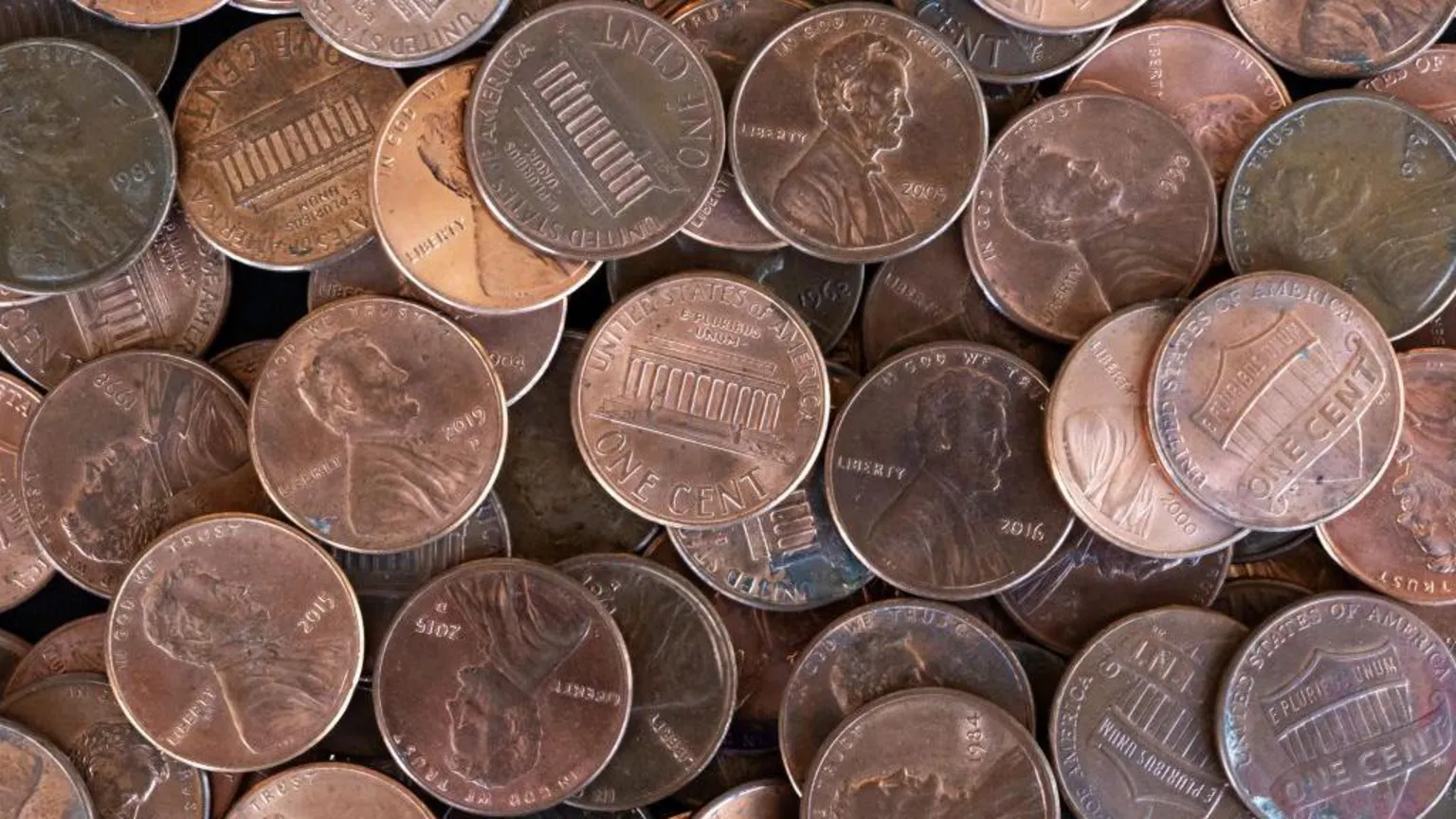
When a financial system hits a liquidity shock, it usually happens on Wall Street screens or in central-bank briefings. But in the United States, a stranger drama is unfolding at the smallest denomination: the disappearance of the penny. We at YourNewsClub see this not as a quirky currency story, but as a stress test for the cash economy and retail infrastructure in a society still split between digital wallets and dollar bills. When the Trump administration halted penny minting, the move was framed as smart budget trimming. Instead, it has triggered operational chaos from gas stations to grocery counters.
Minting pennies cost roughly four cents per coin, and the government argued that ending production would save taxpayer money. Yet banks exhausted their inventories far earlier than Treasury models predicted. Retailers suddenly found themselves unable to make exact change, forcing cash transactions to be rounded to the nearest five cents. In jurisdictions requiring exact change, shops face regulatory uncertainty, customer complaints, and even legal exposure. Most chains round down to avoid lawsuits, quietly absorbing millions in losses on cash sales.
“When the state rewrites the smallest unit of exchange, the question is not about metal but about the infrastructure of access to money,” notes Jessica Larn, YourNewsClub analyst of technology policy. The disappearance of pennies exposes a deeper structural reality: physical currency isn’t just a payment tool, it’s a bridge between income tiers. Eliminating the smallest unit disproportionately affects low-income Americans who rely on cash, often without bank accounts or credit cards.
The fallout has spread quickly. Convenience store chains report millions lost from rounding policies. Some retailers run promotions urging customers to bring in spare coins from home. Others reprogram point-of-sale systems on the fly. Meanwhile, banks cannot obtain pennies from the government, and consumers cannot get them from banks. Retailers are improvising just to keep registers running, even as card networks benefit from increased dependence on plastic – and their transaction fees disproportionately burden low-income consumers.
Alex Reinhardt, YourNewsClub analyst of financial infrastructure, frames the moment bluntly: “When the smallest element of the payment stack disappears, behavioral shifts cascade upward. Capital flows toward whatever rails are cheaper and faster. This isn’t about one cent – it’s about who governs the environment where value moves.” In effect, ending penny production accelerates a shift toward cashless retail – without the social or technological scaffolding to support it.
Complicating the transition is the absence of clear federal guidance. Some cities mandate exact change, others prohibit price differences between cash and card, and most businesses operate in a regulatory gray zone. The result is fragmented policy, legal risk for retailers, and an invisible tax on businesses forced to make up the difference. Countries that phased out low-denomination coins – Canada, Australia, parts of Europe – adopted standardized rounding protocols. The U.S. did not.
We at YourNewsClub see a clear lesson: eliminating a currency unit is not just fiscal math, it is behavioral economics and infrastructure design. Without coordinated policy, the penny’s disappearance has produced unplanned economic friction and widened equity gaps in payment access. Low-income households, cash-dependent workers, and small retailers are absorbing costs meant to save the government money.
In the next 12 to 18 months, the U.S. is likely to accelerate toward cash-optional retail. For policymakers, that means urgency: implement federal rounding rules, launch campaigns to recirculate existing coins, upgrade point-of-sale systems, and design protections for cash-reliant consumers. Otherwise, a cost-saving measure valued at fractions of a penny could become a trillion-dollar behavioral shift – widening divides in who can pay, how they pay, and what participation in the economy costs.
At Your News Club we believe the penny has revealed an uncomfortable truth: sometimes the smallest components keep the system frictionless. Remove them carelessly, and the whole machine reveals where it grinds.