
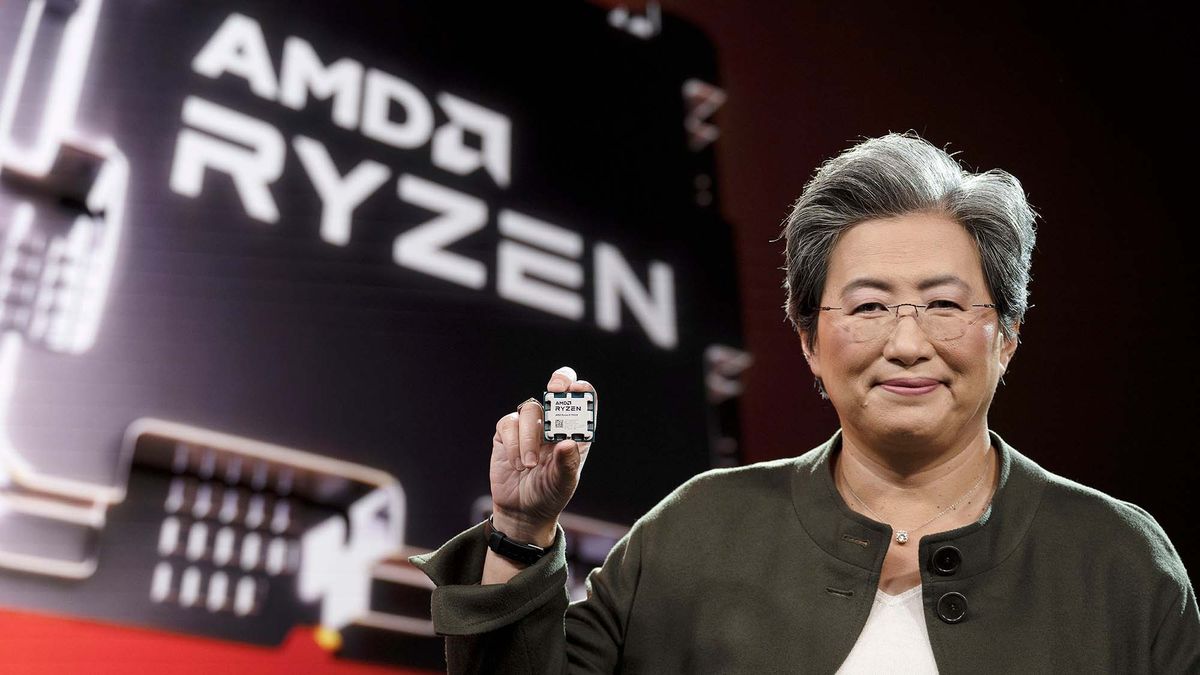
For years, the AI hardware market looked like a one-horse race, with Nvidia providing not just chips but the rules of engagement. But at YourNewsClub, we are tracking a fundamental shift: AMD is no longer playing the role of “alternative supplier.” Instead, it is using open-source philosophy not as a PR gesture, but as a strategic weapon. By giving OpenAI deep access to its platform – down to the source code – AMD is effectively saying: “Here are the keys. Rewrite the stack on your terms.” This is not just hardware delivery. It’s a transfer of leverage.
Digital ethics analyst at YourNewsClub, Maya Renn, defines the move clearly: “The fact that the world’s most influential AI lab is seriously evaluating an open platform instead of operating inside a closed software cage signals a new logic of value – where computational sovereignty matters as much as raw power.” For OpenAI, where a single training cycle can cost millions per week, access to low-level tuning means shifting from scaling by hardware quantity to scaling by architectural precision – optimizing memory paths, compiler layers, and interconnect logic for their own models.
Meanwhile, Nvidia faces the downside of absolute dominance. Years of market control resulted in what many internally refer to as the “Nvidia tax” – premium pricing, long lead times, and strict lock-in through CUDA. Corporate strategy analyst at YourNewsClub, Freddy Camacho, explains: “Nvidia’s issue isn’t performance – it’s posture. When one vendor defines all the boundaries, partnership turns into platform dependency.” AMD, on the other hand, positions itself not as a vendor, but as a collaborator willing to adjust the software layer, not just ship silicon.
The geopolitical context makes the deal even more significant. With tariffs on advanced semiconductors and supply chain pressure growing, hyperscalers can no longer afford infrastructure dependency. Securing a long-term deal with OpenAI at this moment functions as territorial capture – those who build the compute foundation now will hold the standard for the next decade. YourNewsClub macro-infrastructure analyst Alex Reinhardt notes: “This isn’t about winning a GPU contract today. This is about embedding architectural influence into the next global generation of AI infrastructure.”
AMD’s ROCm stack is the next decisive front. If AMD narrows the gap with CUDA not just in features but in adaptability – allowing custom compiler paths, modular kernels, and native hybrid support – developers will gain something they’ve been deprived of for years: permission to choose. And once that threshold is crossed, competition shifts from FLOPS to freedom of execution.
Of course, open infrastructure is not plug-and-play. It demands new abstraction layers, vendor-neutral compilers, and flexible MLOps tooling ready to orchestrate mixed-GPU environments. But the moment that shift starts, architecture stops being a vendor product and becomes a computational asset that users control.
From YourNewsClub’ perspective, this deal is not about chip supply – it is a declaration of a new infrastructure doctrine: from closed verticals to open computational sovereignty. Our recommendation to AI engineering teams: begin testing hybrid GPU clusters now, invest in vendor-neutral toolchains, and develop internal strategies for stack independence.