
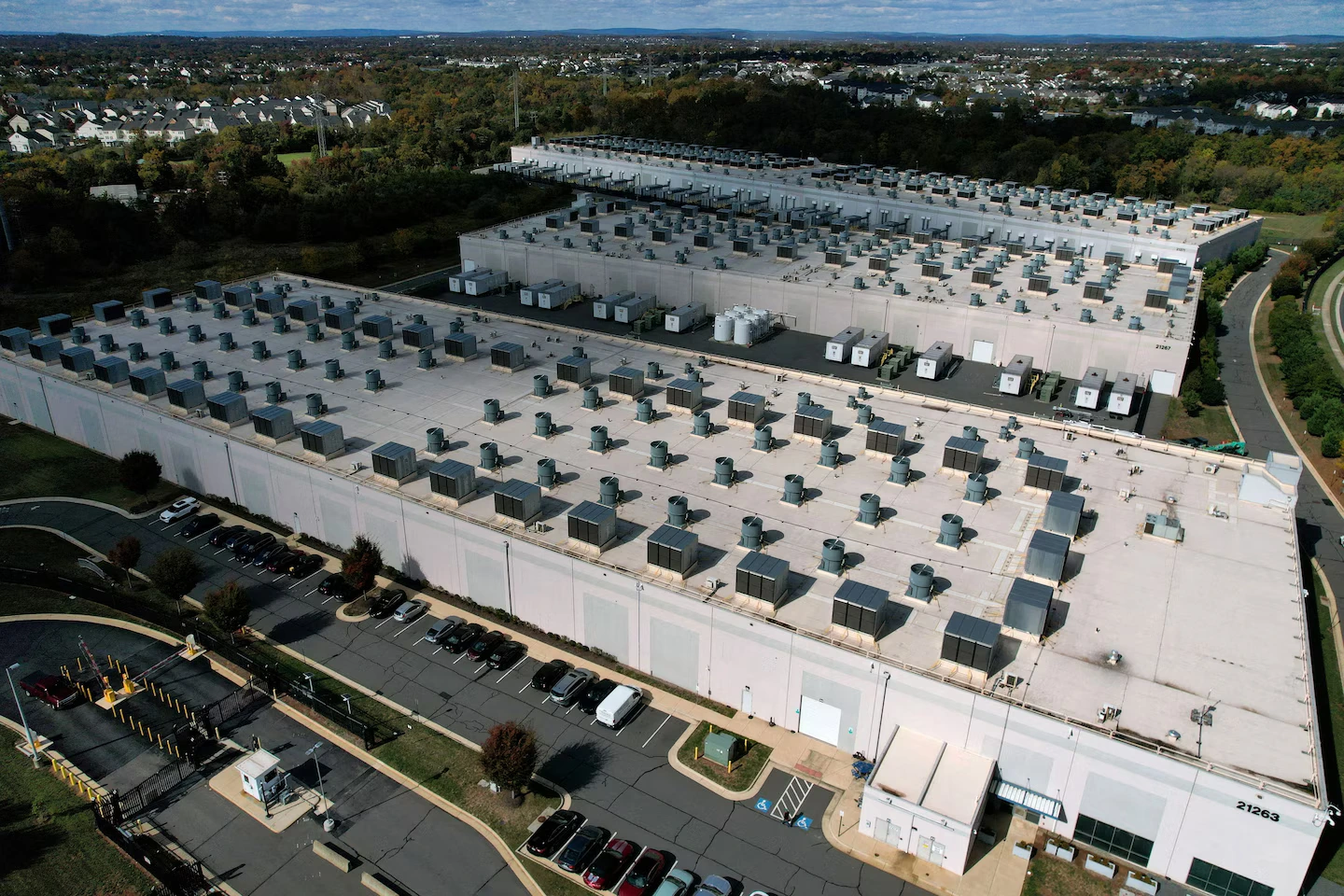
New York became the first U.S. state on Tuesday to halt construction of large new data centers, with Governor Kathy Hochul imposing a one-year moratorium on facilities with peak energy demand of 20 megawatts or more, citing concerns that AI-driven data center growth is raising power costs, straining water supplies, and burdening local communities. During the moratorium, the state’s Department of Environmental Conservation will stop issuing new discretionary permits for qualifying projects that haven’t already completed the approval process. YourNewsClub isolates the 20-megawatt threshold as the detail that determines how sweeping this moratorium actually is: that’s a relatively low bar in an industry where a single modern AI training facility can require several hundred megawatts, meaning the pause captures nearly the entire category of large-scale AI infrastructure New York might otherwise have hosted over the next year, not just the largest hyperscale projects.
The moratorium arrives via the Responsible Data Center Development Act, which the state legislature passed earlier this year; Hochul has held off acting on the broader bill itself while implementing the one-year construction pause through her own authority, and has separately said she will pursue legislation to repeal sales-tax exemptions currently available to large data centers. “As data center development threatens to hike up utility bills, deplete our natural resources, and create uncertainty for New Yorkers, it’s my responsibility to take action and lead,” Hochul said. YourNewsClub marks the sales-tax repeal proposal as arguably the more durable policy shift buried inside this announcement: a one-year construction pause expires by definition, but removing a standing tax incentive permanently changes the economics of building a data center in New York regardless of what happens once the moratorium lifts.
New York’s move puts Hochul, a Democrat, at odds with fellow Democratic governors including Maine’s Janet Mills and Virginia’s Abigail Spanberger, both of whom have publicly cautioned against this kind of blanket construction pause, typically on the grounds that it risks pushing AI infrastructure investment, and the jobs and tax revenue that come with it, to other states rather than actually reducing the industry’s overall footprint. Fourteen state legislatures have introduced bills restricting new data center construction this year, and New York’s is the first to actually become policy rather than remain a pending proposal.
Owen Radner, who models digital infrastructure as energy-information transport systems, draws out the grid-capacity angle: “Data centers of this scale are, functionally, competing directly with households and existing industry for a finite amount of grid capacity and water access in a given region. A moratorium doesn’t reduce the underlying demand for AI compute, it just relocates where that compute gets built, and states that decline to build capacity now are betting they can capture the economic benefits of AI later without having absorbed the infrastructure costs other states are bearing today.”
Freddy Camacho, who studies the political economy of computation, materials, and energy as dominance assets, places the interstate-competition angle: “This is becoming a live test of whether individual U.S. states can meaningfully slow AI infrastructure buildout through local policy, or whether capital simply flows to whichever state offers the least resistance. If New York’s moratorium primarily just shifts projects to Ohio, Texas, or Virginia rather than reducing total buildout, it protects New York communities specifically without changing the national trajectory at all.” YourNewsClub clocks the fate of the broader Responsible Data Center Development Act, which Hochul still hasn’t signed, as the more consequential decision still pending: the one-year moratorium is a temporary measure implemented through executive authority, but the underlying legislation, if and when it reaches her desk, would establish the permanent regulatory framework that determines how New York handles data center development once this pause expires.
Your News Club treats the reaction from environmental and community advocacy groups, who’ve framed the moratorium as a response to sustained public pressure, as evidence that this fight is far from settled at the state level: fourteen other states are watching how New York’s approach plays out both politically and economically before deciding whether to advance their own similar restrictions.