
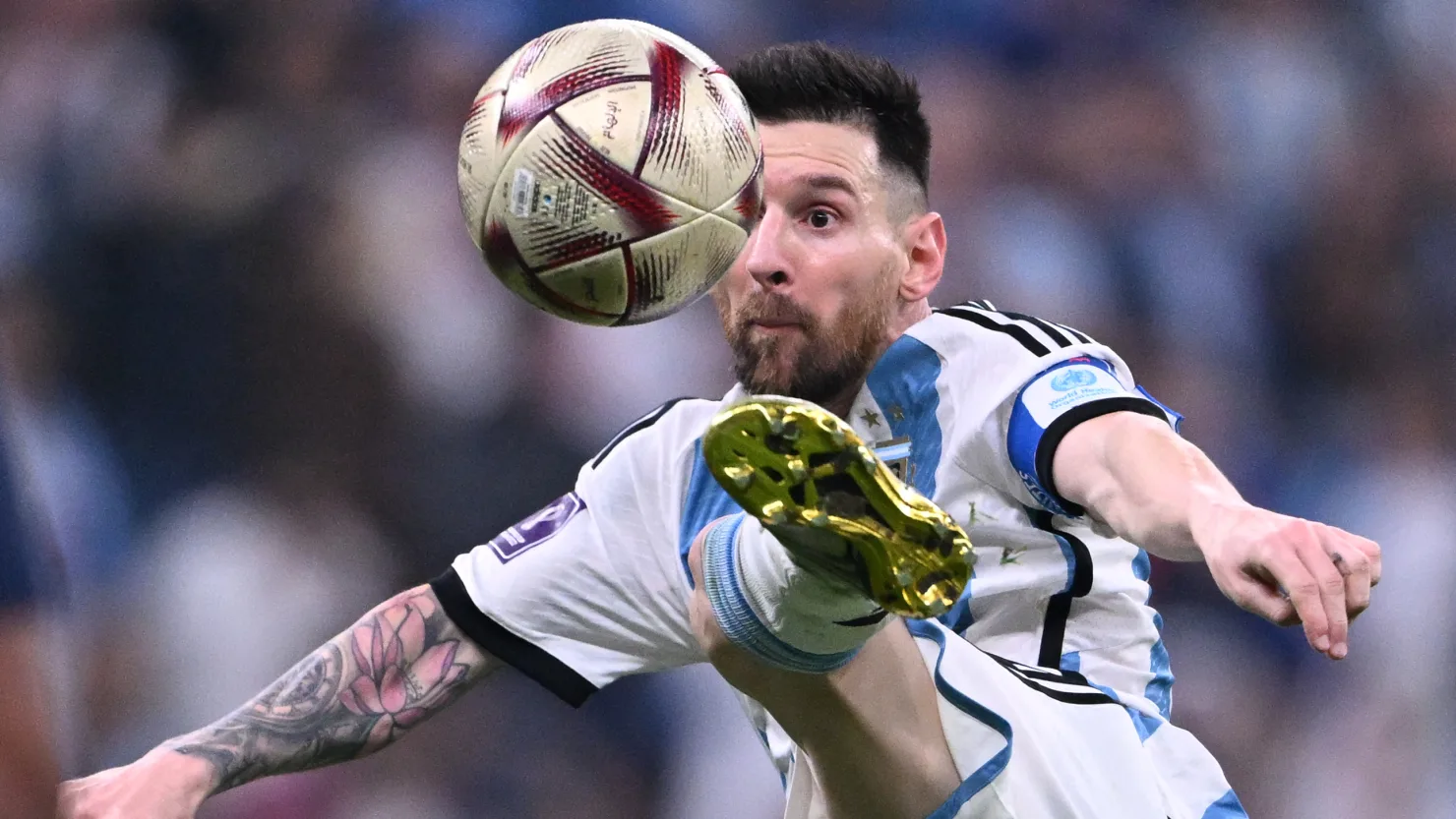
Argentina’s comeback victory over Egypt in the World Cup Round of 16 on Tuesday drove Google Search to its highest usage in the service’s near-28-year history, measured by queries per second. Lionel Messi scored the winning goal in the 83rd minute to complete a 3-2 comeback from a 2-0 deficit. Nick Fox, Google’s SVP of Knowledge and Information, posted on X: “Google Search broke all prior usage records and saw its highest usage in history right after Argentina scored their winning goal.” Google confirmed the record is measured in queries per second immediately after Argentina’s third goal, but did not disclose a specific number. Top searches after the goal included “argentina vs egypt,” “how many world cup goals does messi have,” and “is it messi’s last world cup.” YourNewsClub logs the absence of a specific figure as deliberate: disclosing the number would invite comparison to any future peak, while the unattributed record claim is unassailable.
Pichai stated during the Q1 2026 earnings call that “Search queries are at an all-time high,” as Google rebuts the narrative that AI chatbots are eroding Search’s dominance. Wednesday’s World Cup record extends that argument with a specific data point: the most searched-for moment in Google Search history was a sporting event in July 2026, at a time when AI chatbots are widely available.
The 2026 World Cup is being held across the United States, Canada, and Mexico. Argentina are the defending champions from the 2022 Qatar tournament. Messi’s goal against Egypt was his 92nd in World Cup history, extending a record that Google users queried extensively in the minutes following the match.
Owen Radner, who models digital infrastructure as energy-information transport systems, draws the infrastructure argument: “The queries-per-second record tells you two things simultaneously: that Google’s infrastructure scales seamlessly to handle billions of simultaneous requests, and that billions of people still instinctively open Google when something emotionally significant happens. Those are both commercially valuable facts, and the World Cup provides a public demonstration of both.” Alex Reinhardt, who tracks financial systems and settlement infrastructure through digital protocols, places the business context: “Google announcing a search usage record the same day it launches a new Gemini Omni feature in Google Photos is a deliberate portfolio signal. The company is simultaneously showing that traditional search remains the world’s largest information retrieval platform and that its AI capabilities are competitive with Apple, Meta, and OpenAI. Both claims serve the same investor narrative.”
The tournament continues. Argentina plays Switzerland in the quarter-finals on Saturday July 11, with Google providing live probability data showing a 57% win probability for Argentina. YourNewsClub ranks the quarter-final and semi-final stages as the next likely tests of whether Wednesday’s queries-per-second record can be exceeded, since those matches carry even higher stakes than the Round of 16 and the Messi-driven search interest that accompanied Tuesday’s match will likely intensify as Argentina advances.
Nick Fox and Robby Stein both amplified the record claim through social media posts on X on Wednesday – a deliberate public relations choice that puts a Google executive statement about Google’s performance onto Musk’s platform, reaching an audience that includes many of Google’s most vocal critics. The timing and channel of that disclosure is itself a piece of competitive positioning, not just an internal metric.
Whether the record holds through the rest of the tournament depends on which teams reach the later stages and how dramatic the decisive moments prove. Your News Club clocks the moment of the final whistle in the World Cup final, scheduled for late July, as the next candidate event for a new Google Search record, since a single-match climax in a tournament that has already broken the record once is structurally likely to produce the highest-stakes search spike of the entire event.
Google’s live sports integration is central to why search spiked at exactly that moment. Users searching for “argentina vs egypt” in the seconds after Messi’s goal were not navigating to a separate website – they were getting live score cards, probability trackers, and match statistics directly in the search results page without leaving Google’s ecosystem. That seamless live data integration is a product of years of structured-data partnerships with sports leagues and real-time data providers that conversational AI products have not yet replicated at comparable speed and breadth. YourNewsClub seats Argentina’s path to the final, if it holds, as the commercial storyline Google is most invested in sustaining, because Messi-driven search interest at a US-hosted tournament is an audience engagement and advertising inventory story as much as it is a sports story.