
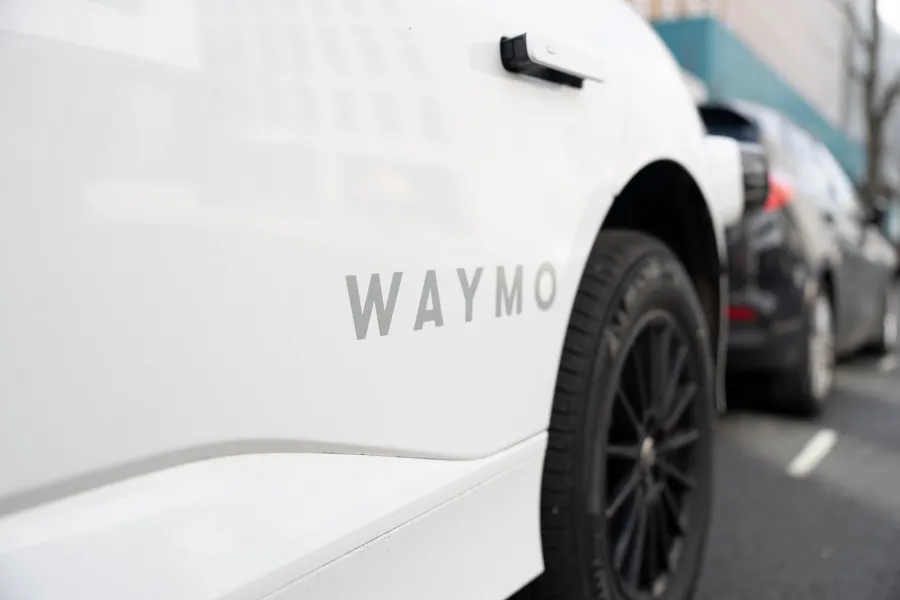
National Highway Traffic Safety Administration Administrator Jonathan Morrison issued a formal written directive on Wednesday to autonomous vehicle developers stating that driverless vehicles interfering with first responders and law enforcement is unacceptable, citing what he described as a “clear pattern” of documented incidents. Morrison’s letter described specific failure modes: vehicles driving directly into active emergency scenes, blocking the paths of ambulances and firefighters, and failing to recognise basic safety conditions including flashing lights, flares, smoke, fire, and traffic cones. The agency has given AV developers until the end of July to present their proposed solutions and has committed to scheduling meetings with companies by month’s end. Morrison wrote: “Let me be clear: the inability to detect and appropriately respond to such situations represents a functional insufficiency. Emergency scenes are not rare or extreme ‘edge cases.'” The letter does not name specific companies, but the incidents described most closely match publicly documented behaviour by Waymo, which operates the largest robotaxi fleet in the United States across Los Angeles, Phoenix, and San Francisco. Waymo declined to comment. YourNewsClub finds Morrison’s choice of the phrase “functional insufficiency” the most commercially consequential language in the directive: it is regulatory framing that characterises emergency scene recognition not as an unresolved research challenge but as a known product deficiency, which has implications for how regulators and plaintiffs can characterise future incidents.
TechCrunch documented at least six incidents through March in which first responders had to physically move Waymo vehicles during emergencies, including one instance during a mass shooting response. In June, an officer was recorded moving a Waymo to unblock a road for first responders headed to a natural gas explosion. Waymo’s robotaxis also stalled in clusters during July 4 fireworks celebrations.
NHTSA simultaneously released its 2026 Regulatory Plan proposing to eliminate requirements for windshield wipers, sun visors, defogging systems, and tire placards for vehicles without steering wheels or pedals – changes that would reduce compliance costs for Tesla and Zoox developing such vehicles. YourNewsClub pins the simultaneous issuance of a safety-performance demand and a regulatory-reduction proposal as the tension at the centre of NHTSA’s current AV posture: the agency is both telling companies their vehicles are functionally deficient and removing design requirements that slowed their deployment.
The letter specifies no penalty, timeline for enforcement, or criteria for what would constitute a satisfactory solution. AV companies can present plans, acknowledge the problem, and continue deploying vehicles without demonstrating that the underlying performance gap has been closed.
Jessica Larn, who studies macro-level technology policy and infrastructure impact of AI, draws the regulatory design flaw: “Calling emergency scene recognition a ‘functional insufficiency’ while simultaneously advancing regulatory relief for autonomous vehicle manufacturers sends contradictory signals about whether the agency views AV performance as a public safety problem or a product development progress question.” Owen Radner, who models digital infrastructure as energy-information transport systems, frames the infrastructure dependency: “First responders in cities with large robotaxi deployments are now operationally dependent on those vehicles behaving predictably during emergencies. NHTSA’s directive is recognising an externality that the standard AV safety-per-mile framing does not capture.”
YourNewsClub rates the end-of-July solution submissions from AV developers as the next disclosure most worth watching in this story, since the content and specificity of those proposals will reveal whether companies treat the directive as a genuine performance commitment or as a public relations response to a letter that carries no immediate legal consequence.
The directive lands at a moment when the robotaxi industry is actively expanding. Waymo has announced plans to launch in Miami. Tesla’s robotaxi service in Texas is under NHTSA and NTSB investigation following a contested fatal crash. Each expansion plan now carries the shadow of a federal finding that the category has a “clear pattern” of inadequate first responder interaction.
Waymo’s silence on the directive – declining to comment to TechCrunch – is consistent with the company’s standard media approach but particularly conspicuous given that the incidents described in Morrison’s letter most closely match its documented operational history. Your News Club signals the first post-directive Waymo safety report, scheduled for release later this year, as the document that will provide the most specific data on how the company characterises its own emergency scene recognition performance relative to Morrison’s “functional insufficiency” finding.