
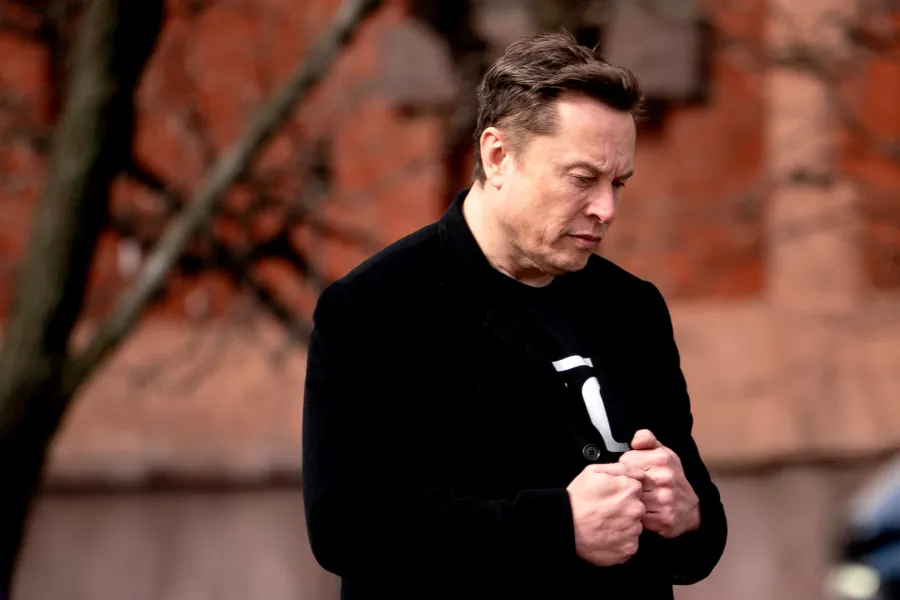
US District Judge Sparkle Sooknanan approved a $1.5 million settlement on Wednesday between the Securities and Exchange Commission and Elon Musk’s revocable trust over Musk’s 11-day delay in disclosing his growing Twitter stake in 2022. Under the settlement, the trust – not Musk personally – pays the penalty; Musk neither admits nor denies wrongdoing. The SEC filed the lawsuit on January 14, 2025; it was amended on May 4, 2026 to add the trust as a defendant and simultaneously seek a consent judgment dropping the case against Musk individually. Sooknanan wrote: “Musk violated Section 13(d) in a manner that facilitated his takeover of Twitter and netted him $150 million in savings. That bears repeating: Elon Musk, the richest person in the world with a net worth close to $1 trillion, allegedly ignored his obligation to file SEC disclosures at the expense of other investors to the tune of $150 million.” YourNewsClub reads the trust-not-Musk structure as the most commercially significant element of the settlement’s design: paying through a trust while consenting to a future prohibition that applies to the trust rather than the individual allows Musk to publicly characterise the outcome as a case that did not result in personal liability, which is technically accurate and functionally misleading in equal measure.
Sooknanan noted that “the course of this litigation dramatically changed in May 2026,” when the SEC added the trust as a defendant and immediately sought a consent judgment, leaving her to “wonder whether the SEC will afford other alleged securities-law violators such solicitude.” At the time those filings were made simultaneously, Musk was serving as a special government employee through DOGE.
Sooknanan raised a specific question in earlier hearings that the settlement does not answer: why was the penalty set at $1.5 million when the SEC’s own estimate of the benefit Musk derived from the delayed disclosure is $150 million. That is a ratio of roughly 1%, or approximately 0.3% depending on how the gain is calculated. Sooknanan stated that while she concluded the settlement met minimum fairness and reasonableness standards, she believed the public – through its elected representatives – should decide whether the SEC had adequately held Musk accountable, a framing that makes clear she viewed the settlement as legally permissible rather than substantively appropriate. The consent judgment also bans future Section 13(d) violations, but the SEC acknowledged in court that the terms of this settlement are unprecedented – unusual language that typically signals an agency’s awareness that the outcome departs from its own enforcement norms. YourNewsClub spots the SEC’s own “unprecedented” characterisation as the most consequential admission in the settlement record, since it explicitly distinguishes this resolution from how the agency has handled comparable disclosure violations by less prominent defendants.
Jessica Larn, who studies macro-level technology policy and infrastructure impact of AI, draws the enforcement signal: “The precedent that matters most is not the consent judgment’s future-violation prohibition but the penalty structure, which suggests that disclosure delays can be commercially rational even at the cost of eventual settlement.” Freddy Camacho, who studies the political economy of computation and capital as dominance assets, frames the power asymmetry: “Sooknanan’s opinion is a public rebuke embedded inside a legal approval. She took care to write an opinion that tells anyone reading it exactly what she thinks happened: a wealthy person in a position of political influence received a settlement that no ordinary defendant would likely have been offered.”
YourNewsClub places the SEC’s July 7 regulatory agenda – published the day before the settlement approval – as context worth noting: the agency is planning new cryptocurrency regulation discussions this month, suggesting it has moved its active enforcement priorities away from the Musk matter now that the case is formally closed.
The pattern – high-profile case, political transition, rapid settlement on terms the judge publicly questioned – describes a regulatory environment in which the outcome of securities enforcement increasingly depends on who controls the executive branch rather than on the underlying conduct.
The settlement ends a case that outlasted the entire era of Twitter as a publicly traded company. Musk completed his acquisition in October 2022, rebranded the platform as X, and transformed it into a global communications infrastructure that has influenced the past two US election cycles. Your News Club marks the consent judgment’s future-violation prohibition as the legal instrument whose actual enforceability matters more than the penalty that accompanied it, since $1.5 million from a trust is not a deterrent but a court order barring Section 13(d) violations by the trust is at least a formal legal obligation.