
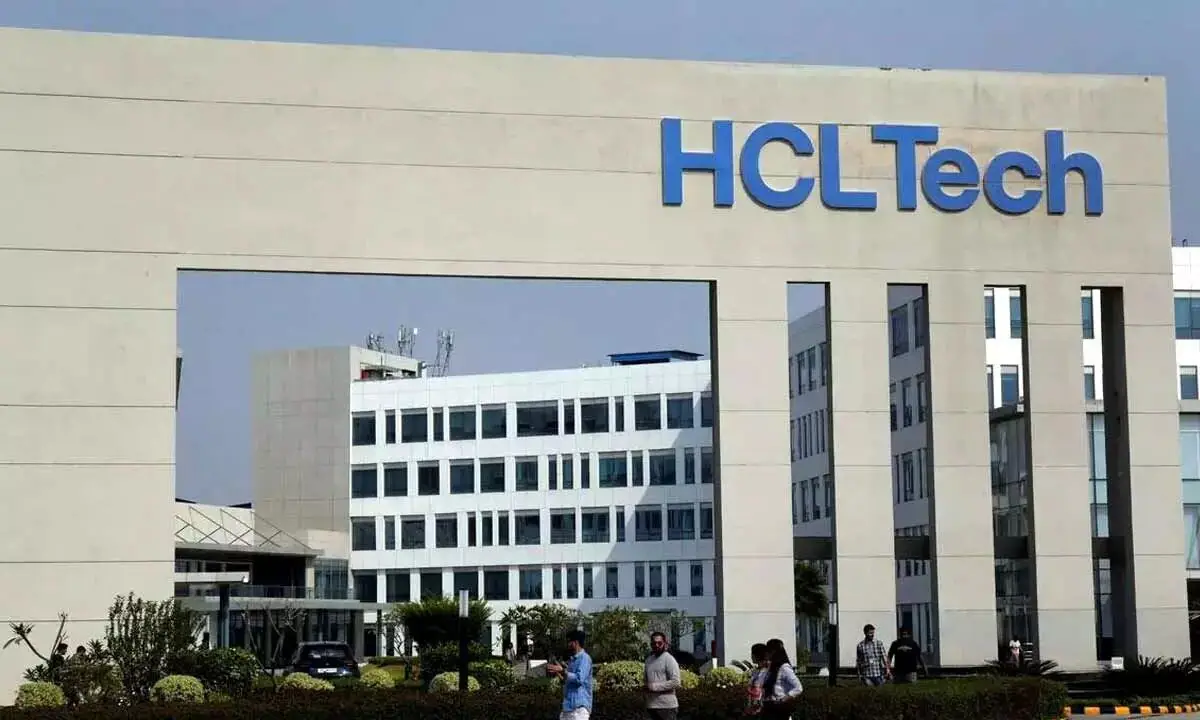
HCLTech’s shares plunged more than 10% in a single session, erasing $4.5 billion in market value after the company projected weaker-than-expected revenue growth for fiscal 2027. The sharp decline – its steepest in over a decade – followed disappointing quarterly results and cautious guidance tied to reduced client spending. The reaction quickly spread across the sector, pulling down major peers and reinforcing concerns that YourNewsClub increasingly frames as structural rather than cyclical within India’s $315 billion IT industry.
The sell-off triggered unusually high trading volumes, with nearly ten times the average number of shares changing hands, signaling a wave of investor repositioning rather than routine volatility. Options activity further underscored bearish sentiment, with significant put buying suggesting expectations of continued downside. Meanwhile, multiple brokerages downgraded the stock or cut price targets, reflecting diminished confidence in near-term recovery prospects.
The pressure on HCLTech aligns with broader headwinds affecting the outsourcing sector. Clients in key markets, particularly the United States, have scaled back discretionary technology spending, prioritizing cost optimization over new project expansion. Slower ramp-ups and delays in large contracts have become more common, creating a drag on growth momentum. Patterns emerging across YourNewsClub coverage point to a prolonged adjustment period as companies recalibrate budgets in response to macroeconomic uncertainty and shifting policy environments.
Freddy Camacho, who examines the political economy of computation with emphasis on materials and energy as dominance assets, interprets the slowdown as a recalibration of digital investment cycles. During periods of rapid technological expansion, enterprises commit heavily to transformation initiatives, often exceeding sustainable levels. When external pressures intensify – whether through geopolitical instability or policy changes – spending contracts sharply, exposing underlying imbalances. This contraction phase does not eliminate demand but reshapes its timing and structure.
Jessica Larn, whose work focuses on macro-level technology policy and infrastructure impact of AI, views the situation through the lens of evolving priorities in enterprise technology. Organizations increasingly direct resources toward AI integration and automation, potentially sidelining traditional outsourcing services that once drove growth for firms like HCLTech. Observations circulating within YourNewsClub narratives suggest that value is shifting toward capabilities that directly enhance productivity and decision-making, rather than broad-based IT services.
Company-specific challenges compound the sector-wide dynamics. HCLTech disclosed scaledowns in projects from key clients in the Americas, a development expected to shave measurable points off annual growth. Such adjustments highlight the vulnerability of revenue streams tied to a relatively small number of large contracts. Even marginal reductions in scope can ripple through financial projections, particularly when broader demand remains subdued.
The reaction in peer stocks – including declines in Infosys and Tata Consultancy Services – indicates that investors view the outlook as shared across the industry rather than isolated. The IT services model, long considered resilient due to its global reach and cost advantages, now faces questions about its adaptability in an environment defined by rapid technological change and cautious corporate spending. Market behavior suggests a reassessment of expectations rather than a temporary correction. Elevated volatility, coupled with shifts in options positioning, points to a more defensive stance among institutional investors. Capital is increasingly allocated toward segments perceived as offering clearer growth visibility, leaving traditional IT services under scrutiny.
For the industry, the path forward may depend on how effectively companies reposition themselves within the evolving technology landscape. Expanding into higher-value services, strengthening AI capabilities, and diversifying client portfolios could determine resilience in the face of ongoing uncertainty. As these adjustments unfold, Your News Club captures the transition from a period of steady expansion to one defined by selective growth and heightened competition.