
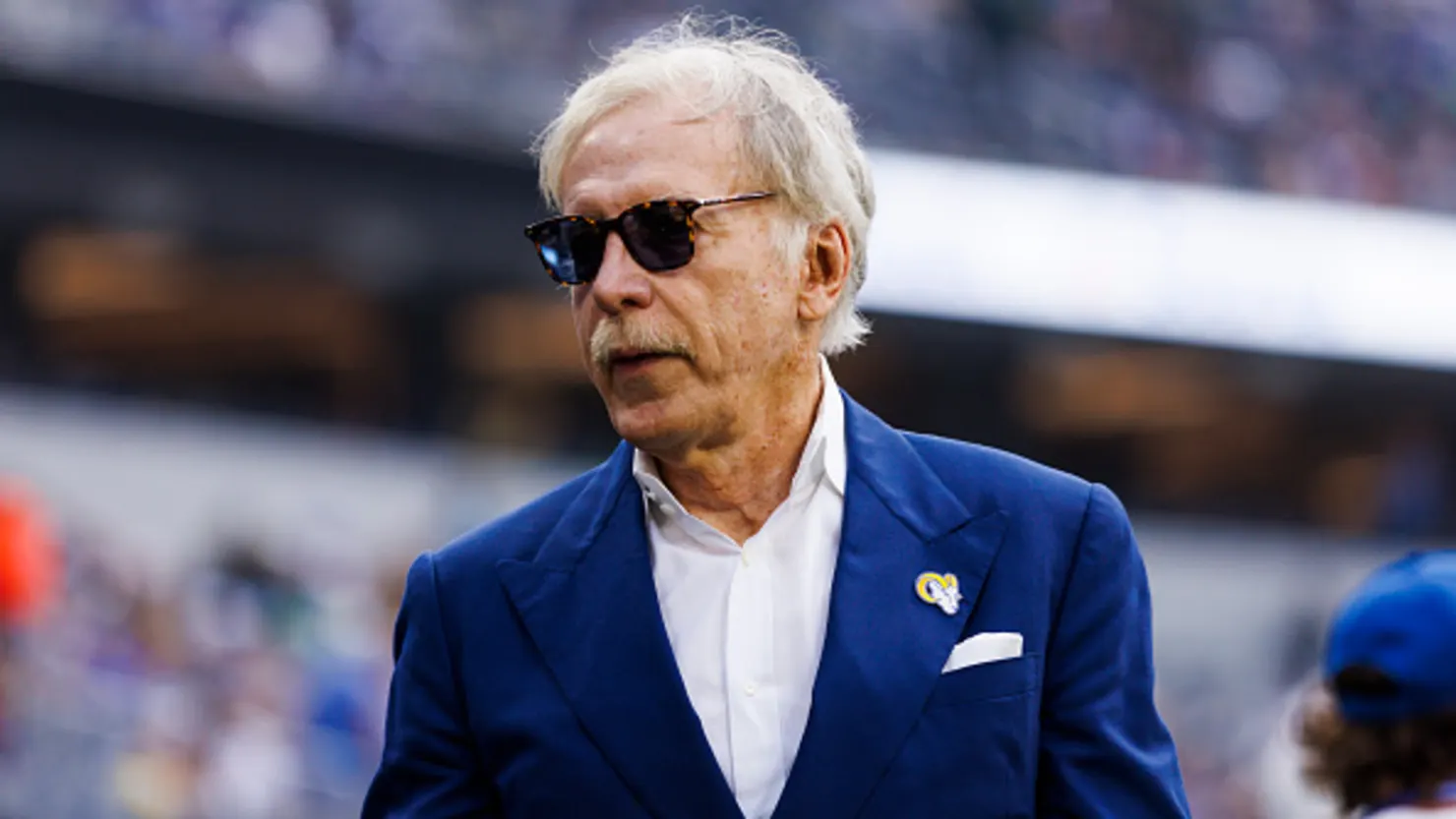
The scale of Stan Kroenke’s landholdings now rivals the scale of his sports empire, and the implications reach far beyond a headline-grabbing ranking. With roughly 2.7 million acres under his control, Kroenke has quietly moved into a different category of ownership, one where land functions not merely as an investment, but as a strategic asset with economic, environmental, and political weight. This shift followed Kroenke’s acquisition of nearly one million acres of ranchland in New Mexico from the Singleton family, heirs to the industrial legacy of Teledyne founder Henry Singleton. The transaction stands out not only for its size, but for its rarity. At YourNewsClub, we see deals of this magnitude as signals of structural change: family-owned mega-ranches are exiting the market, often permanently, and consolidating into the hands of a small group of ultra-capitalized buyers.
That single purchase pushed Kroenke from fourth place to first in the annual ranking of America’s largest private landowners, surpassing long-established holders such as the Emerson family as well as high-profile figures like John Malone and Ted Turner. The speed of this ascent is telling. Land markets rarely reshuffle leadership positions quickly, and when they do, it reflects both concentrated opportunity and concentrated capital. According to YourNewsClub, this is less about competition between billionaires and more about timing – Kroenke acted at a moment when generational transition met rising operational complexity.
Jessica Larn, who analyzes macro-level technology policy and infrastructure dynamics, interprets this trend through a broader lens. She sees large-scale land accumulation as a form of long-duration infrastructure control, particularly as agriculture, water access, and climate resilience become increasingly interlinked. From this perspective, land is no longer passive wealth storage; it is a platform asset whose strategic value grows as other systems become more volatile. The broader context reinforces that view. U.S. agricultural land values have risen steadily in recent years, outpacing inflation on a real basis and attracting capital seeking insulation from financial market swings. At YourNewsClub, we note that this appeal goes beyond price appreciation. Land offers utility, optionality, and collateral value simultaneously – qualities that few other asset classes can combine at scale.
Kroenke’s approach mirrors that of other prominent billionaires who have redirected capital from abstract markets into physical territory. Figures such as Bill Gates, Philip Anschutz, Jeff Bezos, and Thomas Peterffy have all accumulated hundreds of thousands of acres for farming, ranching, or conservation-linked uses. Yet Kroenke’s strategy stands out for its focus on legacy ranches that have remained intact for generations. His earlier purchase of the Waggoner Ranch in Texas marked a similar inflection point, ending more than a century and a half of family ownership. Owen Radner, whose work focuses on digital and physical infrastructure as energy–information transport systems, frames this consolidation as a quiet rebalancing between public and private control of critical land resources. As fewer families are willing or able to operate these properties, ownership shifts toward entities capable of absorbing long-term risk and regulatory pressure. In Radner’s view, the result is a landscape where land increasingly behaves like infrastructure – slow-moving, capital-intensive, and strategically defensible.
At Your News Club, we see Kroenke’s rise as the country’s largest private landowner not as an anomaly, but as a preview. The supply of comparable assets is finite, while demand from ultra-wealthy investors continues to rise. That imbalance suggests further consolidation ahead, with land playing a growing role in how wealth is preserved, influence is exercised, and economic resilience is built. The record itself may change again, but the direction of the market appears firmly set.