
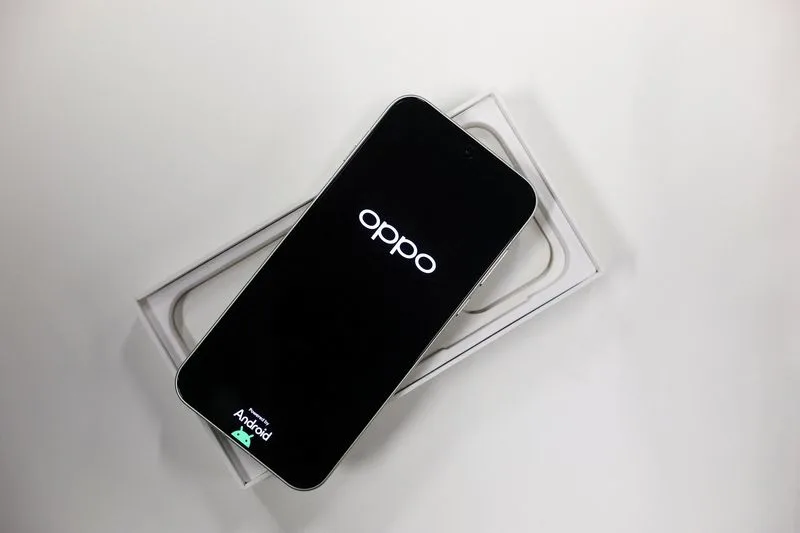
Chinese smartphone maker Realme said it will be integrated into Oppo as a sub-brand, a move aimed at pooling resources and reducing costs across businesses that already share the same corporate parent. While framed as an operational alignment, the decision signals a broader strategic shift inside China’s smartphone industry.
At YourNewsClub, we view this integration as less about brand consolidation and more about margin defense. Realme built its presence in India, Southeast Asia, and parts of Europe by operating as an independent, youth-oriented brand, but its growth model relied heavily on shared supply chains, platforms, and manufacturing capabilities within the BBK ecosystem. As global smartphone demand stagnates, sustaining parallel structures has become increasingly difficult to justify.
Both Realme and Oppo are part of BBK Electronics, a group that previously benefited from running multiple brands in overlapping segments to maximize shelf space and market reach. That strategy worked in a high-growth environment. Today, slower replacement cycles, pricing pressure, and rising component costs are pushing manufacturers toward internal consolidation. Jessica Larn, a technology policy and infrastructure analyst at YourNewsClub, notes that when markets mature, internal competition becomes a liability rather than an advantage. She argues that folding Realme into Oppo allows BBK to simplify governance, streamline investment decisions, and avoid cannibalization across its own portfolio while maintaining coverage of different price tiers.
From an operational standpoint, the integration offers immediate efficiencies. Shared procurement, unified logistics, and consolidated R&D can lower per-unit costs and reduce exposure to supply shocks. Owen Radner, who focuses on industrial systems and manufacturing networks at YourNewsClub, points out that scale now matters less in volume terms and more in cost discipline. According to him, brands that fail to rationalize operations risk being squeezed out of the mid-range segment entirely.
For Oppo, absorbing Realme as a sub-brand also strengthens its ecosystem strategy. Oppo has increasingly positioned itself as a platform player spanning smartphones, wearables, and connected devices. Keeping Realme within that orbit expands reach without diluting Oppo’s core brand, particularly in price-sensitive markets such as India where segmentation remains critical. For consumers, the impact is likely to be mixed. Realme is expected to retain its branding and pricing logic, but product differentiation may narrow as device roadmaps align more closely with Oppo’s platforms. At YourNewsClub, we see this as a common trade-off in consolidation cycles: consistency and cost efficiency often come at the expense of experimentation.
In a wider context, the move reflects a structural transition across China’s consumer electronics sector. The era of aggressive brand proliferation is giving way to a focus on profitability, resilience, and tighter control over distribution and messaging. Realme’s integration is unlikely to be the last example of this shift.
Looking ahead, we at Your News Club expect Realme to remain visible in its core markets, but with reduced strategic autonomy. For Oppo and BBK, the priority is no longer rapid expansion, but preserving margins and operational leverage in a crowded global market. The key signal for investors and competitors alike is clear: consolidation, not expansion, is becoming the default strategy.