
The U.S. airline industry is heading into 2026 with a sharp contradiction. New international routes, upgraded airport lounges, premium cabins, and digital conveniences are expanding. At YourNewsClub, we do not read this as a temporary pricing move. We see it as a structural shift toward a K-shaped aviation economy, where the top tier is engineered for margin and stability while the bottom tier absorbs fees, friction, and tighter rules.
Airlines entered 2025 with optimism, expecting demand to continue supporting profitability. That confidence cooled as consumer caution, excess domestic capacity, and renewed macro uncertainty pressured yields. The industry’s response has been consistent: monetize passengers willing to pay for space, earlier boarding, and predictability, while making base fares more restrictive. The “middle” of the cabin is shrinking economically even if the seat map appears unchanged.
This strategy is unfolding against unresolved operational constraints. Staffing shortages, particularly among air traffic controllers, and aging infrastructure continue to undermine reliability. Official on-time performance metrics still define punctuality generously, softening reported outcomes while passengers continue to experience disruption.
Jessica Larn, technology policy and infrastructure analyst, observes that when infrastructure lags behind demand, the market does not fix reliability but prices it. “Premium becomes a proxy for capacity that the system can’t consistently deliver,” she says. At YourNewsClub, we view this as the core mechanism behind widening inequality in air travel.
Profit concentration reinforces this divide. Network carriers with strong hubs and premium-heavy demand are structurally positioned to capture a disproportionate share of industry earnings, while airlines reliant on domestic economy traffic remain more exposed to any demand slowdown. As higher-income travelers account for a growing share of total spending, premium products remain insulated even when broader consumer confidence weakens. At Your News Club, we see this dynamic hardening into a durable business model rather than a cyclical anomaly.
Low-cost carriers are feeling the pressure most acutely. Spirit Airlines’ continued restructuring highlights the fragility of ultra-low-cost models in an environment of expensive capital, operational shocks, and limited pricing power. The question heading into 2026 is no longer whether these airlines can sell seats, but whether they can remain independent under tightening economic conditions.
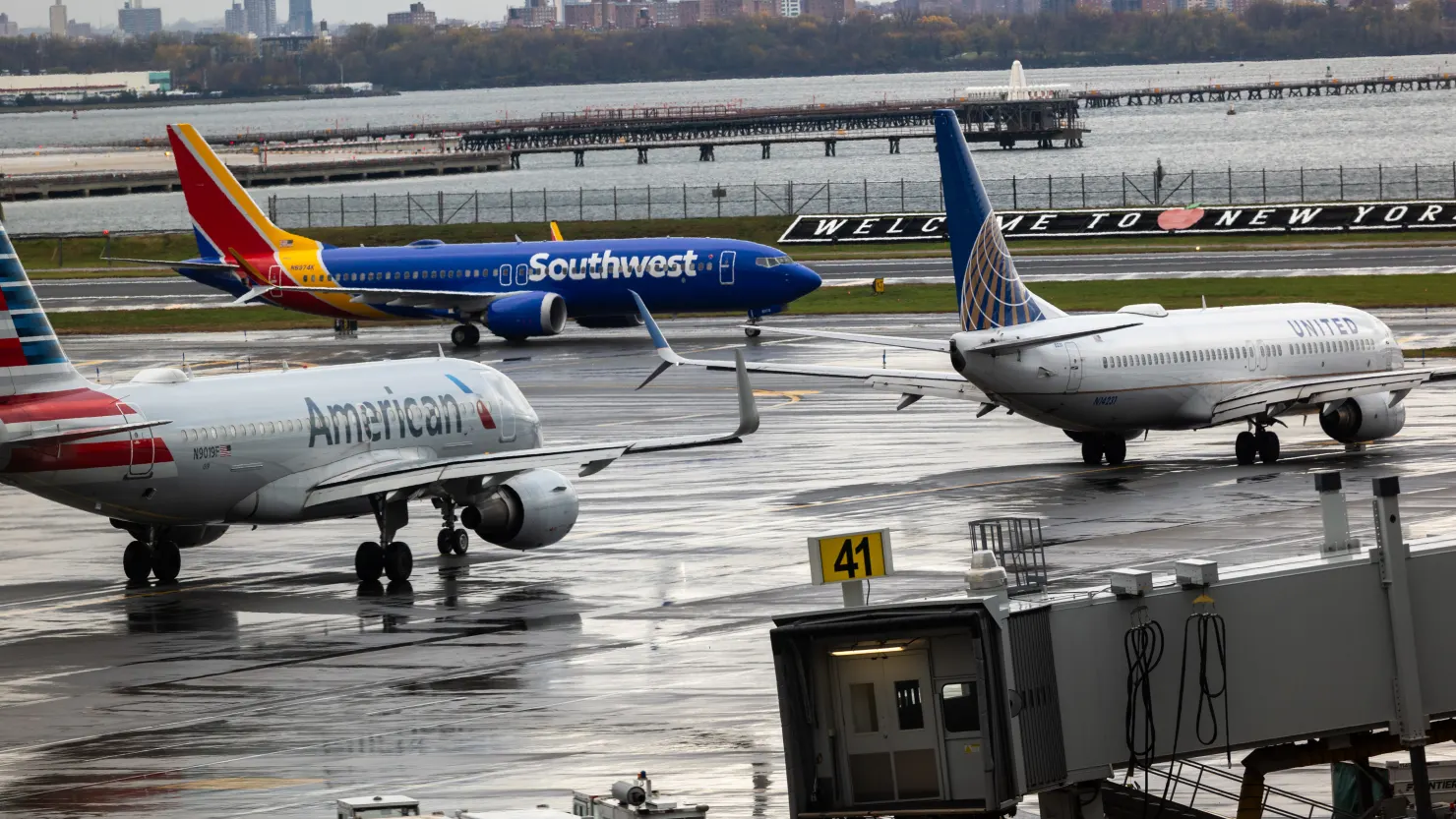
Southwest’s transformation is especially symbolic. The shift away from open seating toward assigned seating marks a cultural pivot and reflects broader industry convergence toward monetized order. Investors have rewarded the move, betting that Southwest can translate its brand strength into a more segmented revenue model without fundamentally damaging customer loyalty.
American Airlines is pursuing a parallel but distinct strategy, leaning into premium recovery while tightening execution. Expanded lounges, new long-range narrowbody aircraft, complimentary high-speed connectivity for loyalty members, and stricter earning rules all point to a clear recalibration: revenue contribution now outweighs frequency alone. At the same time, investments in boarding flow and hub operations signal recognition that premium positioning cannot compensate for persistent disruption.
Later in the cycle, Owen Radner – transport and network infrastructure analyst – argues that aviation outcomes are shaped by control over nodes rather than fares. “The carriers that control hubs, recovery capacity, and operational coordination will widen the gap,” he says, “even when ticket prices appear competitive.”
At YourNewsClub, our conclusion is direct. The airline industry in 2026 is not simply becoming more premium; it is becoming more unequal by design. Comfort, flexibility, and predictability are increasingly reserved for passengers who pay for them. Until system-level reliability improves, segmentation will continue to substitute for resilience. For travelers, the real cost of flying will be determined less by headline fares and more by where they sit on the K-shaped curve.